

Doctors in London rally in front of the General Medical Council in support of Ghassan Abu-Sitta
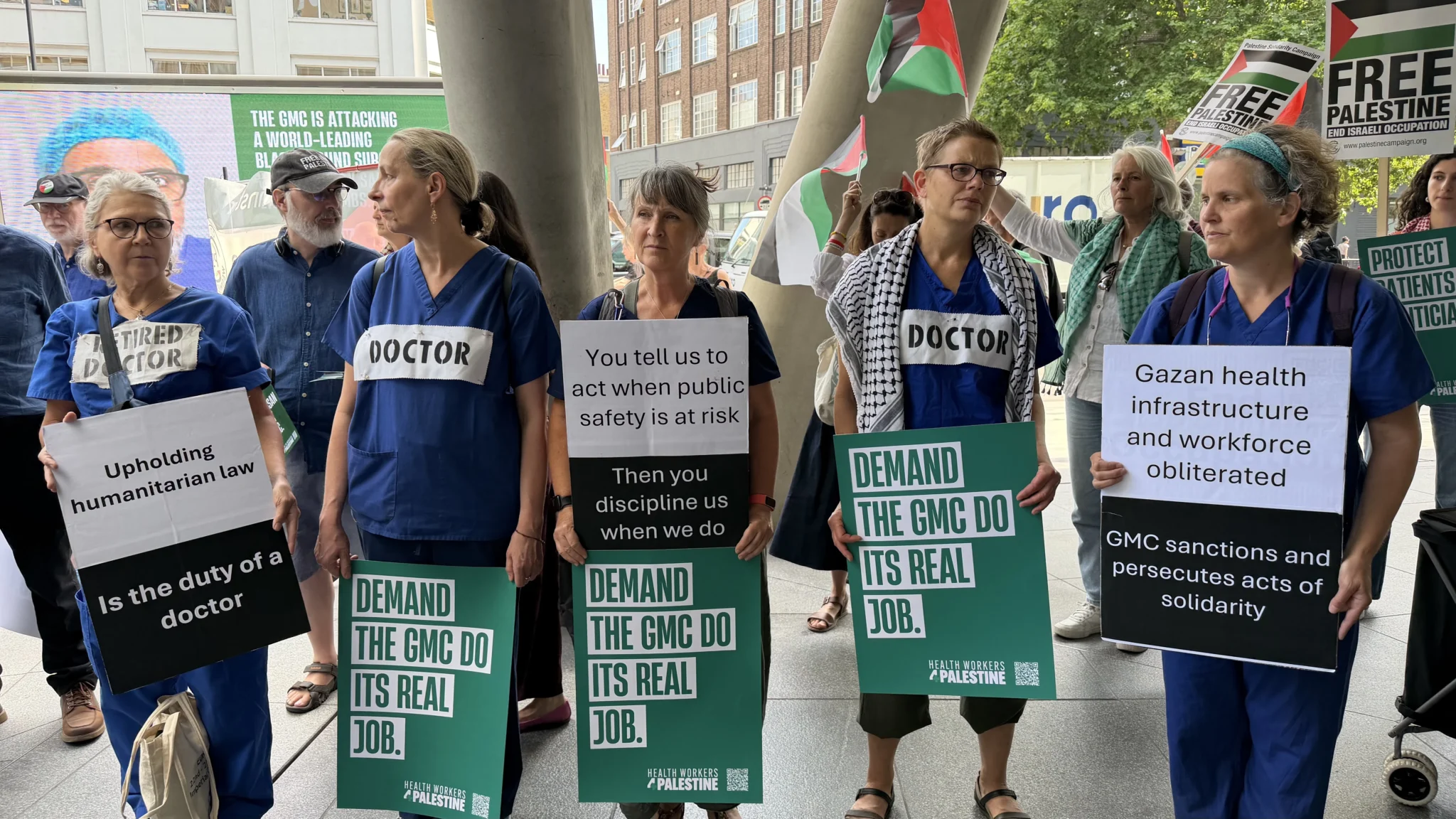
Amid pro-Palestinian chants, the beating of drums, and rows of doctors and nurses in their scrubs and Palestinian keffiyehs, the vicinity of the British General Medical Council (GMC) headquarters in central London turned, on Thursday evening, July 3, into a protest platform carrying a single message: “Hands off Dr Ghassan Abu-Sitta.”
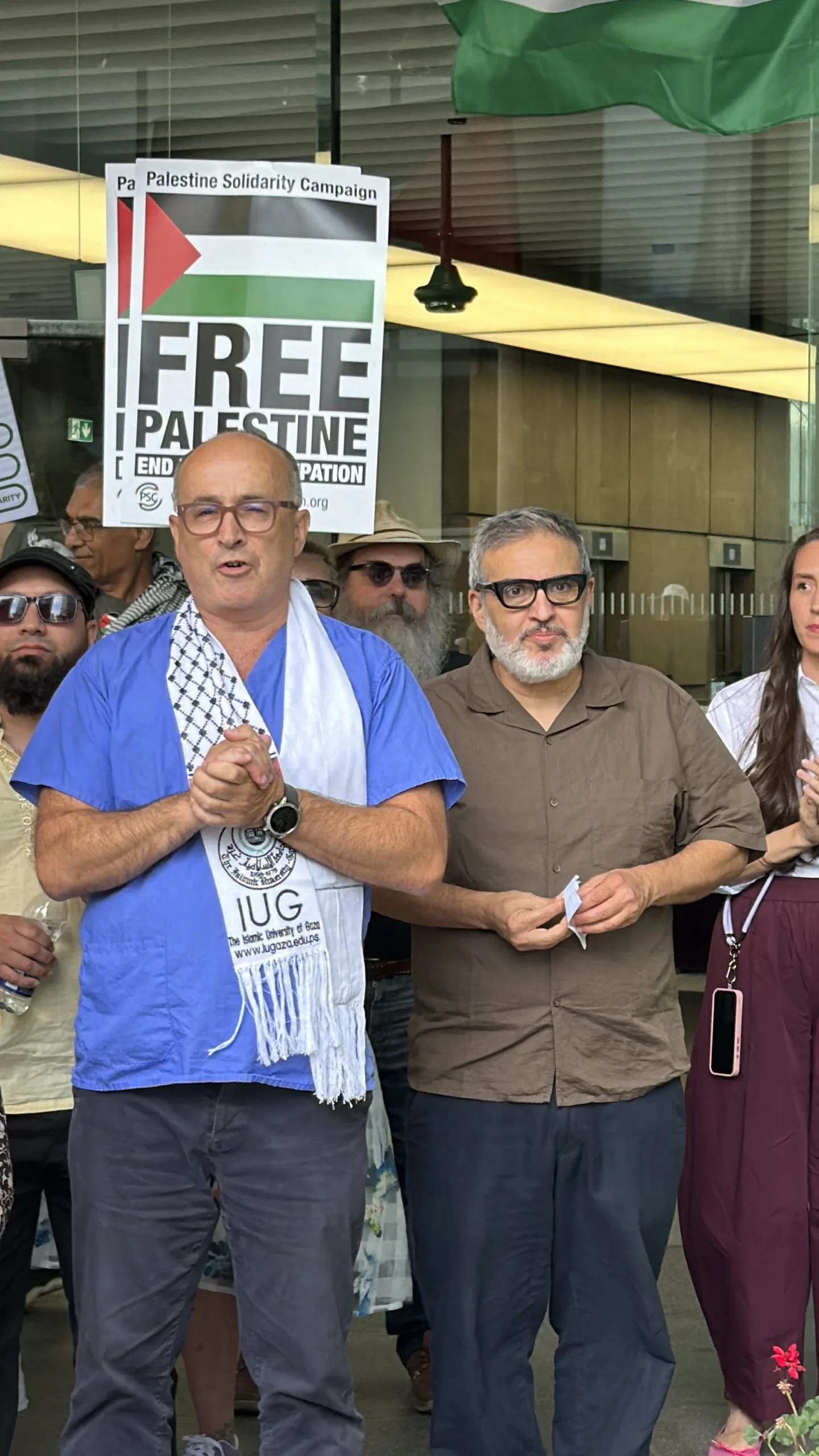
The vigil, organized by Healthcare Workers 4 Palestine, was not just a solidarity event for a surgeon returning from the battlefields, but rather came to highlight what participants described as the ongoing targeting of Dr Ghassan Abu-Sitta, and an attempt to intimidate doctors and healthcare workers who continue to document what they witness in Gaza and defend their patients.
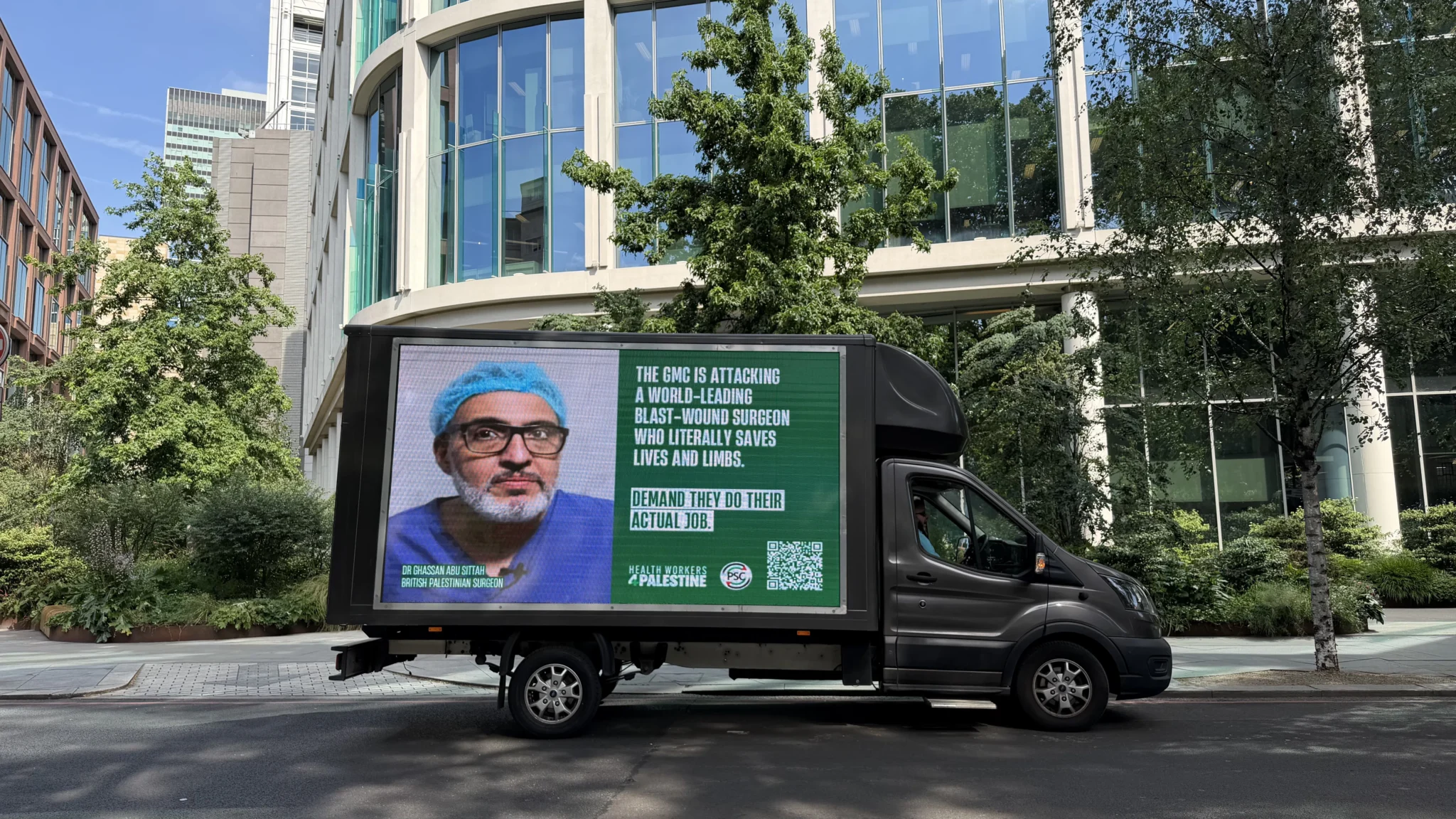
The organizers believe that the case has moved beyond Dr Abu-Sitta himself, turning into a broader debate on the autonomy of the medical profession and the right of doctors to share their testimonies in conflict zones without fear of professional prosecution.
From acquittal to appeal… Why did doctors take to the streets?
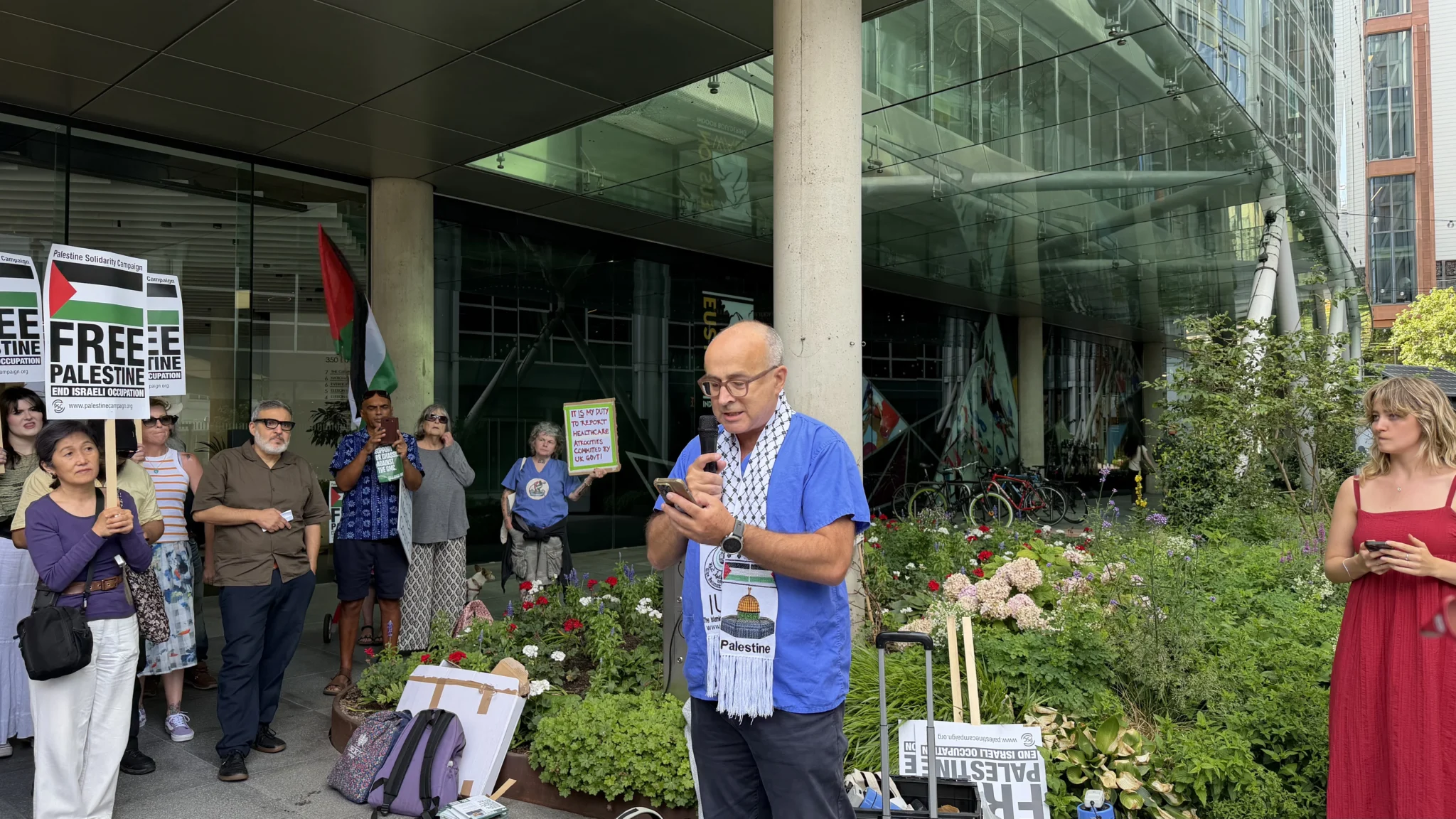
The vigil came against the backdrop of the case faced by Dr Abu-Sitta before the British General Medical Council (GMC), following a series of complaints linked to pro-Israel lobby groups that accused him of supporting terrorism and antisemitism.

Speakers noted that two independent panels had cleared Abu-Sitta of these allegations; however, the General Medical Council (GMC) chose to challenge those decisions before the High Court. This is a move that protesters said raises questions about the institution’s independence and the use of regulatory procedures to silence medical voices critical of the war on Gaza.
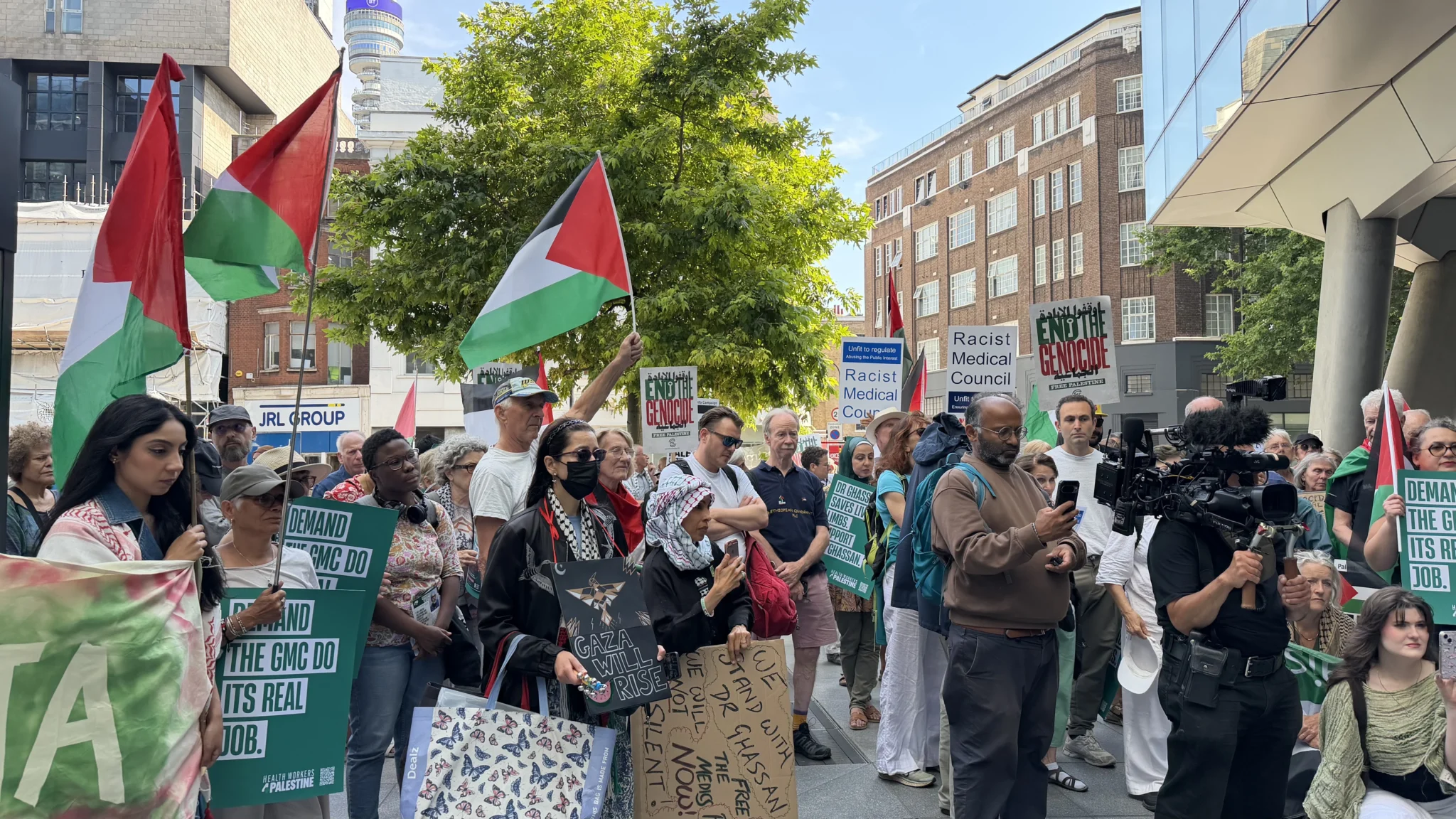
During the protest, slogans such as “Protect Patients, Not Politicians,” “Medical Council: Do Your Real Job,” and “Ghassan Saves Lives and Limbs” were repeatedly chanted. These were raised alongside banners accusing the Council of abusing its powers and deviating from its core mission to protect patients.
Ghassan Abu-Sitta: “They want to make Palestinians invisible”
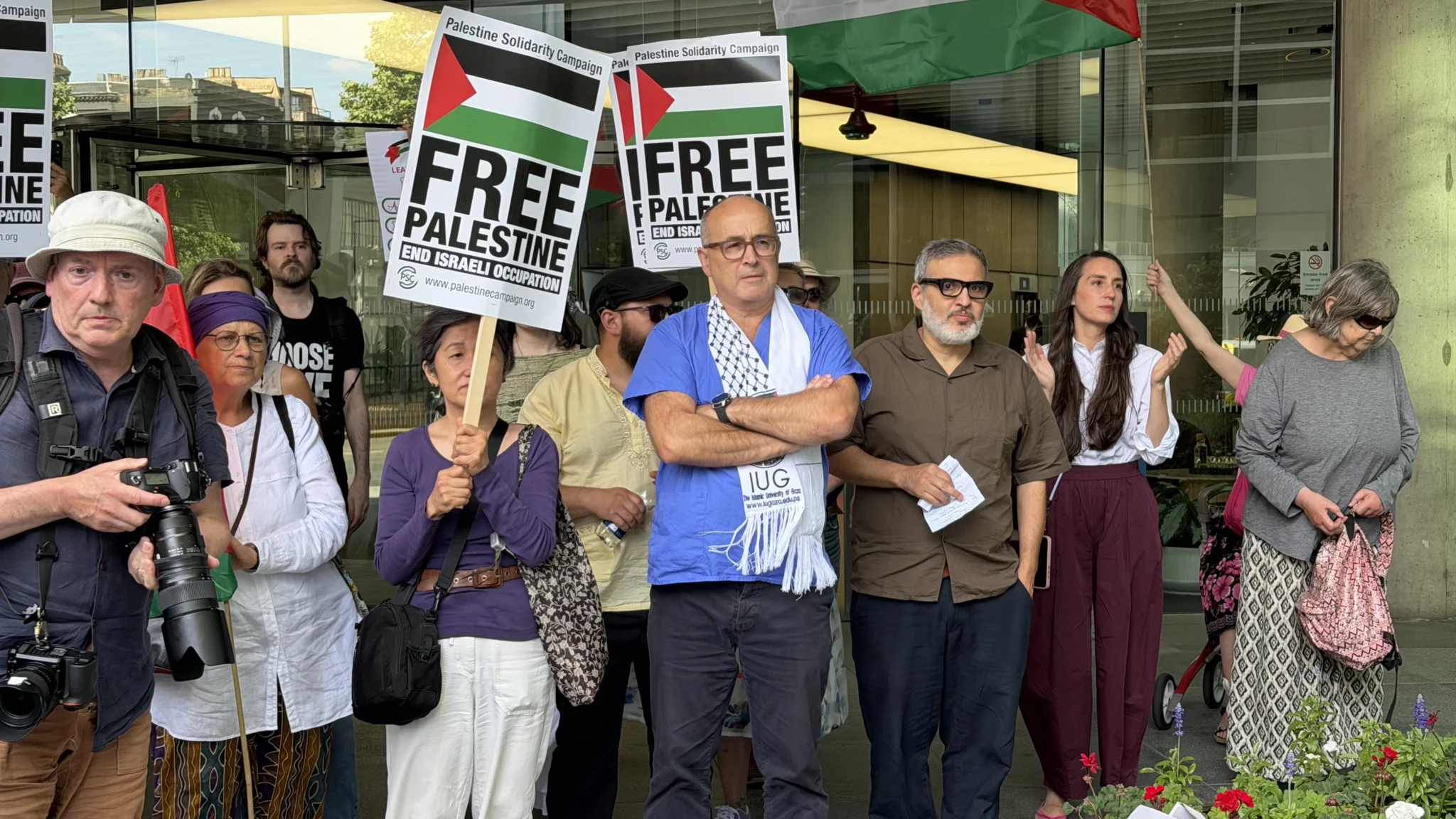
In his keynote address, Dr Ghassan Abu-Sitta stated that what he is facing is inseparable from the broader context of the war on Gaza, remarking that genocide begins when “a people are made surplus to the world’s needs.”
He added that targeting doctors who provide their testimonies from Gaza is an attempt to conceal Palestinian suffering from public opinion. Addressing the crowd, he said: “The General Medical Council has become a tool to facilitate genocide by silencing doctors who spoke out about the brutality of the killing in Gaza.”

In a direct critique of the Council, he described it as “seeking to be a 21st-century Jim Crow institution that launders its racism through regulatory policies and procedures,” maintaining that the case is about every doctor who bears witness to what they see in conflict zones, not just his own professional future. He added: “Our job as activists is to make their career progression dependent on doing the right thing, because we know they won’t do it of their own accord.”
Nick Maynard: “Gaza has been failed by our medical institutions”
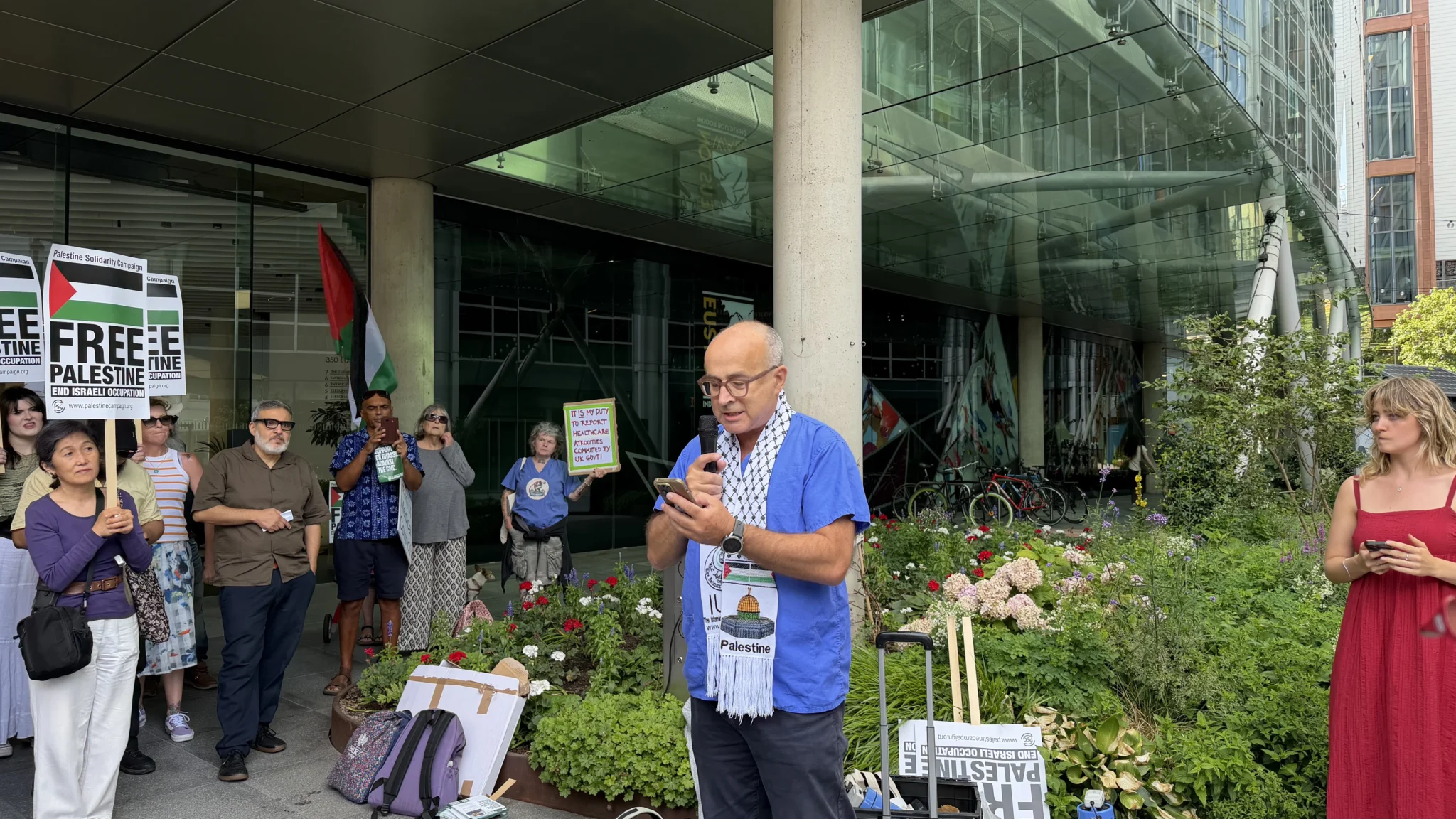
Professor Nick Maynard, a war surgeon, focused on the human cost of the war in Gaza, pointing to the deaths of thousands of civilians and healthcare workers. He stated that what is happening represents not only a political failure, but also a moral failure of British medical institutions, adding: “Gaza has been failed by our academic institutions, it’s been failed by the medical colleges, and it’s been failed by the General Medical Council.”
He maintained that the case at hand extends far beyond Dr Abu-Sitta himself, saying: “It is about whether doctors are able to advocate for their patients without fear, and whether nurses and doctors will feel they have to stay silent for fear of regulatory sanctions.” He also warned that preventing Abu-Sitta from continuing his work would deprive some of the world’s most vulnerable children of the life-saving surgeries he provides in conflict zones.
“A Doctor’s Duty to Bear Witness”… A Message from the Organizers

Dr Omar Abdel-Mannan, founder of Healthcare Workers 4 Palestine UK, stated that Ghassan Abu-Sitta “returned to Britain and did what his professional conscience demanded of him, which is to bear witness to what he saw.”
He added: “If doctors become afraid that telling the truth will cost them their professional registration, then patients are the ones who will pay the price, and the profession will lose its independence.”

Abdel-Mannan called for sustained public pressure through three steps: sending emails to the General Medical Council management demanding the case be dropped, donating to the CrowdJustice fund to cover Dr Abu-Sitta’s legal expenses, and participating in the protest planned outside the High Court during the case hearings scheduled for this coming September.
He added: “History does not judge doctors only by how they treat their patients, but by whether they have the courage to tell the truth about what is being committed against them.”
Amira Nimrawi: “The battle extends beyond the individual

In the same context, Amira Nimrawi, CEO of Healthcare Workers 4 Palestine, emphasized that what is happening cannot be reduced to an individual case, but rather represents a broad test of the limits of freedom of expression within the healthcare sector in Britain. She stated firmly: “If this case continues against Dr Ghassan Abu-Sitta, it means widening the circle of silencing voices within the medical profession.”
She stressed that current events raise a broader question about the independence of medical decision-making and the boundaries of professional accountability, concluding with: “Protect patients, not politicians.”
Ghassan Abu-Sitta at the Heart of the Scene

The name of Dr Ghassan Abu-Sitta remained at the heart of the protest from its very first moment until its conclusion, as speakers linked his medical career in Gaza and Beirut to what they described as an attempt to turn him into a “cautionary tale.”
Chants demanding an end to the proceedings against him were repeatedly heard, while participants raised banners with slogans such as “Hands Off Dr Ghassan,” “Medical Council: Unfit to Regulate,” and “Ghassan Saves Lives and Limbs,” alongside signs linking medical practice to humanitarian commitment in war zones.

The protest concluded amid chanting, the beating of drums, and the raising of Palestinian flags, as participants gradually left the site.
Yet, the core message remained clear: what is unfolding before the General Medical Council extends far beyond a professional dispute, raising a broader question about the limits of what a doctor can say, and whether telling the truth could itself become a ground for accountability.
Read More:
- Analysis: Is Washington Choosing Britain’s Chancellor? Why the Trump Administration Is Weighing In on the Next UK Government
- London Was Never Built for This Heat. Is Britain Falling Behind in Adapting to a New Climate?
- Analysis: Fewer Jobs for More Security? The Hidden Cost of Britain’s Rearmament Plan
ShortURL ⬇