


Trump and Netanyahu vs Iran: Arab Reflections in a Time of Regional Crisis
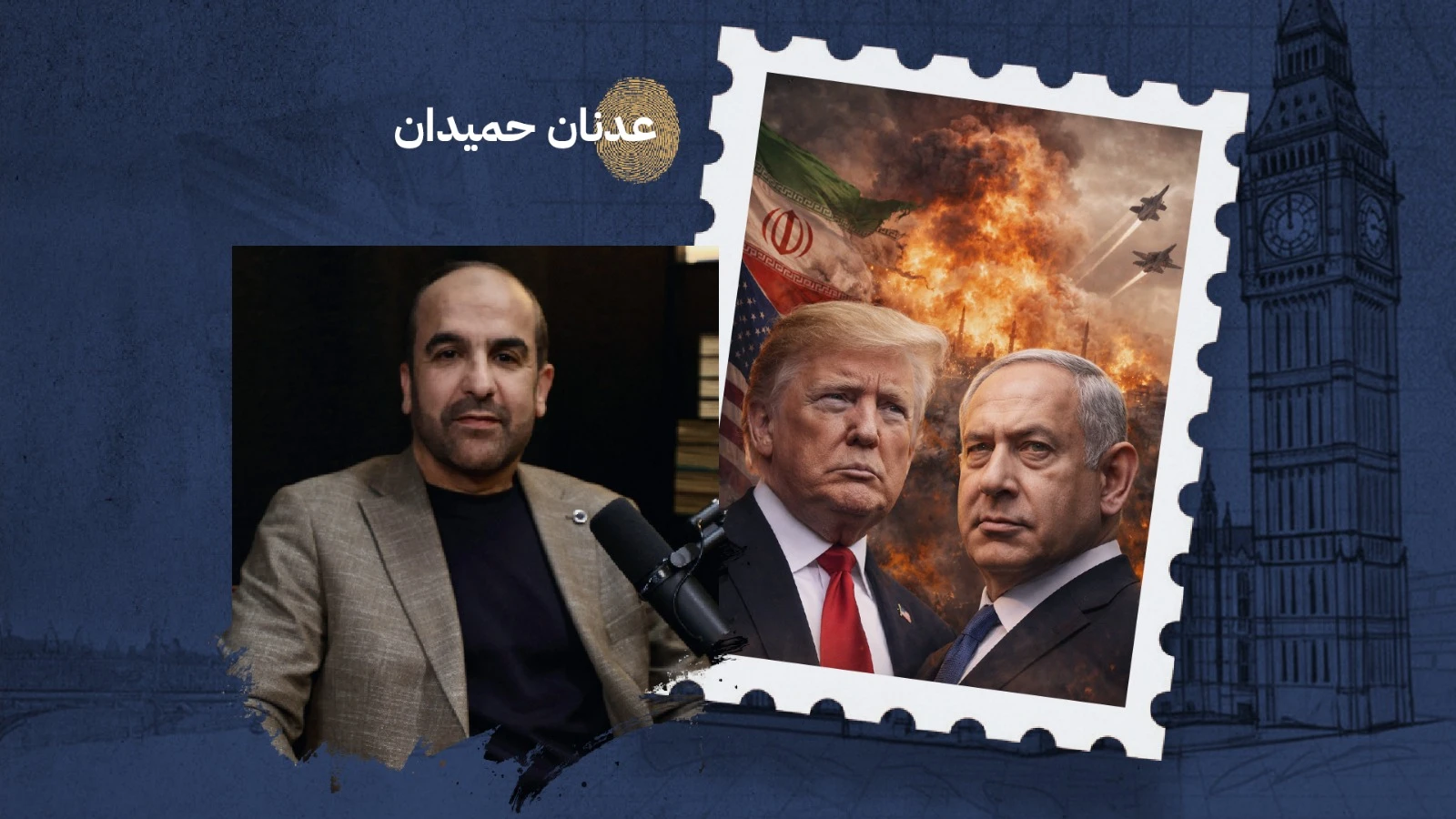
In moments of major turmoil, when breaking news piles up and events move so fast that people can hardly catch their breath, reflection becomes a necessity rather than a luxury. Today we are living through one of those heavy moments in our region’s history, a time when the regional landscape is being reshaped by war and rising tensions, and when emotions mix uneasily between anger, fear, hope and bitterness.
At times like this, it is helpful to remember a few simple truths that can easily be lost amid the noise of sharp divisions and mutual accusations.
The first of these truths is that trying to impose one opinion on everyone, or pushing people to follow a single line of thinking, is little more than an illusion. Societies are naturally diverse, and political views are shaped by different experiences and different ways of understanding reality. Grey areas and differing views are therefore not flaws that must be eliminated. They are a normal part of public life. What must be preserved amid disagreement is a basic level of mutual respect, so that political differences do not turn into social rifts.
At the same time, having different opinions should not create confusion about the main source of danger facing our region today. The current escalation, which has pushed the Middle East close to a wider war, did not appear out of nowhere. It comes in the context of a clear Israeli attack carried out with direct American support. This military and political alliance between Washington and Tel Aviv bears full responsibility for dragging the region into another wave of violence and instability.
For decades, Israel, backed by American power, has acted as though it stands above international law and beyond the will of the region’s people, using its military strength to impose new realities by force. What we are seeing today is simply another continuation of a policy that has brought little to the region except war and destruction.
Amid these developments, the security of Arab states from the Gulf to Lebanon must remain non negotiable. This land should not be an open field for the exchange of military messages between rival powers, nor should Arab cities and villages become accidental targets for missiles or miscalculated retaliation. Protecting civilians and maintaining the stability of Arab countries must remain a red line under all circumstances.
Past decades have also shown that the heavy presence of foreign military forces in the region has rarely produced real stability. On the contrary, it has often become a lasting source of tension and a reason used by competing powers to justify new military strikes. As a result, the people of the region repeatedly pay the price for conflicts they did not choose, while bearing the consequences of policies made in distant capitals.
One of the clearest patterns in the region’s modern history is that when American and Israeli interests meet on any regional issue, justice is usually missing. When overwhelming military power combines with political dominance, humanitarian values often become little more than words in speeches, while real outcomes are imposed by force on the ground.
This context helps explain the emotions felt by many in the region when they see any response that limits the arrogance of this alliance or weakens its sense of complete superiority. These feelings are not necessarily a sign of ideological alignment. Rather, they reflect accumulated grievances and a deep desire to see some limits placed on the use of force by the government of Benjamin Netanyahu, with open American support.
At the same time, rejecting aggression against any state in the region, including Iran, should not be seen as support for that country’s policies or a defence of its decisions. Opposing war is, above all, a principled position based on the understanding that expanding the conflict will bring nothing to the region’s people except more destruction and suffering.
It is also painful to see, at times, some Arab voices drift, driven by regional rivalries or narrow interests, toward positions that effectively serve Israel’s interests and reduce the political and moral pressure it should face because of its aggressive policies. When internal disagreements become a reason to ignore the crimes of occupation, we do not solve our problems. We simply add another layer of complexity to them.
Nor can the deep wounds left by sectarian conflicts and regional interventions in some of our countries, particularly Syria, be ignored. These wounds are real, and their bitterness remains strong in the memories of many. It is natural for those affected to feel a deep desire to see justice done.
Yet one important truth should not be forgotten. Justice cannot come through an alliance with a greater injustice. Benjamin Netanyahu and his government, whose policies are built on occupation, siege and repeated attacks, cannot be a tool for delivering justice to any people or correcting any wrong.
An oppressor does not remove injustice. He multiplies it.
In times of major setbacks, perhaps the most important thing we need is to restore a simple moral compass: to stand clearly against aggression, to refuse turning our region into a permanent battlefield, and to defend the right of our people to security and dignity, free from the dominance of powers that have brought the region little but repeated tragedy.
Read More:
ShortURL ⬇