


Nearly 1,500 Casualties in a Single Night in Beirut: How Did the British Media Cover the Tragedy?
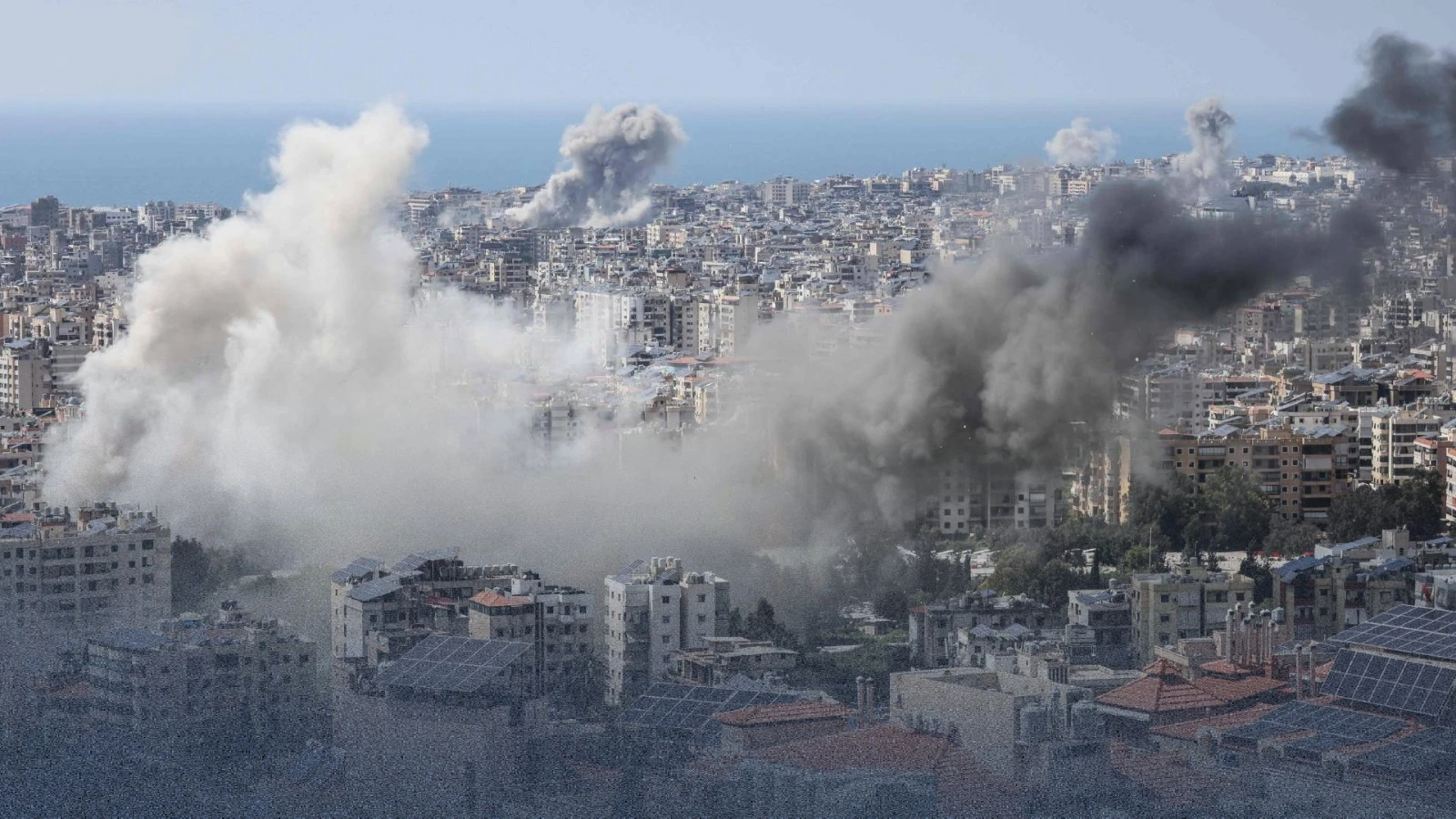
The Lebanese capital, Beirut, woke up to the horror of a tragedy unseen for 44 years, following a night described by observers as “Black Wednesday.”
During those hours, the Israeli occupation launched its most violent and bloodiest aggression, leaving behind nearly 1,500 victims, including martyrs and wounded. This barbaric aggression placed the British media before a moral and professional test; its response fluctuated between cautiously reporting the human tragedy and adopting the executioner’s narrative, amid burning questions about the absence of explicit condemnation for these horrific massacres.
International Disregard and ‘Provocative’ US Complicity
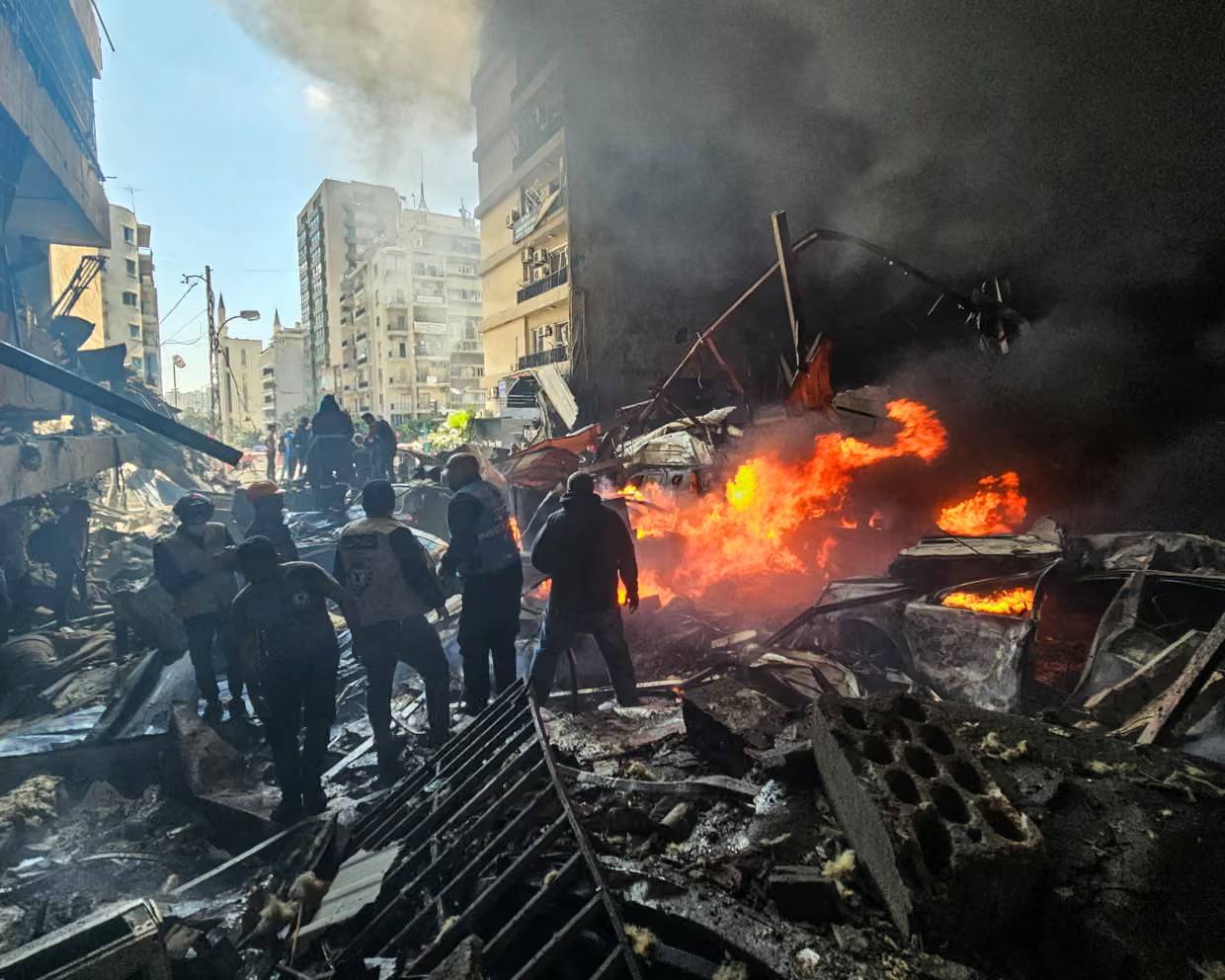
While the remains of civilians were being pulled from under the rubble in Beirut’s southern suburbs and the South, American statements came to pour oil on the fire. Officials in Washington settled for speaking of an Iranian ‘misunderstanding’ of agreements, claiming that the understandings with Tehran do not include Lebanon. This stance did not merely remain silent on condemning the aggression; rather, it represented a green light for the occupation to persist in its war of genocide. This was clearly reflected in the absence of the ‘language of accountability’ within the corridors of the British press, which did not dare to describe what occurred as a full-fledged war crime.
The Guardian: Documenting Hell Without Naming the Perpetrator
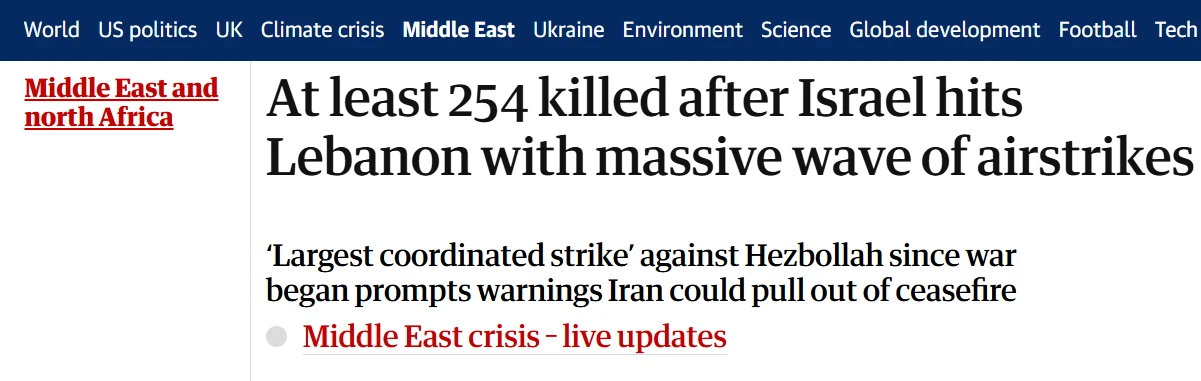
While The Guardian focused on the humanitarian catastrophe, describing Beirut as an ‘ongoing hell,’ its coverage remained trapped in ‘depicting the pain’ without shouting in the face of the ‘aggressor.’ Although the newspaper highlighted the ‘scorched earth’ strategy pursued by the occupation and the collapse of the healthcare system, it refrained from calling on London to take a firm stand to stop the Zionist killing machine, settling instead for criticizing the absence of international guarantees.
The Times: Justifying the Massacre Under an Intelligence Cover
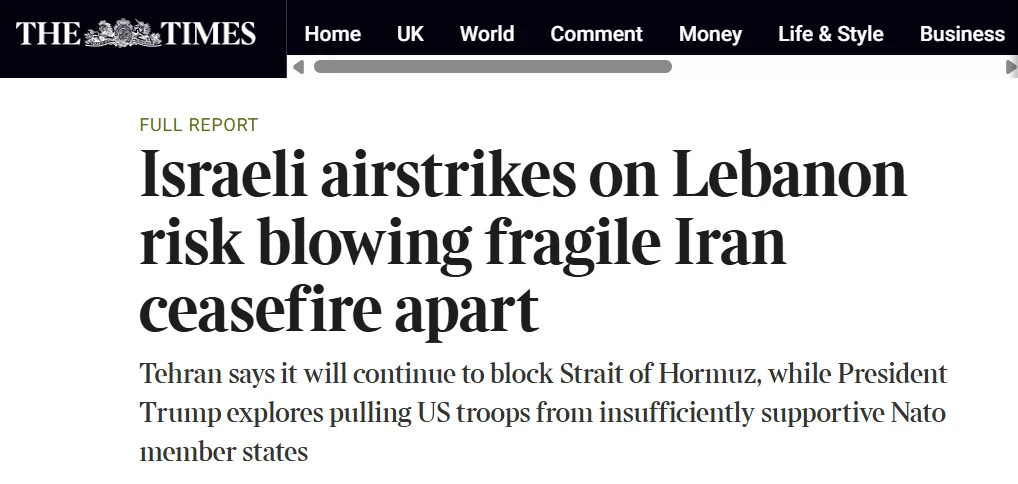
In a suspicious approach, The Times preoccupied itself with analyzing the ‘brilliance’ of the strike from a military perspective, speaking of bunker-buster bombs in densely populated areas. Despite its admission that Beirut has become a ‘testing ground for weapons of mass destruction,’ its coverage was blatantly biased toward the Israeli narrative by justifying the slaughter of civilians with ‘intelligence objectives.’ This represents a professional failure that legitimizes the cold-blooded killing of innocents.
BBC: Suspicious Neutrality in the Face of a Bloodbath
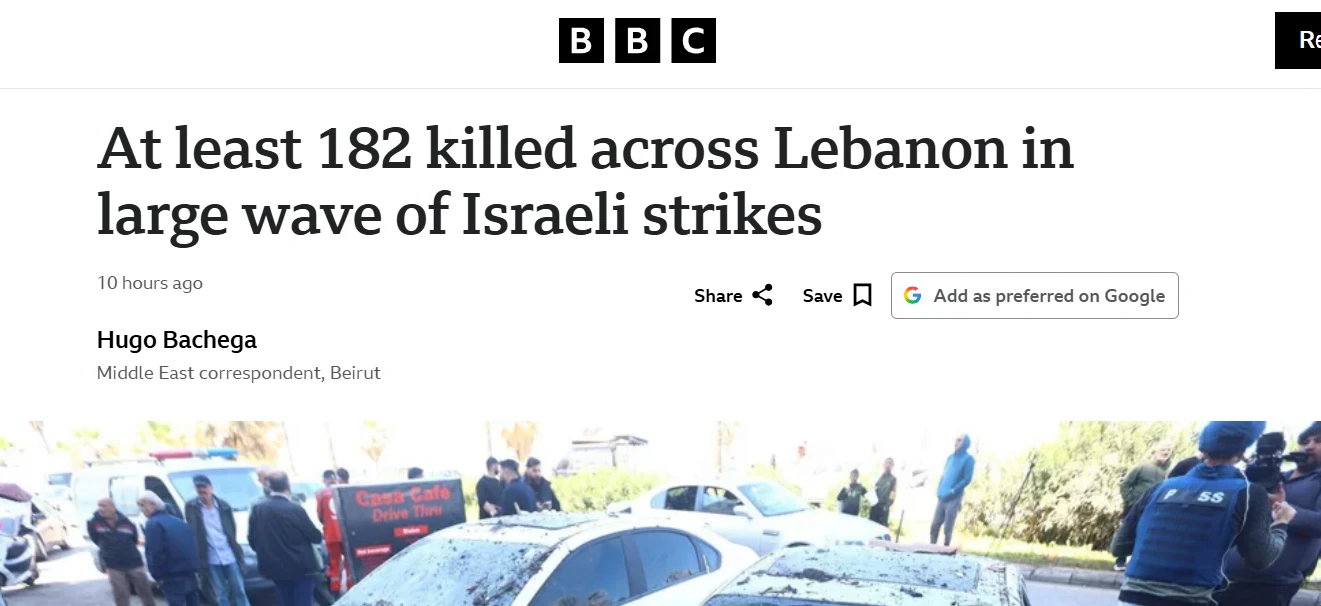
As usual, the BBC took cover under the umbrella of ‘cautious balance’—phrasings that the Arab public and the resistance view as implicit complicity. Although it broadcasted scenes of chaos and shock from hospitals, its journalistic language was devoid of any direct condemnation of the occupation. It obscured the fact that what is happening is an extension of the ongoing holocaust in Palestine, thereby contributing to the dilution of the occupier’s criminal responsibility.
The Independent: A Timid Cry in the Valley of Silence
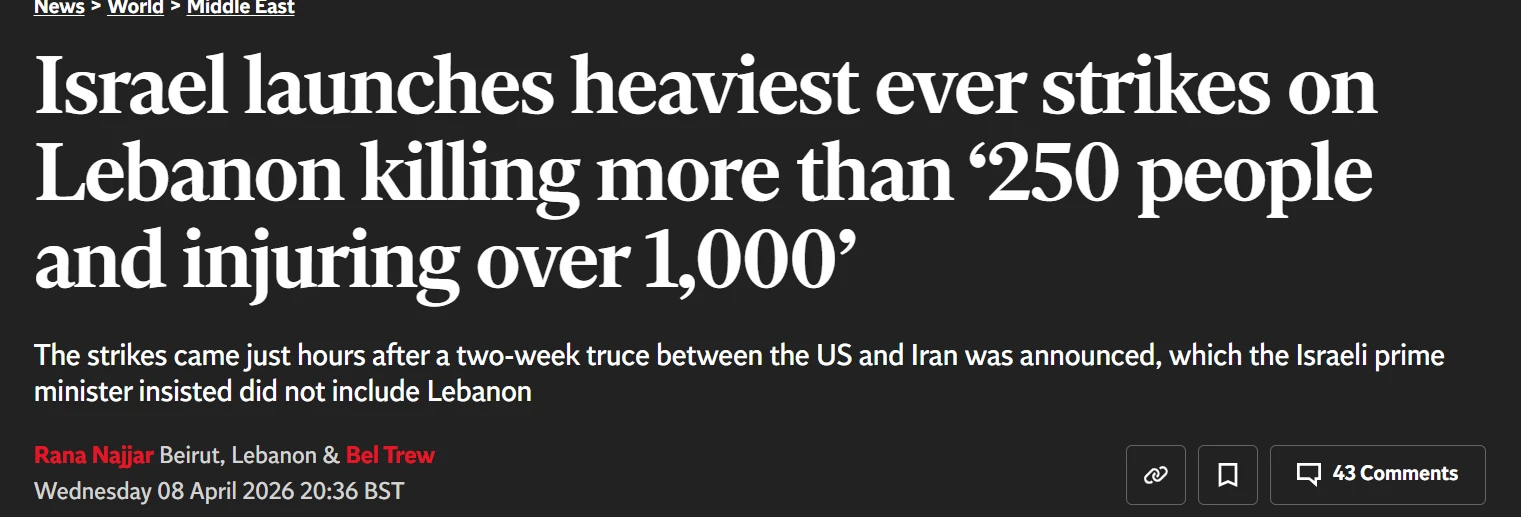
The Independent was the closest to touching the truth by questioning the ‘red lines.’ It described the night of 1,500 victims as a ‘stain of shame,’ pointing out that British and American silence is the actual driver of these massacres. Nevertheless, the question remains: Why is the term ‘Zionist aggression’ still absent from its main headlines?
“Right-Wing Media: The Daily Mail and The Telegraph as Mouthpieces for the Occupation
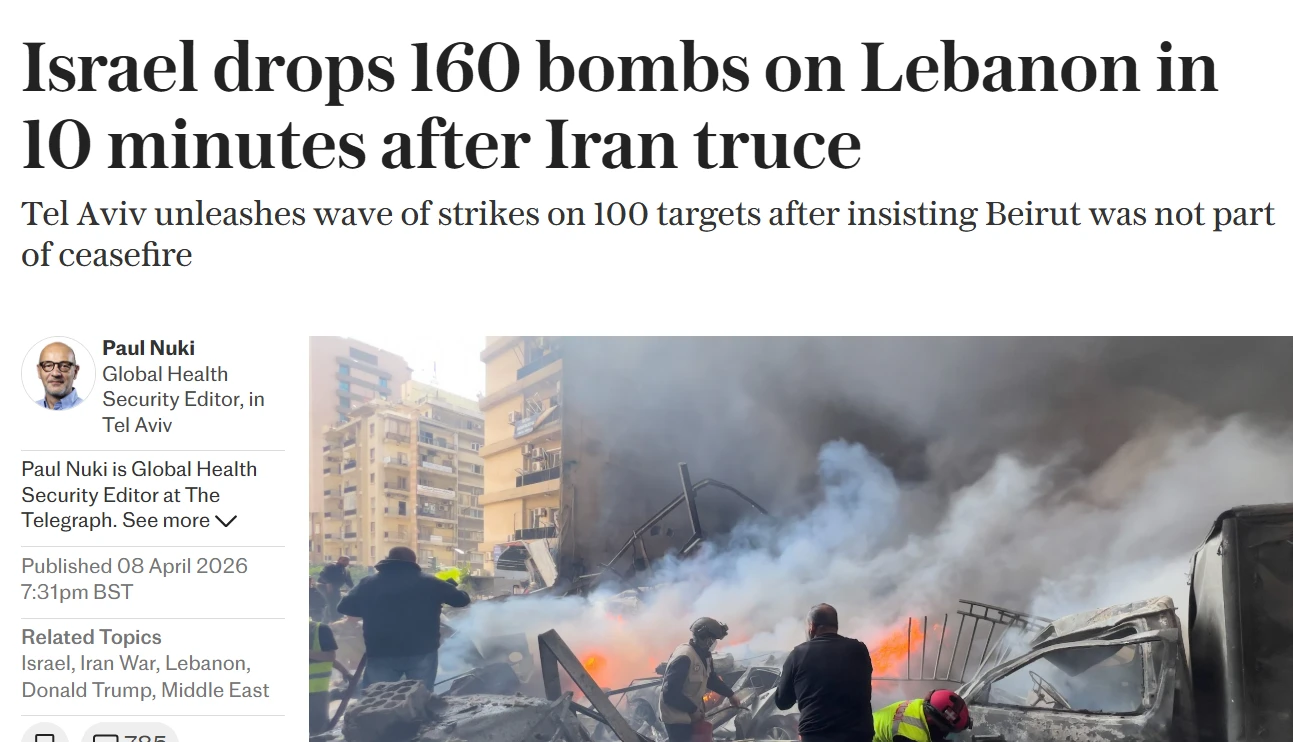
“On the dark side of the coverage, newspapers like the Daily Mail and The Telegraph played the role of a ‘military spokesperson’ for the occupation army. They worked on ‘rationalizing’ the massacre and marketing it as the ‘dismantling of terrorism’—a malicious attempt to whitewash the occupation’s reputation and mitigate the impact of the shock on Western readers, while completely ignoring the blood of women and children spilled in the most horrific bombardment in decades.
Conclusion: The Deadly Double Standards
The absence of clear condemnation in the British media regarding what happened in Beirut, in parallel with flimsy American justifications, confirms that the international community and its media networks continue to operate with double standards. What occurred on ‘Black Wednesday’ is not merely a ‘military escalation’; it is a horrific massacre and a war of genocide that demands a genuine stand of solidarity with Lebanon and Palestine. It is a resounding cry to break the wall of silence that grants the killer the opportunity for impunity.”
Read More:
ShortURL ⬇