

More Than 130 Lawyers Urge Britain to Impose Broader Sanctions on Israeli Settlements

More Than 130 Lawyers Urge Britain to Impose Broader Sanctions on Israeli Settlements
More than 130 lawyers, legal experts, academics and former judges in Britain have sent a letter to Prime Minister Andy Burnham, warning that the government’s recent measures concerning Israeli settlements in the occupied Palestinian territories do not, in their view, fulfil Britain’s obligations under international law.
The letter came after Foreign Secretary Ed Miliband announced measures on 8 September targeting Britain’s economic ties with Israeli settlements. The signatories welcomed the move but said it remained limited compared with the findings of the International Court of Justice in its advisory opinion issued in July 2024 on the illegality of Israel’s continued occupation of the occupied Palestinian territories.
What Did the Letter Say About Settlements and the Occupation?

The signatories cited the International Court of Justice’s advisory opinion, which concluded that Israel’s continued presence in the occupied Palestinian territories is unlawful and called for it to be brought to an end as soon as possible.
The letter also noted that the court had found an almost complete separation between Israeli settler and Palestinian communities in the West Bank and East Jerusalem, which constitutes a violation of the prohibition of apartheid and racial discrimination, according to the court’s findings.
The signatories called on Britain to take measures that go beyond targeting individuals involved in violence, extending them to entities that finance, build or provide services and infrastructure to Israeli settlements.
According to data cited in the letter from the United Nations Office for the Coordination of Humanitarian Affairs (OCHA), 2,803 settler attacks took place between January 2025 and May 2026. Developments during the same period resulted in the killing of 295 Palestinians, including 67 children, and the injury of 5,255 Palestinians, including 862 children, while 2,292 Palestinian buildings and structures were demolished.
Why Is the E1 Project a Cause for Concern?
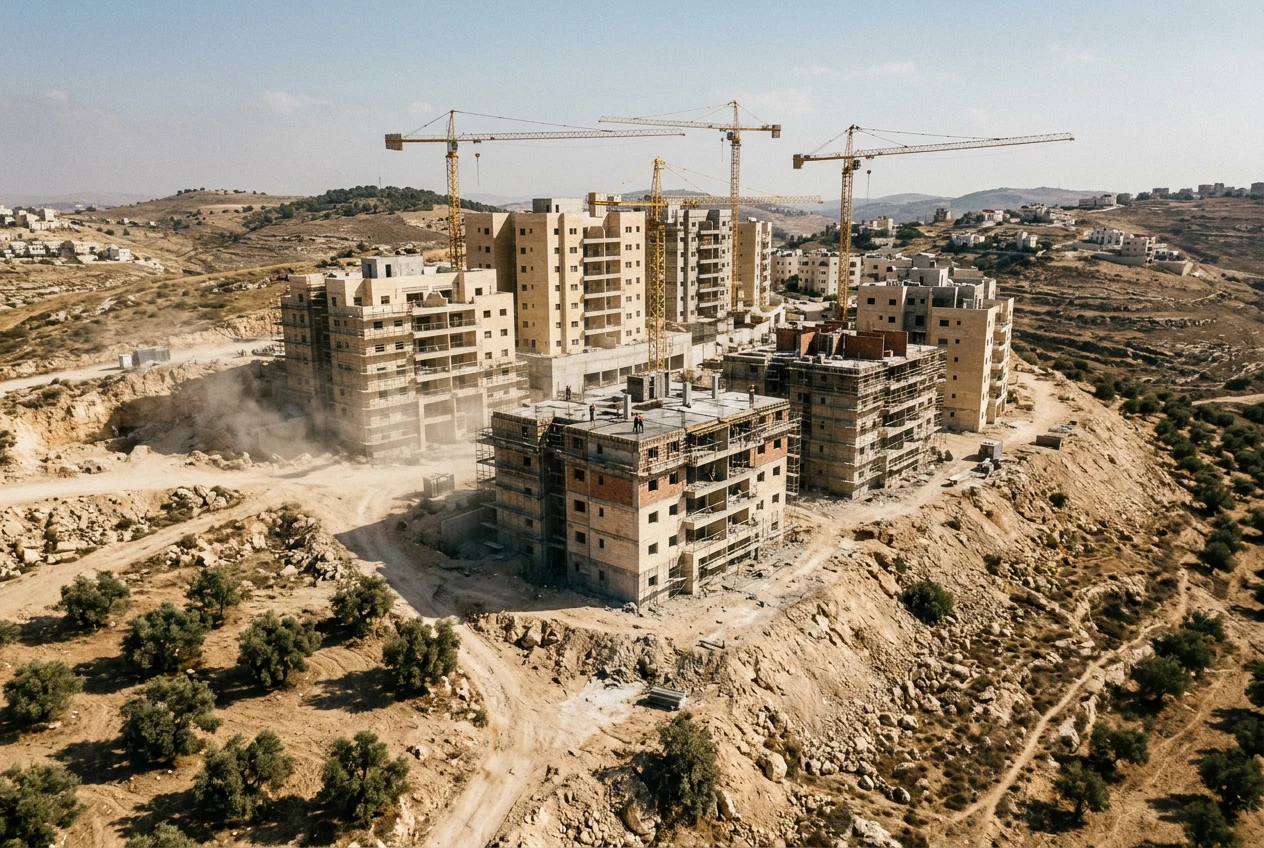
The letter focused on the E1 area east of Jerusalem, where Israel’s Ministry of Construction and Housing issued tenders in August 2026 for the construction of 1,234 housing units, as part of a project comprising 3,401 units approved the previous year.
The signatories said the project would separate the northern and southern parts of the West Bank and isolate East Jerusalem, in addition to displacing more than 18 Palestinian Bedouin communities.
The tender is due to close on 19 October 2026. The signatories therefore called on the British government to bring the expanded sanctions regime into force before that date.
What Sanctions Are the Signatories Calling For?
The signatories called on the British government to expand the measures to include:
- Banning the import of settlement products and implementing the ban without delay.
- Extending restrictions to include insurance and reinsurance, legal and accounting services, logistics, digital infrastructure and technology.
- Imposing sanctions on entities that finance, build or provide services to settlements, regardless of whether they are linked to violence.
- Ensuring that government bodies, pension funds and British public funds do not invest in entities linked to settlements.
- Preventing the use of charitable funds and British tax exemptions to support settlement activities.
- Reviewing trade agreements, government procurement arrangements and export licences that extend to the occupied Palestinian territories.
- Imposing a comprehensive ban on the export of arms and military equipment to Israel.
Does Britain Apply the Same Standards to Israel and Russia?

The signatories compared Britain’s approach to the settlements with the sanctions imposed on Russia, noting that sanctions against Moscow have extended to banks, energy companies, shipping, financial services and investments, because, under British policy, these sectors can contribute to financing and supporting war and occupation.
The signatories argue that the same logic should apply to entities that contribute to financing, building or maintaining the settlements.
The letter also stated that a media investigation identified 17 companies linked to the settlements that had received contracts from the British public sector worth more than £2.1 billion.
What About Arms and Military Relations?
The letter noted that at least 10 military flights have departed from Royal Air Force bases for Israel since the current government took office.
The signatories cited Article 6(3) of the Arms Trade Treaty, which prohibits the transfer of arms when a state is aware that they could be used in genocide, crimes against humanity or war crimes.
In light of what they described as the continued violations, they called for a comprehensive arms embargo on Israel.
What About Charities?
The letter called on the government to ensure that funds from charities registered in Britain, or the tax exemptions granted to them, are not used to support the settlements.
It cited estimates that Israeli settlements received £28 million in donations through 32 charities in England and Wales, and that the Charity Commission had opened an investigation to establish the facts surrounding the issue.
Is Britain Turning Its Position on the Occupation into Concrete Action?

The signatories believe that the British government’s recognition that the occupation is unlawful is an important step, but that it is not sufficient on its own. They called for this position to be translated into more comprehensive economic, financial, trade and military measures.
They argue that Britain cannot, in their view, consider the occupation unlawful and impose sanctions on some entities linked to the settlements while other parts of Britain’s economic relationship continue to support them.
They called on the government to close this gap and establish a comprehensive sanctions regime before the tender for the E1 project closes on 19 October, alongside broader measures to end what they describe as violations linked to the occupation.
The signatories concluded their letter by announcing the formation of a coalition of lawyers, academics and human rights advocates in Britain to support the rights of the Palestinian people and defend freedom of expression concerning the Palestinian cause.
Read More:
ShortURL ⬇