

British Arab figures urge foreign secretary to act over Israeli settlement expansion
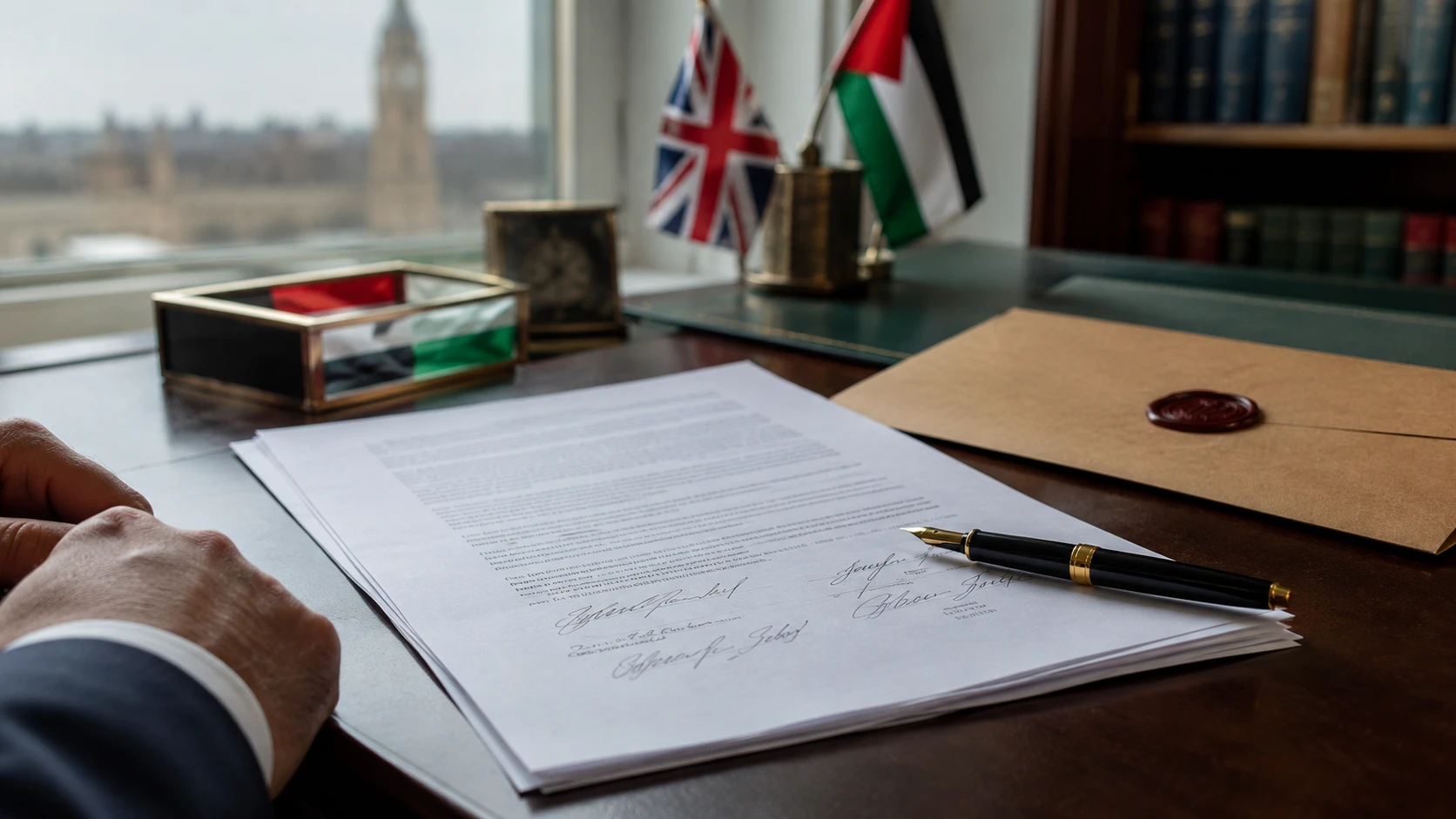
Israeli settlements UK: British Arabs urge Ed Miliband to take binding action
Dozens of prominent British Arabs have signed a joint letter to the foreign secretary, Ed Miliband, urging the government to move beyond condemning Israeli settlements and issuing guidance to businesses, and instead adopt binding measures to prevent British economic and financial activity from supporting settlements or contributing to their expansion.
The signatories welcomed the government’s position that Israeli settlements in the occupied Palestinian territory, including East Jerusalem, are illegal under international law, as well as its decision to strengthen guidance to British businesses and impose sanctions on individuals and entities accused of financing or facilitating settler violence.
But in the letter, dated 24 August 2026, they argued that the issue was not the need for Britain to formulate a new legal position, but to give practical effect to obligations it already recognises — including the duties of non-recognition, non-assistance and differentiation between Israel and the Palestinian territories occupied since 1967.
The full text of the letter can be read here.
Are voluntary guidelines enough?
The letter puts a direct question to the government over whether its existing combination of measures — voluntary business guidance, customs differentiation and targeted sanctions — is sufficient to meet Britain’s obligations under international law.
The signatories are calling on ministers to carry out and publish a legal and policy assessment examining whether voluntary guidance can in practice prevent British individuals, companies and institutions from providing material support to settlement activity.
If such guidance is not sufficient to close off activities that assist the settlements, the letter argues, the government should consider legally binding restrictions rather than relying solely on advice and warnings.
Restrictions on investment, finance and services
The letter calls for binding restrictions, where necessary, on British economic or financial activity that directly supports illegal settlements or provides them with a material benefit.
The activities identified include investment and banking services, financing and insurance, procurement, construction and infrastructure, land transactions, and professional and commercial services.
The signatories also want the sanctions regime to allow individuals — not only companies, entities and financial networks — to be targeted where there is sufficient evidence and a legal basis to show that they have financed or facilitated settlement expansion, unlawful land seizures, the displacement of Palestinians or violence against them.
They also call for the principle of legal differentiation to be applied fully across government procurement, public investment, export support, grants, customs treatment, financial assistance and other official dealings, to ensure that no British public body treats settlements as part of the territory of Israel.
The letter further urges Britain to work with European governments and other international partners to prevent restrictions being circumvented through subsidiaries, intermediaries, charities, affiliated entities or corporate structures registered in other jurisdictions, while continuing to expand targeted sanctions where sufficient evidence exists.
It points to the Sanctions and Anti-Money Laundering Act 2018 as providing a domestic legal framework that the government could use for such measures, including in pursuit of international obligations, civilian protection and accountability for serious human rights abuses.
UN resolution and ICJ opinion cited
The signatories point to Britain’s vote in favour of UN security council resolution 2334 in 2016, which reaffirmed that Israeli settlements in territory occupied since 1967, including East Jerusalem, have “no legal validity” and called on states to distinguish in their dealings between the territory of Israel and the occupied territories.
The letter also cites the International Court of Justice’s advisory opinion of 19 July 2024, which found Israel’s continued presence in the occupied Palestinian territory to be unlawful and said all new settlement activity must cease immediately.
Particular attention is drawn to paragraph 278 of the opinion, which addresses states’ obligations to refrain from economic or commercial dealings concerning the occupied territory where they may entrench the unlawful situation, and to take steps to prevent trade or investment relations that assist in maintaining it.
The letter acknowledges that the advisory opinion is not a binding bilateral judgment issued against the UK and does not prescribe a specific piece of domestic legislation.
It argues, however, that the opinion identifies legal consequences arising from existing rules of international law — leaving the government discretion over how to implement its obligations, but not over whether those obligations exist.
Warning over the E1 settlement plan

The letter also refers to a statement made by the UK at the UN security council on 11 August 2026, when Britain said the Israeli government had approved 104 settlements over four years, an increase of 80%, and warned that the E1 settlement plan threatened to divide the West Bank in two.
It cites a joint British statement with international partners in May 2026 that warned construction in E1 would constitute a serious breach of international law and urged companies not to bid for construction projects there or in other settlements.
The government subsequently updated its Overseas Business Risk guidance in June 2026, advising British nationals and companies against economic or financial activity in or directly benefiting illegal Israeli settlements, including investments, procurement, financial transactions, services and tourism.
The signatories argue, however, that the continuing expansion of settlements and the risks associated with it make it necessary to test whether non-binding guidance is sufficient.
Call for mechanism to protect Palestinians from settler violence
Alongside economic measures, the letter urges the government to work through the UN and with international partners to establish an effective mechanism to protect Palestinian civilians at risk of settler violence and to monitor abuses against them.
It proposes examining options including independent monitoring, systematic documentation of violence and displacement, rapid-reporting arrangements and protective measures for Palestinian communities facing the greatest risk.
The signatories cite UN security council resolution 904 of 1994, which called for measures to guarantee the safety and protection of Palestinian civilians in the occupied territories, including the possible establishment of a temporary international or foreign presence.
The letter notes that the UK was among the states that sponsored the resolution.
Signatories demand detailed government response

The signatories have asked the government to state whether it believes its current measures are sufficient to meet the obligations of non-recognition, non-assistance and differentiation identified by the ICJ — and, if so, to set out the legal basis and evidence supporting that conclusion.
If ministers conclude that the current approach is insufficient, the letter calls on them to use the powers available to government and work with international partners to prevent British economic and financial activity from assisting the continuation or expansion of illegal settlements.
The signatories stress that their demands are not directed against Israel or Israeli citizens, nor are they calling for indiscriminate restrictions on lawful trade with Israel.
Rather, they say the measures are intended to uphold the distinction Britain itself recognises between Israel and the occupied Palestinian territories.
The letter concludes by arguing that Britain’s commitment to the rule of international law should not be confined to public statements or diplomatic positions, but should be reflected in consistent and effective action.
It calls for a substantive government response addressing both the legal obligations and the practical measures raised in the letter.
Among the signatories are doctors, academics, lawyers, journalists, institutional leaders and civil society figures, including Adnan Hmidan, chairman of the Palestinian Forum in Britain; Sabah Almukhtar, president of the Arab Lawyers Association in the UK; Dr Omar Abdel-Mannan, president of Health Workers 4 Palestine; Feda Shahin, secretary general of the Palestine Solidarity Movement; and Salah Abdullah, deputy director of Arab in UK.
Signatories to the letter
- Abdullah Hanoun – NHS Surgeon
- Adel Hamdi – Journalist
- Adnan Hmidan – Chairman of the Palestinian Forum in Britain
- Boudjema Bounoua – Journalism
- Dr Adam Darwish – Lecturer
- Dr Amer Ali Bilal Hamed – Cardiology Consultant
- Dr Anas Altikriti – CEO
- Dr Ayman Jundi – Clinical Senior Lecturer & Retired Consultant
- Dr Ibrahim Adwan – Functional Medicine Consultant
- Dr Essam Mustafa – Retired
- Dr Hafez Al Karmi – General Director
- Dr Helmi Alharahsheh – Director
- Dr Mohamed Haddad – Human Rights Researcher
- Dr Mohammad Dessoky – NHS Doctor
- Dr Mona Adam – CEO of Shaman PR
- Dr Omar Abdel-Mannan – President, Health Workers 4 Palestine
- Dr Omar Al-Falahi – GP
- Dr Shokri Othman – Advanced Practitioner – Clinical Development
- Dr Yasser Khalaf – Surgeon
- Eman Nazeh
- Eslam Shalaby – Managing Director
- Fadi Itani OBE – CEO
- Feda Shahin – Secretary General, Palestine Solidarity Movement
- Ibrahim Badran – Graphic Designer
- Ibrahim Khadra – Journalist
- Majdi Aqil – Imam
- Mina Harballou – Journalist
- Mohamed Saleh – International Health Specialist
- Mohammad Bassam Tablieh – Solicitor
- Mohammad Shaikh Hasan – IT Consultant
- Nayef Abu Ebaid – Head of Engineering
- Nour Noris – OPA
- Osama Khalefa – Retired
- Reem Al Otaibi – Virtual Teacher
- Sabah Almukhtar – President, Arab Lawyers Association (UK)
- Salah Abdullah – Deputy Director of AUK
- Sultan Omar – President of Charity
- Touria Lhimer – Staff at UWE
- Waseem Abuaglain – Tour Operator
The letter remains open for additional signatures and can be read and signed here
Read more:
ShortURL ⬇