
Dr Mahmoud Al-Haj Ali… A Witness to the Nakba Who Carried His Homeland on His Shoulders Until His Final Breath
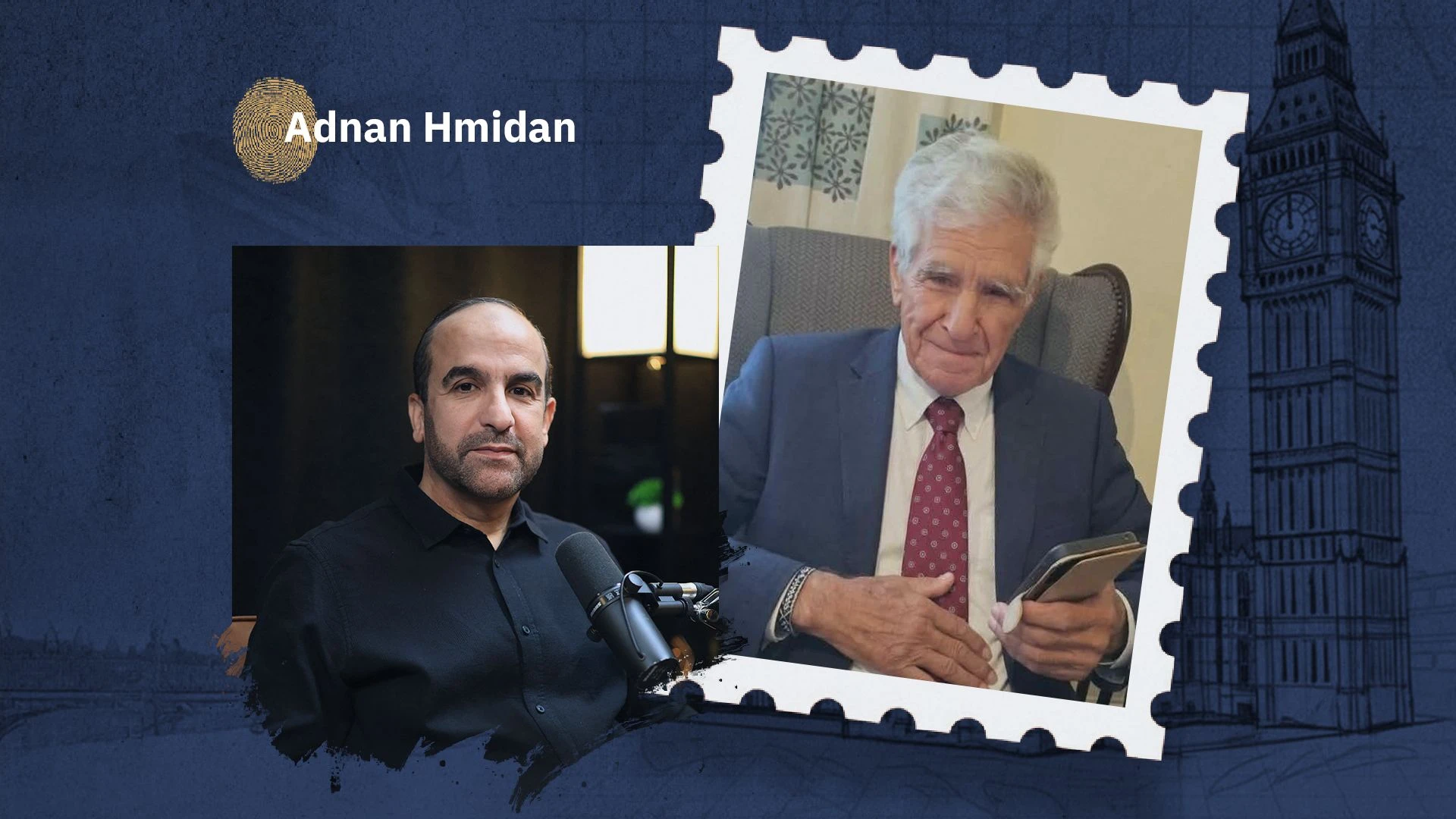
Some news reaches you late, leaving you with the feeling that you have let someone down twice: once because you did not get to say goodbye, and again because you did not learn of their passing in time. That is exactly how I felt yesterday when I learned that Dr Mahmoud Al-Haj Ali had passed away around two weeks earlier.
We used to exchange messages on Messenger from time to time. He would send me a new poem he had written, a reflection that had come to him during a long night, or simply ask how I was and how our people here in Britain were doing. His messages were not frequent, but they were warm, carrying something of a father’s tenderness and a teacher’s concern. When I opened our conversation after hearing the news, I found his last messages still there, as though he might send another at any moment.
A Son of Al-Jura Who Never Forgot
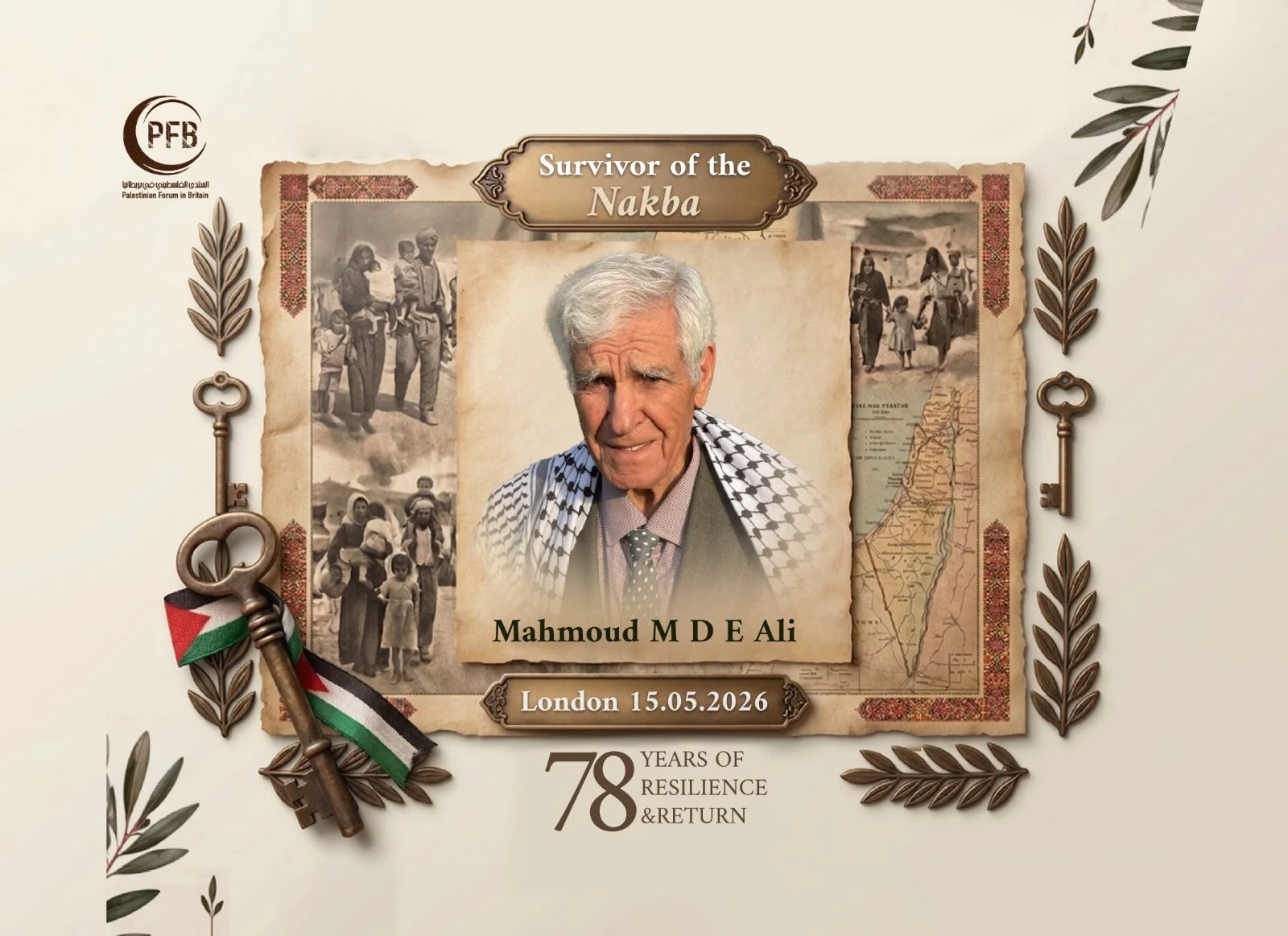
Dr Mahmoud was born in Al-Jura, near Ashkelon, on Palestine’s southern coast. He was a child when the Nakba took place, and witnessed with his own eyes things that could never be forgotten: homes being abandoned, roads filling with people, and the sea he loved receding into the distance behind him.
From that day onwards, he became a witness to the Nakba, a victim of it, and a survivor of it, all at once. These are three identities rarely united in one person, yet they came together in him, and he carried them throughout his life.
Perhaps it was that very sea that later led him to his academic specialisation. He went on to earn a doctorate in marine and ocean sciences, making significant contributions through his knowledge and work. For him, science was never a substitute for his homeland, but rather another path towards it. The Palestinian who had lost his land had nothing left but to learn, work and prove to the world that he deserved to live.
The Evening of Honour
I will never forget the evening organised by the Palestinian Forum in Britain to honour Palestinian witnesses to the Nakba, its victims and survivors living in Britain. It was a solemn and moving ceremony, held under the patronage of veteran MP Jeremy Corbyn. In attendance were men and women in their eighties and beyond, each carrying in their memory a village, a home and a tree.
Dr Mahmoud took to the stage and recited a selection of his patriotic poems. His voice carried the pain of the passing years, yet it remained steady, as though he were telling us all: I am still here, and Palestine is still here.
That day, I felt that it was not we who were honouring him; rather, he was honouring us through his presence and through all that remained in his memory of a homeland that most of us had never seen.
A Portrait of the Palestinian Diaspora
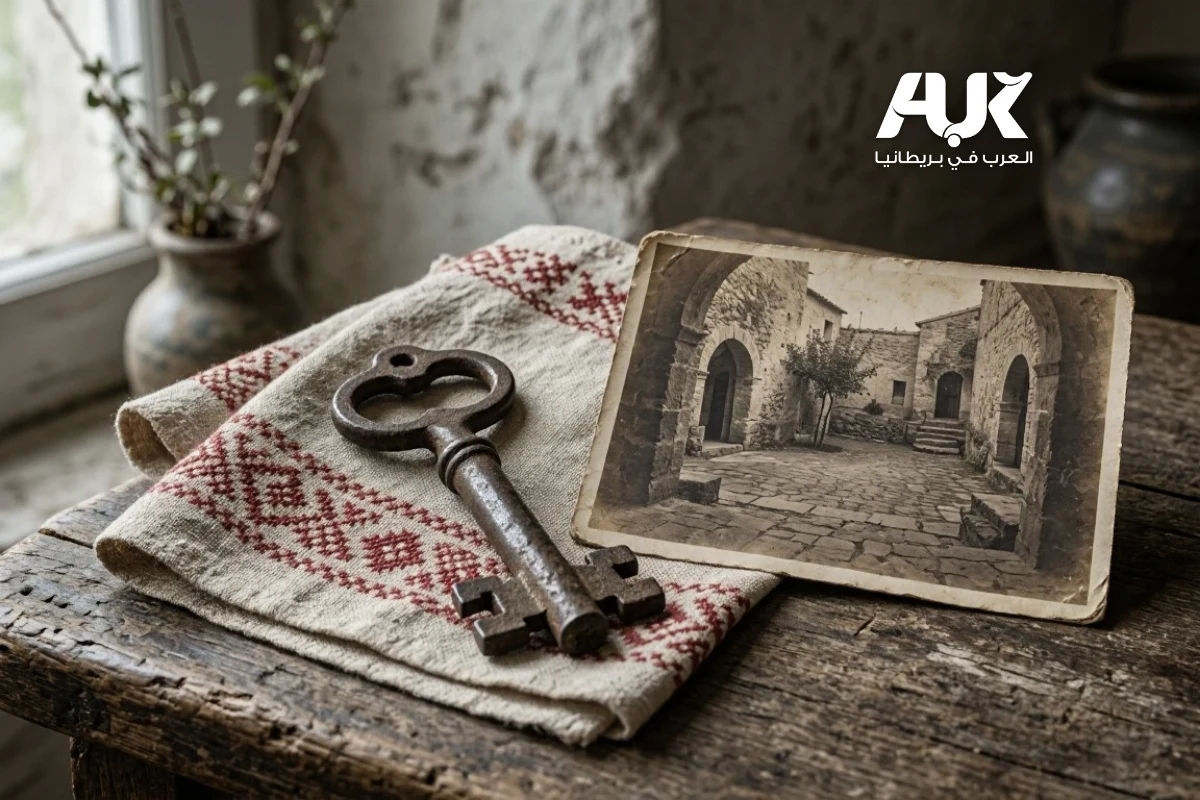
In his final years, Dr Mahmoud embodied the Palestinian diaspora. He travelled between his children and grandchildren in Spain, Canada and Britain, spending months here and months there. His children were scattered across continents, passports and languages multiplied, yet his homeland remained one in his heart. Its name and its place in his soul never changed.
This is the story of so many of our families. Palestinians today can be found almost everywhere, yet deep inside, they have never truly left their villages.
Carrying the Homeland
He never stopped writing, right up until his final days. Among the last things he wrote was a poem entitled The Burden of the Homeland, dated 24 June this year. In it, he wrote:
I am the one who suffers from such intense pain,
From the weight of your heavy burden, my homeland.
For I am the patient camel that bears the load,
And if I grow weary, who will carry me?
…Oh, my homeland, I will never abandon you to fate,
You shall remain upon my shoulders, carried for eternity,
For you are my soul, and the soul can neither be cast away nor discarded.
When I read these lines after his passing, I understood them differently. It was as though he had been bidding us farewell while also leaving us with a message. He compared himself to the patient camel that bears heavy loads, asking: if I grow weary, who will carry me?
And now he has grown weary and departed, yet he never laid down his burden, carrying it on his shoulders until the very end, just as he had promised in his poem.
For How Much Longer?
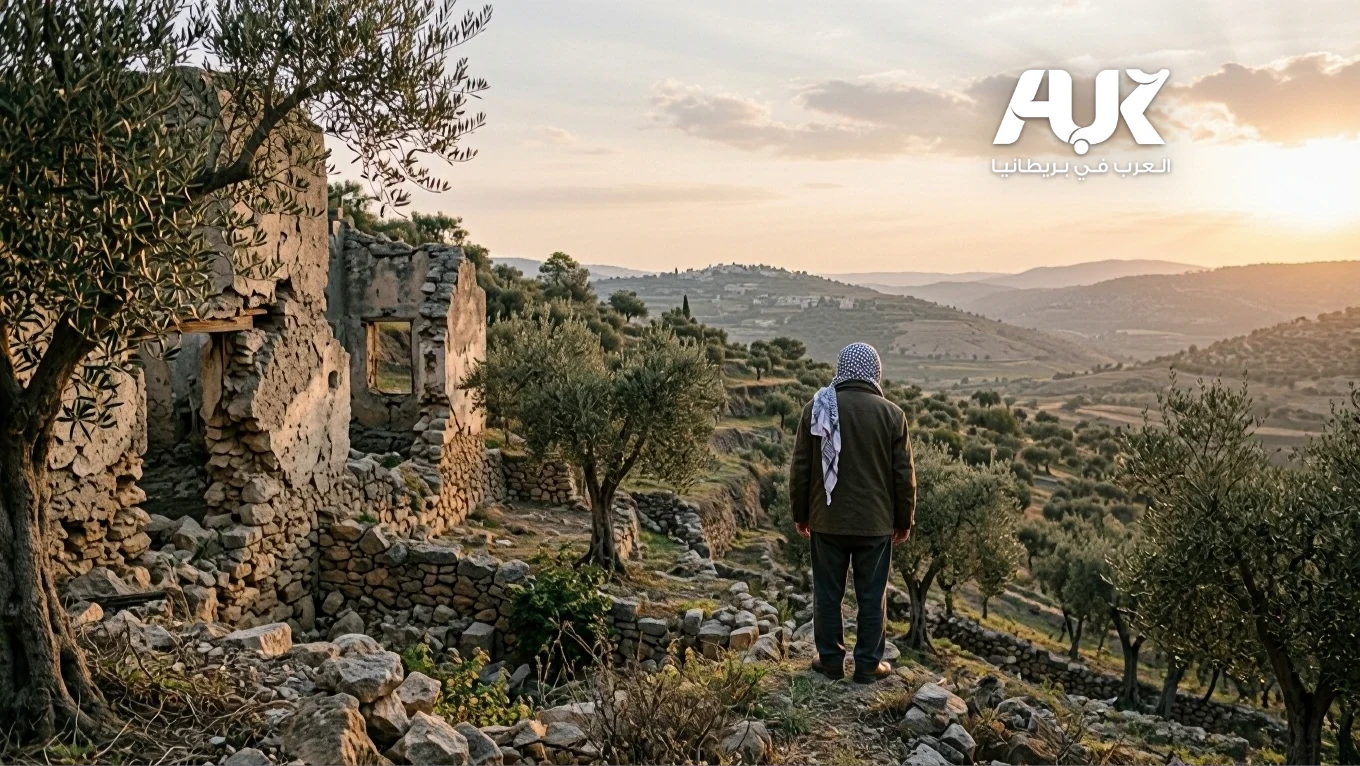
After nearly 89 years of life, the moment of farewell finally came. What pains me most is that this man left his homeland as a child, spent an entire lifetime counting the years, one after another, and then passed away before his dream of return and liberation could be fulfilled.
I find myself asking the same question that each of us asks: For how much longer will Palestinians have to spend their lives deprived of their land? How many more witnesses will we have to bid farewell before any of them can return to their homes?
Yet I remind myself that, with God, this is never beyond reach. I also remember that those who wagered that “the old will die and the young will forget” have lost their bet.
Yes, the elders pass away, but the young do not forget. We inherited this dream from our fathers and grandfathers, and today we pass it on to our children and grandchildren, who preserve the promise and continue the journey. Dr Mahmoud’s grandchildren in Spain, Canada and Britain are now among those who carry that trust forward after him.
Anyone wishing to learn more about the late Dr Mahmoud and hear his words from the ceremony held in his honour, where he spoke as a witness to the Nakba and a survivor of it, can watch the recording through this link.
May God have mercy on Dr Mahmoud Al-Haj Ali, grant him a place in His vast Paradise, and reward him abundantly for his service to Palestine, his scientific contributions and his poetry. May He grant patience and solace to his family and all those who loved him.
Indeed, we belong to God, and indeed, to Him we shall return.
ShortURL ⬇