

In Britain… Small Things About Elections That Many People Don’t Notice, Yet They Say So Much

Sometimes, the most striking thing about elections is not the results themselves… but the way the details unfold.
For many people, elections mean noise, tension, spectacle, and a visual battle that consumes the streets long before the ballot boxes begin their work. But in Britain, there is an entirely different angle to the experience — one that many may overlook, yet for someone coming from places accustomed to a very different electoral atmosphere, feels deeply revealing.

From the very first moment, you notice something simple, yet profoundly meaningful:
No police surrounding polling stations.
No excessive security presence.
No campaign representatives standing at the doors trying to unsettle or influence voters.
And no forest of banners and giant portraits swallowing the city and distorting its appearance.
You walk into a polling station the same way you would enter a school or a library.
An ordinary calmness… almost as if it is quietly telling you that exercising political rights here is not a battle, but a normal part of public life.
Then you walk inside… and become even more surprised:
Voting is done with a pencil.

And despite the simplicity of the scene, no one treats it with suspicion, nor does it become a source of panic or conspiracy; because the essence of trust here lies not in the tool itself… but in the system as a whole.
In Scotland and Wales, the picture becomes even more thought-provoking. Polling stations close at ten in the evening, and people simply return home and go to sleep, while the ballots remain sealed in their boxes until the next morning, when counting begins.
Yes… they go to sleep.
It may sound like a small detail, but in reality, it reflects a profound level of public confidence.
For citizens to sleep without fearing for their vote — that in itself is a political and civilizational statement.
But perhaps the most important — and least discussed — aspect is that the focus in the British electoral scene is not on the individual as much as it is on the party.
Results are interpreted through a party lens before they are viewed through a personal one.
People ask: Which party advanced?
Which vision gained support?
Which political project expanded?
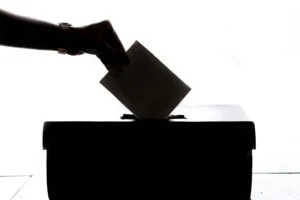
The candidate’s name itself can become secondary compared to the larger question: What does this person represent? And which party stands behind them?
This is not merely an electoral mechanism… it is a political culture that places collective and institutional work above individualism and personality-driven politics.
The central question here is not simply, “Who won?”
But rather, “Which political direction is advancing?”
And that is a crucial difference.
In many places, elections are often reduced to individuals, names, personal influence, or dominant personalities. But within a deeply rooted party-based model, the individual becomes part of a larger project, and politics becomes more about programs and movements than personal heroics.

People may disagree strongly with British parties, and political polarization can become intense… yet it remains striking that the broader scene, despite its heat, is governed by calm procedures, respect for the law, and the primacy of institutions over individuals.
That is why some of the most important lessons of British elections may not lie in who won or who lost…
but in those seemingly small details:
To walk in without noise.
To vote with a pencil.
For ballot boxes to close while people peacefully go to sleep.
And for the most important question afterward not to be the name of the person… but what they represent.
In those moments, one realizes that democracy is not merely a ballot box…
but a culture of trust, institutions, and a collective idea greater than individuals.
Read More:
ShortURL ⬇