
Arab families in the west: strain, identity and the search for balance
Arab families in the west: strain, identity and the search for balance
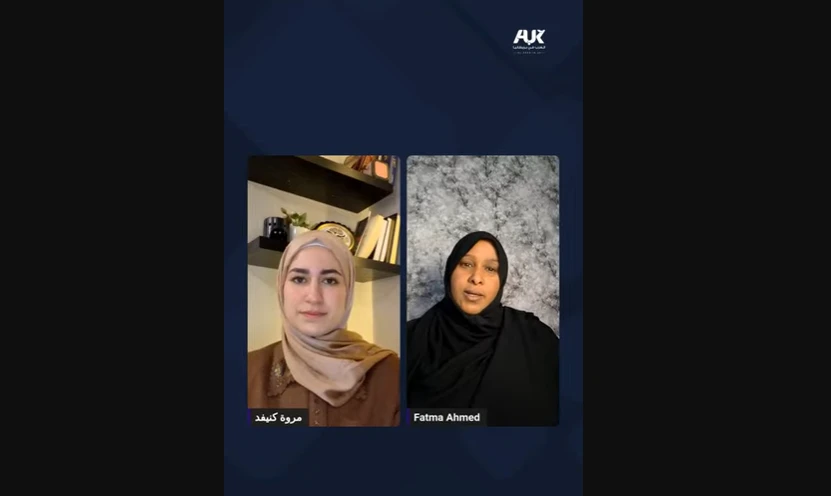
An episode of Evening London, broadcast on Thursday 30 April, examined the pressures facing Arab Muslim families in western societies, and how migration can reshape family life in ways that are both disruptive and, at times, transformative.
Hosted by Marwa Kenaifed, the programme featured the writer Fatima Ahmed, whose book They Have a Migration draws on real-life accounts of Muslim families navigating life abroad.
A beginning marked by contradiction
Ahmed described the early days of migration as a moment of tension rather than clarity: excitement sits alongside isolation, and the promise of a new start is often shadowed by a sense of loss. That phase, she suggested, can either harden into disconnection or open a space for reinvention.
Pressure as a test of relationships
Much of the discussion focused on what happens inside the home. Migration, in Ahmed’s account, does not simply add pressure; it reveals what was already there. Financial strain and the absence of extended family networks shift the burden inward, placing greater weight on communication between partners.
Parenting in unfamiliar ground
For many families, the sharper anxiety centres on children. Ahmed framed concern as inevitable, but warned that overprotection can prove counterproductive. Shielding children too closely, she argued, may limit their ability to adapt, rather than protect them from risk.
What emerges instead is a balancing act: maintaining moral and religious reference points while allowing children to engage with the surrounding environment. Everyday practices—how time is organised, how responsibilities are shared—become part of that negotiation.
A shared struggle, often unseen

A recurring thread in the conversation was the belief, common among families, that their difficulties are uniquely theirs. Ahmed’s examples suggest otherwise. The patterns repeat, even if they are rarely spoken about openly.
When strain becomes rupture
The programme also touched on separation, not as an exception but as one possible outcome of accumulated pressure. In some cases, Ahmed noted, differences that might once have been contained become harder to absorb in the absence of support structures. Still, she pointed to the possibility of recovery, where awareness and support exist.
Holding on without withdrawing
Questions of faith and identity ran throughout the discussion. For Ahmed, religion functions less as a boundary than as a stabilising reference point. Integration, in this sense, is not framed as assimilation, but as a process that allows for participation without erasure.
The episode drew notable engagement from viewers, many of whom shared similar experiences—suggesting that what is often lived in private may, in fact, be widely shared.
Migration, as the discussion made clear, does not produce a single outcome. It can expose fault lines within families, or force a renegotiation of them—sometimes toward greater fragility, sometimes toward a more deliberate form of cohesion.
Read More:
ShortURL ⬇