

Analysis: Is Washington Choosing Britain’s Chancellor? Why the Trump Administration Is Weighing In on the Next UK Government
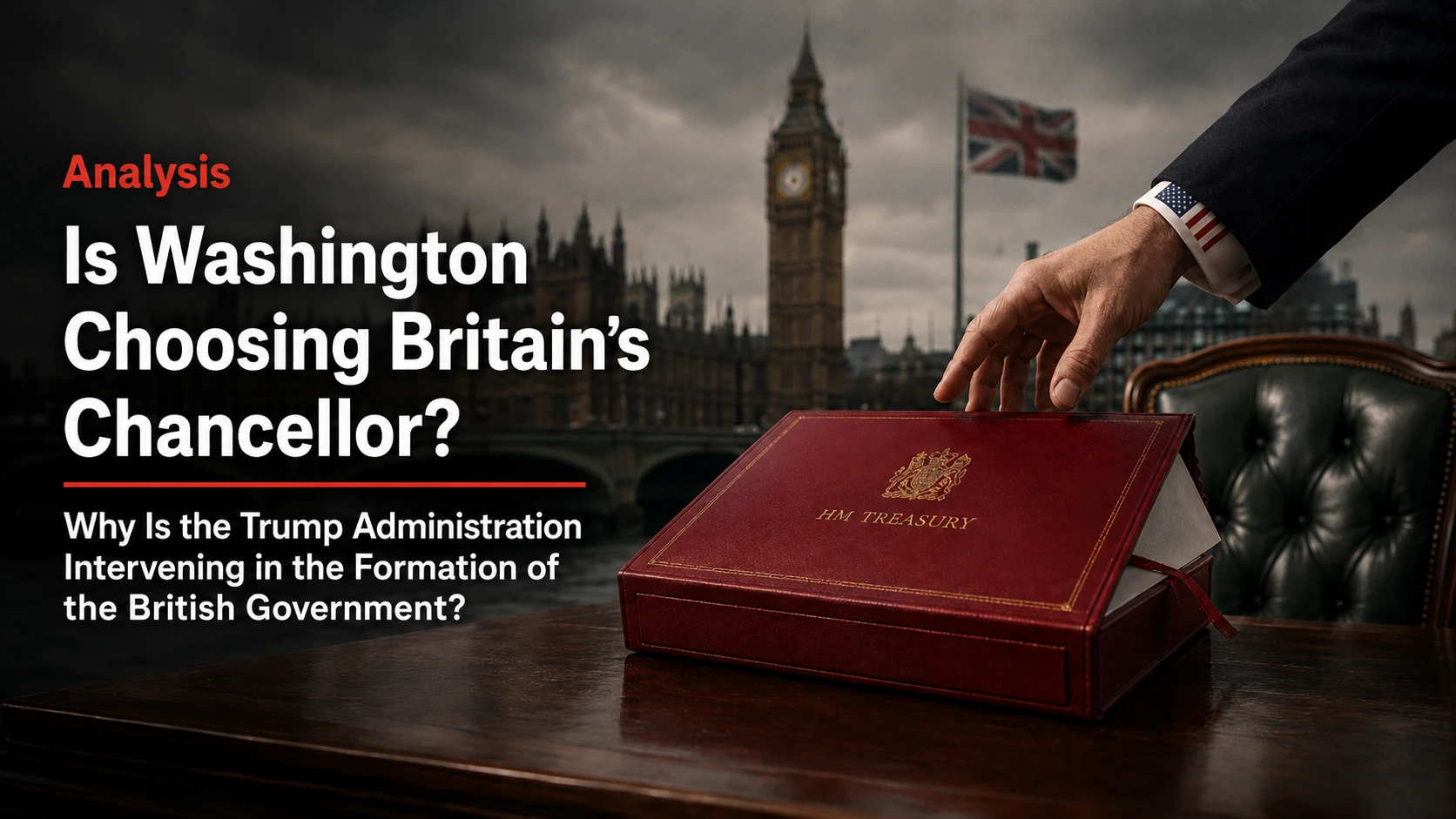
Analysis: Is Washington Choosing Britain's Chancellor? Why the Trump Administration Is Weighing In on the Next UK Government
The story is not that Washington will officially choose Britain’s next Chancellor.
It runs much deeper than that.
When senior US officials privately warn London against appointing Ed Miliband as Chancellor in a potential Andy Burnham government, it does not mean the United States holds a veto over Britain’s cabinet.
It does suggest, however, that the “special relationship” is no longer always a quiet exchange of advice between allies. Increasingly, it can become early pressure on domestic political choices before a government has even taken office.
According to The Times, officials within Donald Trump’s administration warned that appointing Miliband as Chancellor would be “a mistake”. Their concern is not simply his place on Labour’s left or his political record. It is his opposition to new oil and gas licences in the North Sea.
That is what makes this story bigger than one cabinet appointment.
The North Sea is not merely another policy brief. It sits at the intersection of energy, taxation, employment, climate policy and public finances.
Washington views it differently.
To the Trump administration, North Sea oil and gas represent tax revenues, greater energy independence and a source of funding for higher defence spending at a time when the United States is demanding that European allies shoulder more of their own security burden.
That is why Miliband matters.
Not simply because he is Ed Miliband, but because he represents an economic vision fundamentally at odds with Trumpism: a faster green transition, greater caution towards fossil fuels and a more interventionist state steering the economy towards clean energy.
For the Trump administration, oil and gas are not environmental liabilities.
They are strategic assets.
Intervention or Warning?

Washington can argue that it is merely expressing the opinion of a close ally.
London can insist that forming a government is entirely Britain’s business.
Yet behind those official positions lies a more subtle form of pressure.
A prospective prime minister need only know that a particular appointment worries Washington for that decision to become more than a domestic political choice.
If Burnham appoints Miliband, he risks appearing to challenge the Trump administration before even entering Downing Street.
If he leaves him out, another question immediately follows.
Was it because he genuinely preferred another candidate—or because he wanted to avoid an early confrontation with Washington?
That is the real dilemma.
External influence rarely requires direct instructions.
Sometimes it is enough to raise the political cost of one option before the decision is even made.
Trump and Vance: A Pattern, Not an Exception
What makes this episode particularly sensitive is that it does not stand alone.
Trump has repeatedly commented on Britain’s domestic politics, criticising London’s approach to energy and immigration, attacking wind power and renewable energy, and urging Britain to expand North Sea oil and gas production rather than rely on imported energy.
Vice President JD Vance went further during his widely discussed speech at the Munich Security Conference, accusing Europe of retreating from free speech while criticising British laws surrounding buffer zones outside abortion clinics. He also invoked the murder of British teenager Henry Nowak to attack Britain’s immigration policies, arguing that both migration and Europe’s political elites reflected a broader civilisational decline.
The issues differ—energy, immigration, free speech or cabinet appointments.

The pattern does not.
This administration increasingly views British and European domestic politics as matters of legitimate American concern whenever they conflict with its ideological priorities or economic interests.
For decades, the special relationship was presented as a strategic partnership built on defence, intelligence and shared security.
Today, it can sometimes resemble something less equal.
A larger ally speaks loudly.
A smaller ally quietly calculates the American reaction before making its own domestic choices.
That inevitably raises uncomfortable questions in Britain about where partnership ends and political interference begins.
The North Sea as a Test of Sovereignty

This is why the disagreement over Miliband should not be read as a dispute over one politician.
The real question is who determines Britain’s energy policy.
Should that decision rest with an elected British government balancing climate commitments, union pressure, employment concerns and the costs of the green transition?
Or does Washington become an indirect participant because it believes restricting new drilling weakens Britain’s economy, its defence capacity and, by extension, the Western alliance?
The North Sea itself illustrates the divide.
To Miliband and his supporters, approving new oil and gas licences delays the green transition, locks Britain into an outdated economic model and encourages short-term investment without solving the country’s long-term energy challenges.
To the Trump administration—and to some Labour MPs and trade unions—halting exploration risks destroying jobs, reducing tax revenues and weakening an industry capable of helping to finance other national priorities, including defence.
That is an entirely legitimate British debate.
The moment it becomes the subject of American warnings, however, Britain’s energy policy no longer appears entirely Britain’s own affair.
Burnham Between Washington and His Party
If Andy Burnham enters Downing Street, appointing a Chancellor will become the defining early test of his premiership.
Will his government continue Starmer’s cautious centrism, reassuring markets and allies through fiscal restraint?
Or will it pursue a more interventionist economic agenda, using the Treasury to reshape the relationship between the state, markets, energy policy and regional investment?
In that context, Miliband is more than a candidate for high office.
He is a political signal.
Appointing him would suggest a government prepared to embrace a more interventionist economy and a more ambitious green agenda.
Leaving him out might reassure Washington and some investors, while provoking Labour voices seeking a clearer break with the Starmer era.
Burnham could therefore find himself squeezed from the very beginning between three competing pressures: Washington, the financial markets and his own party.
Before his cabinet is even announced, he may discover that some names represent far more than personnel choices.
They become tests of sovereignty, political direction and resolve.
The Limits of the Special Relationship

The Miliband episode exposes a form of pressure in which alliance and intervention begin to overlap.
Supporters of the closest possible Anglo-American partnership may argue that Washington has every right to care about the energy and defence policies of one of its closest allies.
Others will ask a different question.
At what point does legitimate concern become interference in another country’s domestic decisions?
Washington may not literally choose Britain’s next Chancellor.
But if a future British prime minister feels compelled to consider Donald Trump’s reaction before choosing one of the most senior figures in his government, the question is no longer rhetorical.
Who ultimately shapes Britain’s government?
The electorate and the governing party alone?
Or has the special relationship quietly acquired an unofficial seat at the cabinet table?
Read more:
ShortURL ⬇