


The Journey of Voice and Gratitude: From Childhood to Maturity (Mustafa Al-Azzawi)
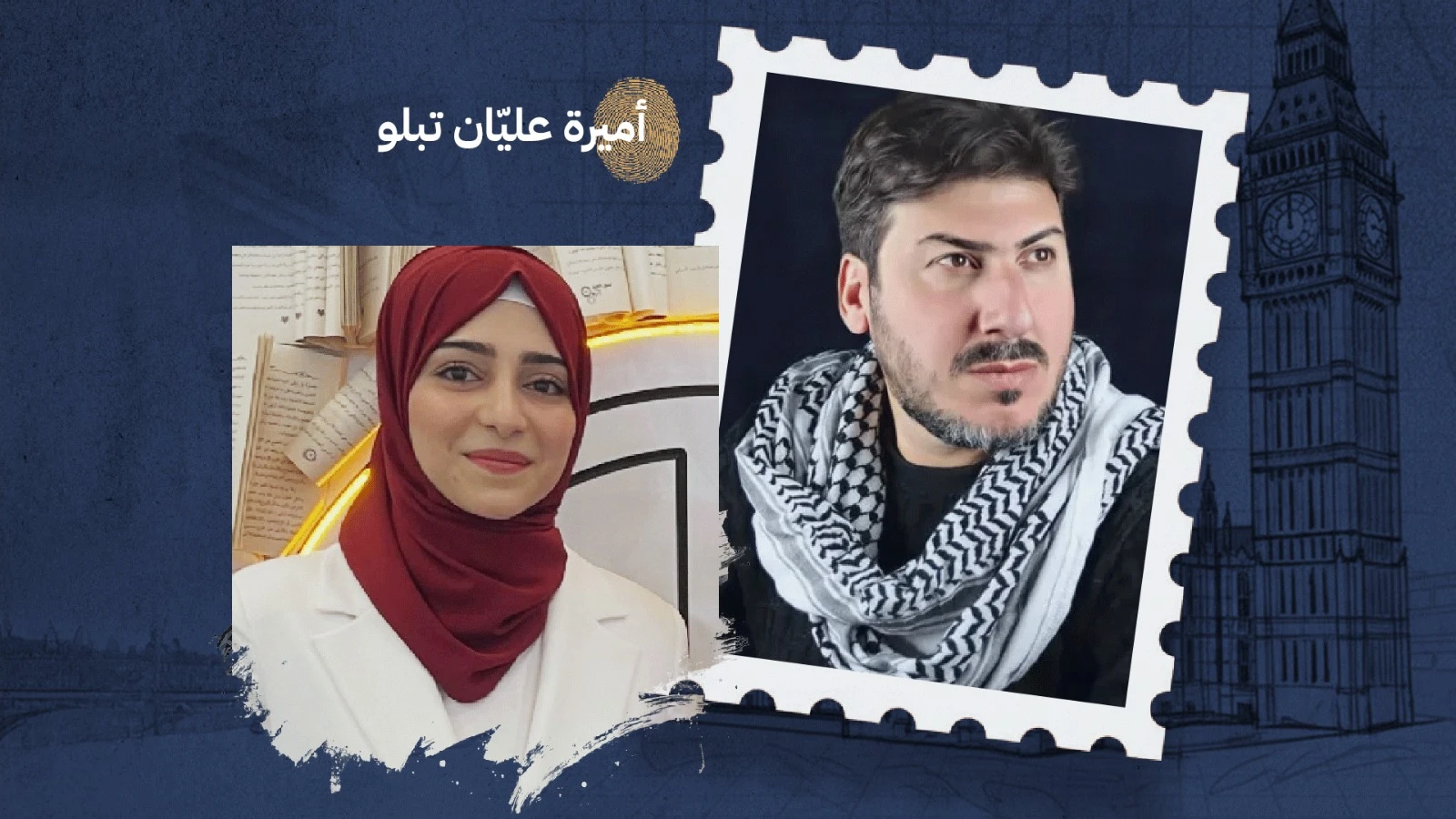
Every voice carries a story behind it, and every note serves as a bridge between what has passed and what is yet to come. In a moving episode of the Arab podcast hosted by Adnan Hmidan, the vocalist Mustafa Al-Azzawi spoke gently, as though his words were rising from a heart that refuses silence, recounting a story that began in Palestine — the place that left its first imprint on his early beginnings.
Palestine, with its wounded land and burning sky, was the starting point. His singing was a cry from the heart; he chose nasheed before he chose art as a path for himself. What heart can carry the pain of a people and find in its voice a passage to freedom? What heart chooses to sing not for itself, but for those who have lost hope in their own voice?
Here, the journey begins: from a child’s voice that refused silence to a man who understands that voice is a trust before it is pleasure or performance.
In this episode, Mustafa Al-Azzawi peeled back layers of a soul shaped by pain, exile, politics, and faith. His words felt like a long confession before a transparent mirror — one that reflects not appearances, but questions. Titles fall away, lights dim, and the human being stands alone before his original truth.
The voice known to audiences was never merely a tool of chanting; it was the cumulative imprint of intertwined experiences: a childhood born into turbulent times, youth awakening to questions of identity, a spiritual journey that transcended politics, fame that revealed the fragility of image, and maturity that redefined the relationship between wound and meaning. The episode unfolded as a philosophical reflection on what it means for a human being to be a voice — and for that voice to become a conscience.
Childhood: When the Voice Is Born from the Womb of Silence
A person is born twice: once from the womb of their mother, and once from the womb of their suffering. In the beginnings Al-Azzawi described, childhood was not an innocent stretch of time adorned with roses. It was a hidden foundation for a consciousness shaped under the weight of political and social turbulence — a reality that strips hearts bare and exposes the tightness they carry.
He did not remember Jordan itself as much as he remembered feeling gratitude toward it — like a memory he never lived, yet a human debt that never expires.
His father passed away only fifty-two days after his birth. He grew up learning the meaning of absence before he learned the meaning of calling. He never saw his father, yet his shadow accompanied him for years — an unwritten will urging him to be strong enough to continue life alone, despite every hardship.
A child raised in an environment burdened with tension does not first learn to play, but to be cautious. He does not memorize songs before memorizing the anxiety in adults’ eyes. In such settings, the inner voice forms before the outer voice is heard. A child accustomed to the noise of war or news of division discovers early on that silence is suppressed fullness.
He would say it simply, with the sincerity of Palestinian mothers’ hearts: “Ramadan in Iraq is different.” Yet behind this simplicity lies the hoarseness in his voice — as though the month there is not merely observed, but lived through rituals of memory and longing. Even suhoor was not just a meal; it was a complete ritual where the scent of bread mingled with family warmth and the sound of night preparing for dawn.
From that very silence, artistic sensitivity grows. For art, at its core, is a mechanism of survival. It is an attempt to reorder chaos through melody, to refine fear through words. He lived what the farmer lives when clinging to the land, and what the shepherd learns from the patient steps of his flock. He grew up knowing the value of labor before the value of speech.
He did not resent those stages. He carried them with pride, as though they had built his strong back and content heart. He was grateful for everything he endured, for life — despite its harshness — taught him that gratitude is another form of survival.
Youth: The Search for Self Amid Chaos
If childhood is the silent formation of identity, youth is the eruption of questions. Here begins the tension between what is and what ought to be. Al-Azzawi spoke of his early passion for nasheed and his choice of an artistic path that carries a message. Yet the deeper philosophical question remains: does a person choose their voice, or does the voice choose them?
In societies marked by recurring crises, art becomes more than a hobby; it becomes a moral stance. To sing in times of division is to attempt to mend something broken in collective consciousness. To choose spiritual words in an atmosphere dominated by noise is to side with gentleness in the face of cruelty.
Youth is an age of courage, but also of doubt. Every true artist faces a pivotal moment of asking: do I follow a path that pleases people, or one that satisfies my conscience? The difference between the two lies not only in length, but in cost.
Through his reflections, his choice seemed clear: meaning before noise, message before reach. This choice is less heroic than it is demanding; it requires patience with slow results and resistance to the temptation of instant fame.
The Greatest Test: Entering Mecca in 2002
One of the most symbolic moments he shared was his entry into Mecca in 2002, at a time when political relations between Iraq and Saudi Arabia were tense. Here lies a profound paradox: politics builds walls, while the spirit seeks doors.
The journey was more than geographical movement; it was an existential crossing — from a reality weighed down by constraints to an open spiritual horizon. For someone coming from a wounded country to stand before the Kaaba is to place one’s personal history in the presence of the Absolute, compelled to voice what has long remained unspoken.
Fame: The Silent Test
Fame appears to be a blessing, yet beneath its surface lies a delicate examination. When a voice becomes known, its bearer becomes accountable for every word, every emotion, every stance.
Al-Azzawi did not treat fame as personal triumph, but as a trust. This shift in perspective transforms the nature of one’s relationship with art.
Maturity: Reconciling with Wounds
In his tone, one senses maturity — a stage where the individual is no longer preoccupied with proving himself, but with understanding himself. Maturity is not the disappearance of wounds, but the refusal to deny them.
The Word as Message: When Art Becomes Prayer
In his view, the word is not a neutral instrument of expression; it is an ethical responsibility. Art detached from values becomes beautiful noise. But when connected to meaning, it becomes prayer in another form.
A Journey Without End
Ultimately, a person is not measured by years lived nor by works produced, but by their ability to transform pain into meaning, voice into message, and experience into a quiet light that guides others through darkness.
The stages he passed through were not merely dates in time; they were profound inner transformations: from a child shaped in silence, to a youth searching for himself, to a man standing in the presence of the sacred, to an artist who realizes that the greatest success is to remain human.
Read More:
ShortURL ⬇