

Analysis: Is Britain’s Monarchy Entering an Age of Accountability?

Analysis: Is Britain's Monarchy Entering an Age of Accountability?
The controversy sparked by the National Audit Office’s report into Prince Andrew’s living arrangements at Royal Lodge was never simply a story about discounted rent or royal property.
Instead, it reopened a much larger question about the place of the monarchy in modern Britain: how can an institution built upon hereditary privilege adapt to a society that increasingly demands transparency and accountability?
For decades, the British monarchy has managed to preserve its popularity despite profound political and social change. The secret of that resilience has never rested solely on tradition or historical symbolism. It has also depended on the institution’s ability to present itself as a source of stability and national continuity, standing above the day-to-day conflicts of party politics.
What has changed in recent years is that the monarchy is no longer facing questions only about its symbolic role. It is increasingly confronted with more direct scrutiny over its privileges, wealth and relationship with public resources.
From Deference to Scrutiny

For much of modern British history, the royal family enjoyed a degree of public deference that kept many of its internal arrangements largely beyond serious examination.
That space has gradually narrowed.
The media has become more aggressive, oversight bodies more active, and public opinion more sensitive to questions of privilege and favouritism, particularly during a period marked by rising living costs, pressure on public services and wider economic uncertainty.
Perhaps most strikingly, criticism is no longer confined to Britain’s republican movement. It now extends across newspapers and commentators from both the political right and left.
As scrutiny of royal finances and property arrangements has intensified, criticism has evolved from objections to privilege itself into allegations of special treatment and preferential arrangements. In some cases, newspapers have gone further still, accusing members of the royal family of benefiting personally from advantages unavailable to ordinary citizens.
That is why the Prince Andrew controversy has attracted such attention.
The issue is not simply that royal privileges exist. It is that many people increasingly feel some of those privileges appear to operate beyond the standards of transparency and accountability expected elsewhere in public life.
Andrew’s Problem Is Not Just Andrew’s Problem
This is perhaps the most important point.
Andrew Mountbatten-Windsor, the Duke of York who lost his royal duties and military affiliations, has become more than a controversial individual within the royal family.
He has become a symbol of a broader challenge facing the institution itself.
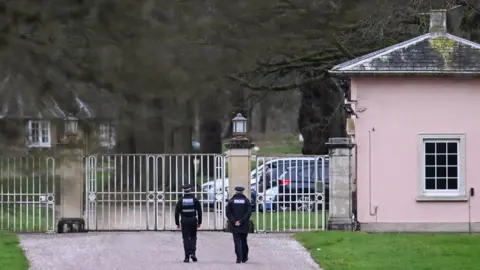
Over the past several years, Andrew has been associated with a succession of controversies that severely damaged his public standing. These range from his relationship with the late convicted sex offender Jeffrey Epstein and the fallout that led to his withdrawal from public life, to the more recent debate surrounding his continued residence at Royal Lodge, a large Crown Estate property within Windsor Great Park occupied under a long-term lease arrangement.
The National Audit Office report drew attention to arrangements that many observers found politically difficult to justify: residence in a prominent royal property under unusually favourable terms involving an initial payment and maintenance obligations, alongside income generated from cottages associated with the estate.
At that point, the issue becomes larger than one individual.
It raises broader questions about transparency and the limits of privileges extended to people who no longer perform public duties or official royal functions.
Nor is this sensitivity confined entirely to Andrew.
The report also referred to housing arrangements and reduced-rent properties involving other members of the royal family, including residences associated with Princess Beatrice and Princess Eugenie, while noting that each case differs in its legal and financial details.
As a result, the debate is no longer solely about Andrew. It increasingly concerns a wider system of property-related privileges whose boundaries many members of the public struggle to understand.
The challenge for the monarchy is therefore not simply managing one controversial royal.
It is maintaining a distinction between the actions of individuals and the reputation of the institution as a whole.
Historically, the monarchy has often succeeded in making that distinction.
But repeated controversies involving finances, property and privilege make that task more difficult over time.
Privilege in an Age of Equality
The controversy also exposes a deeper paradox within British society.
Modern Britain is politically and morally grounded in principles of equality before the law, transparency and public accountability.
The monarchy, by its very nature, rests upon a very different principle: inherited privilege.
This contradiction is not new. It forms part of the historic compromise that allowed the monarchy to survive within a modern democratic system.
Yet the pressures facing the institution today are not primarily about the existence of privilege itself.
They are about the public’s willingness to continue accepting that privilege in a political culture that has become increasingly sceptical of advantages perceived to be unjustified or insulated from scrutiny.
For that reason, the current controversy does not necessarily signal a dramatic republican resurgence or a sudden collapse in support for the monarchy.
Rather, it reflects a broader shift in the relationship between society and its traditional institutions.
Institutions that once derived legitimacy largely from history and symbolism are increasingly expected to provide practical and tangible justifications for their status and privileges.
More Than a Property Dispute

The Prince Andrew controversy may ultimately fade, as previous royal crises have done before it.
The monarchy may once again succeed in containing the political and reputational damage.
But the significance of the episode lies not in the details of a lease agreement or a particular property arrangement.
It lies in what it reveals about Britain itself.
The question is no longer whether the monarchy commands respect.
The question is how long it can continue to command that respect in an era when accountability is expected to extend to everyone.
For decades, the British monarchy weathered crises by separating the institution from the actions of individual family members.
Yet repeated disputes over privilege, funding and accountability raise a different question today.
Has the institution itself reached a point where it must defend not merely the behaviour of particular royals, but the inherited privileges on which it is built?
That is the question that makes the current debate far larger than a story about Andrew Mountbatten-Windsor’s residence at Royal Lodge.
Read more:
ShortURL ⬇