

Beyond Charity: Volunteering Opportunities Inside UK Public Institutions

For many people, volunteering is closely associated with charities, food banks, fundraising campaigns, and local community projects. These activities remain an essential part of civic life, but they are only one side of the UK’s volunteering landscape.
Less well known are the opportunities that place volunteers inside public institutions themselves. Across policing, healthcare, education, and the justice system, thousands of people give their time to support public services, strengthen accountability, and help ensure that institutions remain connected to the communities they serve.
These roles go beyond traditional volunteering. They offer direct insight into how public services operate and create space for individuals to contribute to the systems that shape everyday life in the UK.
For Arab communities in particular, they also open doors to greater visibility, representation, and participation in spaces where their presence is often limited.
1. Policing Your Community as a Special Constable

For many people, policing feels like a profession that exists at a distance from the communities it serves. Yet across the UK, thousands of volunteers work alongside regular police officers as Special Constables, helping to keep their neighbourhoods safe while building stronger relationships between the public and the police.
After training and security vetting, Special Constables take on the same powers as regular officers while on duty.
They may:
- Support neighbourhood patrols
- Respond to incidents and emergencies
- Assist at public events
- Help manage anti-social behaviour
- Support local policing operations
For members of Arab communities, the role often carries an added dimension. It offers a way to build trust with local policing structures, challenge assumptions through visible public service, and be represented within a system that directly affects everyday community life.
Official information: College of Policing – Special Constables
2. Keeping an Independent Eye on Prisons
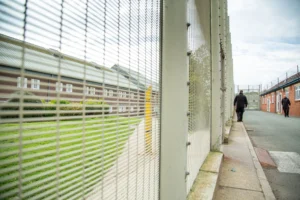
Behind high walls and restricted access areas, Independent Monitoring Boards (IMBs) act as a public safeguard within prisons and immigration detention centres.
Their role is simple but significant: to ensure that people in detention are treated fairly and that institutions meet required legal and humanitarian standards.
Volunteers typically:
- Visit prisons and detention centres regularly
- Speak independently with detainees
- Observe living conditions and daily treatment
- Review complaints and concerns
- Report findings directly to government authorities
This work is fundamentally about accountability. It ensures that institutions which operate away from public view remain open to independent scrutiny.
For many Arab volunteers, especially those familiar with different justice systems globally, this role can also offer a meaningful way to contribute to transparency and fairness within public institutions in the UK.
Learn more: Volunteer to Check Standards in Prison – GOV.UK
Further information: Independent Monitoring Boards (IMB)
3. Understanding the Justice System from Within

The Lay Observer Scheme offers a rare opportunity to observe how parts of the criminal justice system operate behind the scenes.
Volunteers focus on the treatment and transport of detainees as they move between prisons and courts, ensuring that standards of safety, dignity, and legality are upheld.
They may:
- Observe prisoner transport procedures
- Visit custody and holding facilities
- Assess conditions during transfer
- Produce independent reports
- Highlight issues affecting detainee welfare
This is not a visible or public-facing role, but it plays an important part in ensuring accountability in a system most people only see from the outside.
For Arab participants, it also provides a clearer understanding of how legal processes function in the UK, beyond courtroom appearances and official narratives.
Official information: Lay Observers Scheme
4. Supporting Patients and Staff in the NHS

Almost every family in the UK will rely on the NHS at some point. Behind the doctors and nurses is another workforce that often goes unnoticed: tens of thousands of volunteers who help patients, support staff, and make hospitals more welcoming places.
Across hospitals and community services, more than 72,000 volunteers contribute to improving patient experience and supporting day-to-day operations.
Volunteers may:
- Support patients and families
- Help guide visitors in hospitals
- Assist with non-clinical hospital services
- Contribute to community health programmes
- Support patient wellbeing initiatives
For many Arabs working towards careers in healthcare – or simply looking to give back to a service that has supported their own families – NHS volunteering offers a meaningful way to contribute.
Official information: NHS England – Volunteering
5. Having a Voice in Schools: School Governors

School governors play a central role in shaping how schools are run. They are not involved in teaching, but instead help oversee leadership, budgets, and long-term direction.
In practice, governors help ensure that schools are well managed and accountable.
They may:
- Review school performance
- Monitor budgets and resources
- Support strategic planning
- Hold leadership teams accountable
For Arab parents and community members, this role is especially significant. It provides a structured way to be involved in the education system, contribute to decision-making, and ensure that schools understand the needs of diverse families.
It also helps strengthen representation at a stage of education that directly affects children’s outcomes and experiences.
Most roles require DBS checks and a long-term commitment.
Official information: GOV.UK – Become a School Governor or Trustee
Further information: National Governance Association (NGA)
6. Putting Professional Skills to Work in Public Life

Not all volunteering involves frontline roles. Many UK institutions actively seek volunteers who can contribute professional skills in areas such as law, technology, finance, communications, and management.
This form of volunteering often takes place behind the scenes but can have a direct impact on how services are designed and delivered.
Typical areas include:
- Legal and regulatory expertise
- Project and programme management
- Cybersecurity and IT
- Marketing and communications
- Finance and accounting
For Arab professionals in the UK, this can be a particularly effective way to contribute expertise while building networks and gaining exposure to public-sector environments.
Official information: GOV.UK – Volunteering
Who Can Take Part?
While requirements vary, most programmes expect applicants to:
- Be 18 or older
- Pass background and security checks
- Have sufficient English to perform the role
- Commit time consistently depending on the position
Many organisations actively encourage applications from people of diverse cultural and professional backgrounds, recognising the value of broader representation in public service.
Why This Matters for Arab Communities in the UK

Arab participation in volunteering has traditionally been concentrated in charitable and community-based work. While this remains important, involvement in public institutions offers a different kind of impact.
It is not only about service delivery, but about presence, participation, and representation within systems that shape public life.
These opportunities help build:
- Stronger connections with public institutions
- Greater understanding of how services operate
- More visible Arab representation in civic spaces
- Practical pathways into professional development
- A stronger sense of participation in public life
A Different Kind of Civic Participation
Volunteering in the UK is no longer limited to occasional community work or fundraising. Increasingly, it includes roles that sit inside the institutions themselves, helping to shape how public services are delivered, monitored, and improved.
For Arab communities across the UK, these opportunities represent more than volunteering. They are a pathway into civic participation, representation, and long-term engagement with the systems that affect everyday life.
Not just helping from the outside, but contributing from within.
Read More:
ShortURL ⬇