

Analysis: Burnham and the North Sea Battle: When Energy Bills Collide with Climate Promises

Analysis: Burnham and the North Sea Battle: When Energy Bills Collide with Climate Promises
Only days after entering Downing Street, Andy Burnham has found himself confronting a question he would have preferred to postpone.
Can the “breathing room” he promised British households begin in the North Sea?
At first glance, the issue appears purely economic. Energy bills continue to squeeze families, oil prices are climbing amid rising tensions between Washington and Tehran, the Strait of Hormuz has returned to the centre of global concerns, and security risks around the Bab el-Mandeb are intensifying as hostilities between the Houthis and Saudi Arabia escalate. What happens between the Gulf and the Red Sea does not stay there. It reaches petrol stations, household energy bills and the calculations of governments in London.
Beneath the surface, however, the Rosebank and Jackdaw fields present Burnham with his first genuine test of the balance he hopes to strike between easing the cost of living and honouring Britain’s climate commitments.
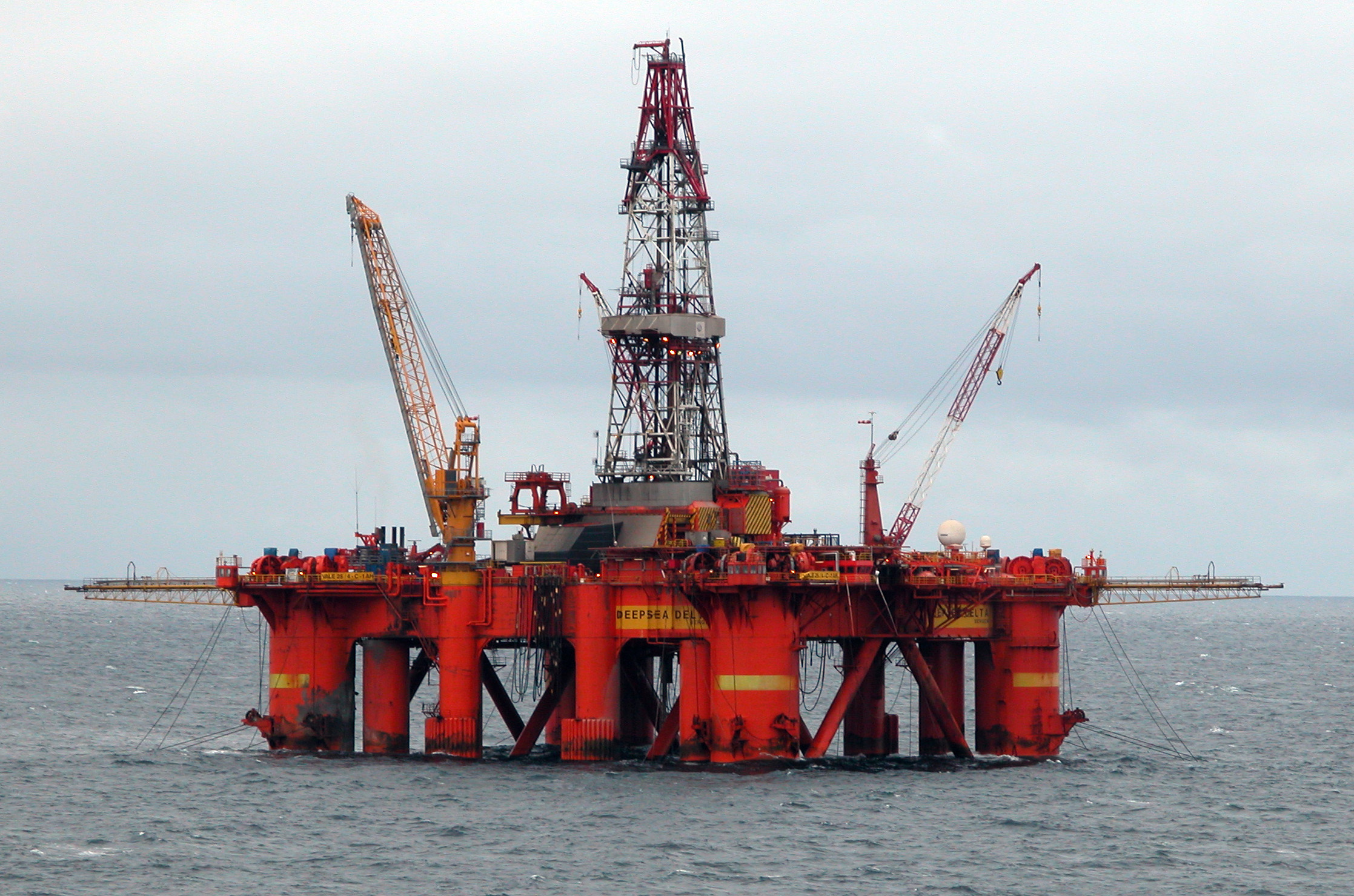
According to The Times, Burnham and Energy Secretary Miatta Fahnbulleh are considering moving quickly to approve major North Sea oil and gas developments, including Rosebank—described as the UK’s largest undeveloped offshore oil and gas field—and the Jackdaw project off the Scottish coast.
That is where the real dilemma begins.
Bills Come First
From his first day in office, Burnham has tried to present himself as a prime minister focused on everyday pressures: household energy bills, transport costs, struggling public services and the financial strain that reaches people’s homes long before it reaches political debate.
From that perspective, the attraction of the North Sea is easy to understand. Expanding domestic production would allow Burnham to argue that he is doing more than talking about the cost-of-living crisis. He is seeking practical ways to reduce it—or at least lessen Britain’s exposure to increasingly volatile global energy markets.
That argument becomes even stronger as oil prices move towards $100 a barrel amid fears of a wider confrontation between Washington and Tehran around Hormuz, alongside escalating tensions involving the Houthis and Saudi Arabia near Bab el-Mandeb and the wider Red Sea shipping routes.
More than a quarter of the world’s seaborne oil trade and roughly one-fifth of global petroleum consumption passes through the Strait of Hormuz. Around 4.2 million barrels of oil and petroleum products moved daily through Bab el-Mandeb during the first half of 2025, while the route has become increasingly important as more Saudi exports have been redirected through Red Sea ports.
At a moment like this, Burnham can plausibly argue that complete dependence on imports and unstable global markets is neither a fair social policy nor a secure economic strategy.
But that is only half the story.

Climate Does Not Disappear When Bills Rise
Rosebank is not simply another energy project.
It has become a symbol of the wider battle over Britain’s fossil-fuel future.
Its opponents see it not as a solution to today’s bills but as an extension of an energy model Britain has committed itself to leaving behind.
Its scale reinforces that symbolism. Court documents have previously estimated Rosebank’s recoverable resources at more than 300 million barrels of oil equivalent, with a production life that could extend for around 25 years. This is therefore not a temporary measure to navigate one difficult winter, but a decision whose consequences could last for decades.
The issue is no longer simply how much oil or gas lies beneath the seabed.
It is the political message.
Approving Rosebank would allow critics to argue that Burnham is sacrificing long-term climate ambitions for short-term political relief on living costs.
The legal context has made the decision even more sensitive. Previous approvals for both Rosebank and Jackdaw were challenged because environmental assessments failed to account for emissions produced when the extracted oil and gas are eventually burned, rather than considering production emissions alone.
The decision therefore returns to government not as a routine administrative approval, but as both a political and environmental test.
The “New Licences” Loophole
Burnham is likely to attempt a careful balancing act.
Labour pledged not to issue new oil and gas exploration licences in the North Sea. Ministers may now argue that Rosebank and Jackdaw do not constitute “new licences” in the political sense, but projects that have already progressed through earlier regulatory stages and now require updated production approvals or environmental assessments.
That distinction may provide a legal—or linguistic—escape route.
It does little to resolve the political problem.
Most voters do not distinguish between an exploration licence, production consent or approvals linked to existing developments. Climate politics is rarely decided by technical definitions.
What many will see instead is a government elected on promises of a greener future beginning its term by expanding oil and gas production.
In that sense, the symbolism of Rosebank is likely to become more significant than the field itself.
Between Pragmatism and Retreat
If Burnham approves further North Sea development, he is likely to receive cautious praise from the political right, the energy industry and perhaps trade unions and communities anxious about jobs in north-east Scotland.
But he risks alienating Labour’s environmental wing, climate campaigners and voters who hoped the post-Starmer era would deliver a clearer commitment to the green transition.
If he refuses, the political costs could be immediate. Critics will accuse him of sacrificing energy security, jobs and household finances in pursuit of climate commitments that many families struggling with winter bills cannot readily see.
That is why the role of Miatta Fahnbulleh matters.
The new Energy Secretary comes from a political background closely associated with both social justice and climate policy, yet The Times reported her describing the issue as one of “pragmatism”. By contrast, Ed Miliband previously condemned Rosebank as “climate vandalism.”
Between those two phrases lies the political shift.
What was once framed as an unacceptable environmental compromise may now be presented as practical government in an era of geopolitical instability and rising energy prices.
This is Burnham’s dilemma.
He wants to govern pragmatically rather than ideologically.
Yet energy policy never escapes ideology altogether.
Every practical decision ultimately reflects a political choice, even when presented as simple necessity.
The Test of Practical Government
Only days ago, the central question facing Burnham was whether he could provide British households with some “breathing room” from the cost-of-living crisis.
Now the question has become more difficult.
What price is he prepared to pay for that breathing room?
If household bills are Burnham’s path towards political legitimacy, the battle over the North Sea may become the first real test of its limits.
Not every decision that eases today’s pressures creates a better future. Equally, appeals to climate responsibility often struggle to persuade families worrying about next winter’s energy bills while headlines focus on Hormuz, Bab el-Mandeb, Iran, Donald Trump and increasingly volatile oil markets.
This is where the character of Burnham’s government will begin to emerge.
Will it ask the public to endure short-term hardship in the name of the green transition?
Will it deliver immediate relief through climate compromises?
Or can it genuinely find a third path that no longer forces household bills and climate policy into permanent conflict?
In that sense, Rosebank is more than an oil field in the North Sea.
It is the first mirror held up to Burnham’s entire governing philosophy: how do you reduce the cost of the present without increasing the cost of the future?
Read more:
ShortURL ⬇