

Analysis: Why Can’t Britain Mourn Its Victims in Peace?
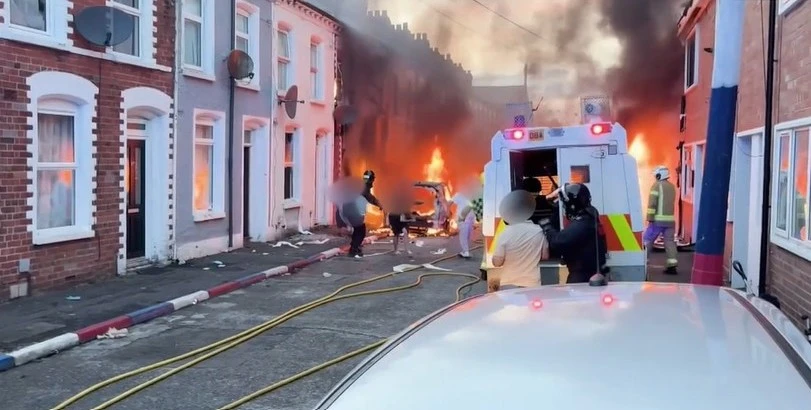
Analysis: Why Can't Britain Mourn Its Victims in Peace? (BBC).
Stephen Ogilvie’s family did not ask for much.
They did not demand revenge. They did not call for confrontation with migrants. They did not ask politicians to adopt their tragedy as proof that their own political arguments had been right all along.
After a relative lost an eye and suffered life-threatening injuries in a knife attack, their request was remarkably simple: do not turn our family’s suffering into fuel for more hatred and violence.

But there is a problem with modern public tragedies. They rarely remain in the hands of those who suffer them.
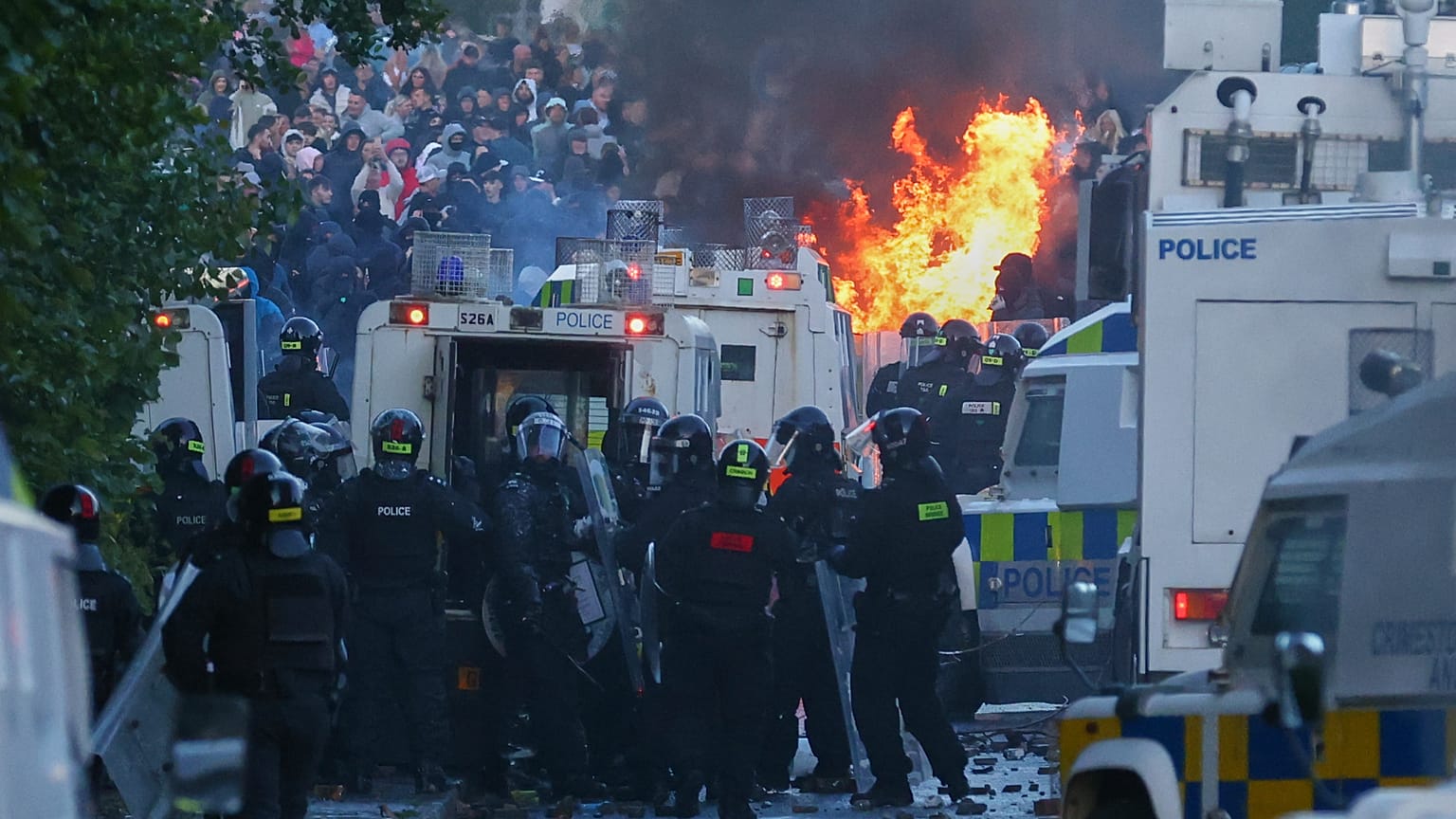
Within hours of the attack on Ogilvie, hundreds of protesters had taken to the streets of Northern Ireland. Fires burned. Stones were thrown. Police deployed water cannon to disperse crowds.
Before long, the debate had moved far beyond the crime itself.
It became a confrontation over immigration, borders, identity and confidence in the state’s ability to maintain order.
That is what makes this episode significant.
The question was no longer simply who committed the crime or how they should be punished.
It became a struggle over who had the right to define what had happened in the first place.
When Stories Leave Their Owners
In divided societies, personal tragedies rarely remain personal for long.
Northern Ireland knows this better than most.
Decades after the Good Friday Agreement, memories of the Troubles remain embedded in the collective consciousness. The social fabric remains fragile enough that shocking events are seldom treated as entirely isolated incidents.

Every major tragedy becomes a candidate for symbolism.
The story ceases to be about one individual and becomes evidence of something else: the failure of the state, an immigration crisis, the rise of hatred, the breakdown of social cohesion.
Once that happens, the story begins to leave its original owners behind.
Social media accelerates the process.
Before official accounts have settled, competing narratives are already circulating. Incidents are linked to immigration, identity and anger at the state. In a charged atmosphere, a clipped video or an outraged comment can become an accepted “truth” shared by thousands within minutes.
For some on the right, such cases confirm the consequences of open borders and a state that has lost control over who enters the country.
For some on the left, they serve as warnings about the dangers of inflammatory rhetoric and the normalisation of prejudice.
In both cases, the life of a real person becomes part of a political and cultural struggle far larger than themselves.
Who Owns Anger?
The obvious answer might seem to be: the victims.
Reality is more complicated.
The anger generated by violent crime rarely remains confined to families or local communities. It often becomes a vehicle through which wider anxieties find expression.
Anxieties about immigration.
About public safety.
About whether the state is still capable of protecting citizens and managing rapid social change.
For many people, what follows is not simply the exploitation of an individual tragedy. They see it as an outlet for concerns that have struggled to find a place in public debate except through moments of collective shock.
Yet recognising that societies carry genuine fears does not mean accepting the ways in which those fears are translated into politics.
The strength of a society is not measured by the absence of crime.
It is measured by its ability to confront crime firmly without abandoning one of its most important principles: responsibility remains individual, not collective.
A killer is punished because of the crime they committed, not because of the group to which they belong.
Holding innocent people responsible for acts they did not commit does not strengthen justice. It redirects anger away from the perpetrator and towards those who merely share aspects of their identity, ethnicity or cultural background.
The irony is that members of those same communities are often among the most fearful of such crimes and among the strongest in condemning them.
They understand that every new incident risks becoming a collective burden they will be expected to carry, despite having played no role beyond being citizens who want safety and justice like everyone else.
That is the deeper moral and political cost.
The more an individual tragedy becomes a symbol of something larger, the less space remains to hear the voices of those who lived through it.
The meanings others impose upon a tragedy begin to matter more than the tragedy itself.
More Than Street Disorder
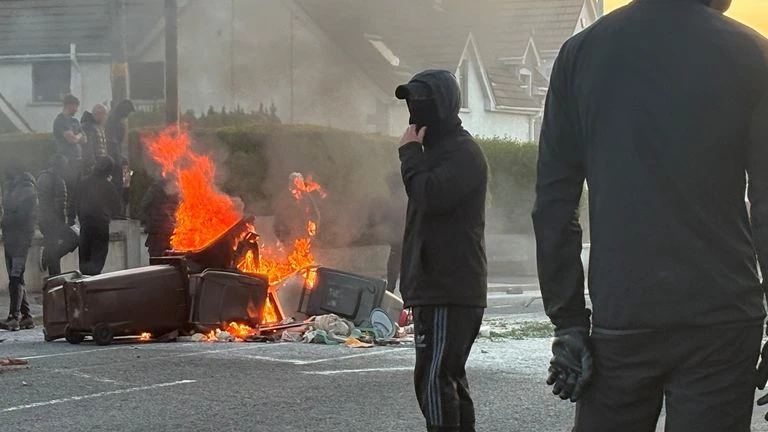
The events in Northern Ireland reveal more than divisions over immigration, policing or public order.
They reveal something more painful.
In contemporary Britain, being a victim is no longer enough to retain ownership of your own story.
Once a tragedy becomes public, others begin speaking in your name, redefining your anger and using your suffering to validate beliefs they already held.
Perhaps the most striking words of recent days came from Stephen Ogilvie’s own family.
“Hatred will not bring justice.”
The question that remains is whether divided societies are still capable of listening to victims at all.
Or whether they have become so consumed by their own battles that all they can hear is the echo of themselves.
Read more:
ShortURL ⬇