
A Guide to Leading Quran and Arabic Learning Platforms for Non-Arabic Speakers
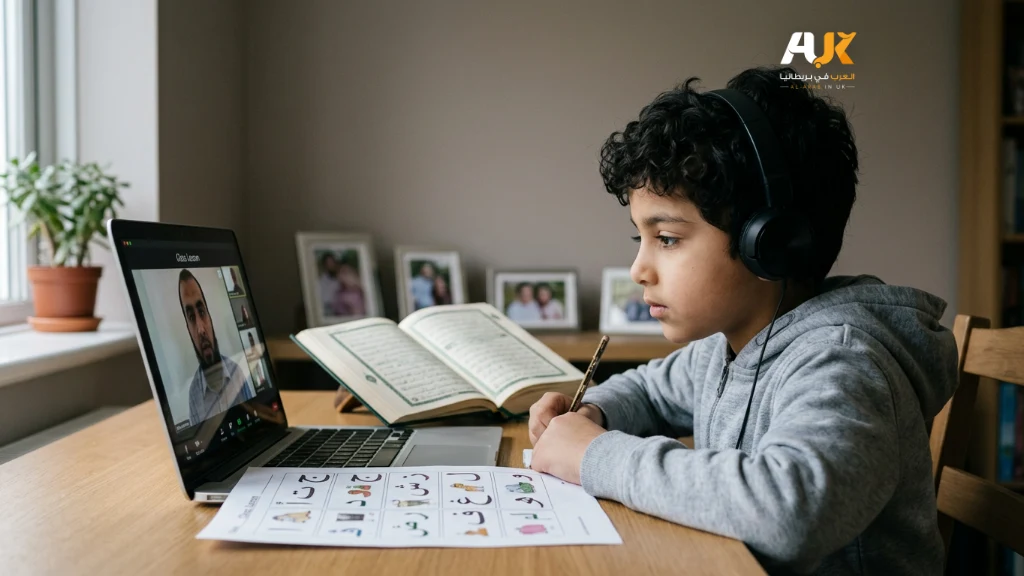
More than four-fifths of Muslims worldwide do not speak Arabic, making Quranic and Arabic education for non-Arabic speakers one of the fastest-growing areas of religious and cultural education online.
Demand for such services has grown alongside expanding Muslim communities across Britain, North America and Europe, as an entire generation increasingly uses English or other European languages as its primary language. This has fuelled demand for digital platforms that provide direct access to the Quranic text and help users understand its meaning without relying on a full translation.
The rapid growth in demand has also led to a proliferation of specialised platforms, creating a highly fragmented market. Dozens of websites operate under similar names, such as “Online Quran Academy”, ranging from established educational institutions with documented curricula to services that function largely as marketing fronts for networks of independent teachers.
This report examines some of the leading platforms currently operating in the market, drawing on publicly available user ratings on app stores and service-review platforms, alongside an objective assessment of the market’s size and direction.
Platforms with institutional presence and documented ratings

Among the best-known platforms for non-Arabic speakers is “Bayyinah TV”, operated by the “Bayyinah” Institute, led by preacher and linguistics researcher Nouman Ali Khan.
The platform combines analysis of the structure of Quranic verses with a gradual approach to teaching Modern Standard Arabic.
Its app has a rating of 4.4 out of 5 stars on Apple’s App Store, based on around 472 reviews. That is a relatively substantial number compared with its competitors, suggesting a broader user base.
The institute offers a paid subscription with a one-week free trial at Bayyinah TV website.
“Understand Qur’an Academy”, based in Hyderabad, India, follows a different model. It offers a completely free programme designed by Dr Abdul Aziz Abdul Raheem to help non-Arabic speakers learn the vocabulary and basic grammar needed to understand the Quranic text directly.
The programme’s written, audio and video materials are available in dozens of languages through Understand Qur’an website. It relies on charitable funding and donations rather than subscriptions and is also broadcast on religious satellite channels in South Asia.
The market also includes institutions formally linked to Al-Azhar-affiliated academic bodies, including “Ulum Al-Azhar Academy”, which says it is accredited by Al-Azhar Al-Sharif.
For the academy, its institutional affiliation is a key point of distinction in marketing its services. However, the absence of independently verified reviews for this category of platforms on public review sites makes it harder to assess the quality of the student experience. Families should therefore verify any claimed accreditation directly before enrolling.
Smaller British platforms with limited reviews

Britain’s market also includes a number of smaller providers. Among them is “Quran Schooling”, which is based in Britain and has a regional office in the United States. It has received positive ratings on “Trustpilot”, based on around 24 reviews so far.
“Alif Quran Academy” has around 10 reviews, most of them positive, with users highlighting the flexibility of its scheduling and the teaching style of its tutors.
The review numbers are markedly lower than those of some larger American and Pakistani competitors. “QuranHost”, for example, has more than 180 reviews and a five-star rating.
The wide gap in review numbers highlights the fragmented nature of the British market, where a large number of smaller operators compete rather than a handful of dominant providers.
The market also includes intermediary platforms such as “Qutor.com”. Rather than providing lessons itself, the platform connects students with independent tutors, allowing them to choose a teacher after a trial lesson. Payments are based on actual teaching hours rather than a fixed monthly subscription.
Questions over reviews and platform reliability

A review of these platforms reveals a recurring problem across the sector: the line between marketing material and genuinely independent information is often blurred.
Many of these websites publish articles with titles such as “Top 10 Platforms” and include themselves in rankings that appear to be independent.
Review numbers on platforms such as “Trustpilot” are also limited in most cases, making it difficult to draw reliable conclusions from the available data. Trustpilot also allows users to post reviews without strict verification that they are actual students.
Digital ratings should therefore not be treated as the only measure of a platform’s quality. Users should also look for reviews on independent forums and community groups and consider taking a trial lesson before making a long-term financial commitment.
Charity or commercial market — is there room for more?

Recent estimates of the Arabic-language digital education platform market suggest that “cultural-context education” — a category that includes Arabic language teaching and Quranic studies for Muslim minorities — accounted for around 14.7% of the overall market in 2025.
This was part of a broader market in which the “live-streaming” segment alone generated more than $0.76 billion in revenue.
The figures point to a sector becoming increasingly commercially developed, with intense competition for students. Major platforms spend between a quarter and a third of their revenues on marketing and teacher recruitment, suggesting that the market is moving towards consolidation rather than continued uncontrolled expansion.
Demographic trends, however, continue to support growth. Non-Arabic-speaking Muslim minorities in the West are expanding from one generation to the next, while a significant gap remains between growing demand for reliable Quranic and Arabic education and the limited capacity of traditional education provided through mosques and Islamic centres.
This means that although the market is becoming increasingly crowded with small commercial platforms offering similar models and prices, there is still room for new providers that can offer clear quality standards or free charitable models for people unable to afford monthly subscriptions. This is particularly relevant in lower-income countries and among refugees and new converts to Islam in Europe.
Ultimately, the key difference between one platform and another is no longer simply whether it exists, but whether it can demonstrate the quality of its teaching transparently, beyond self-promotional claims.
Independent and verifiable reviews, tutors with documented qualifications and measurable learning outcomes are therefore central to establishing that credibility.
Also Read:
ShortURL ⬇