

Refugee tax and abolition of immigration courts: UK Parliament passes harshest asylum restriction bill
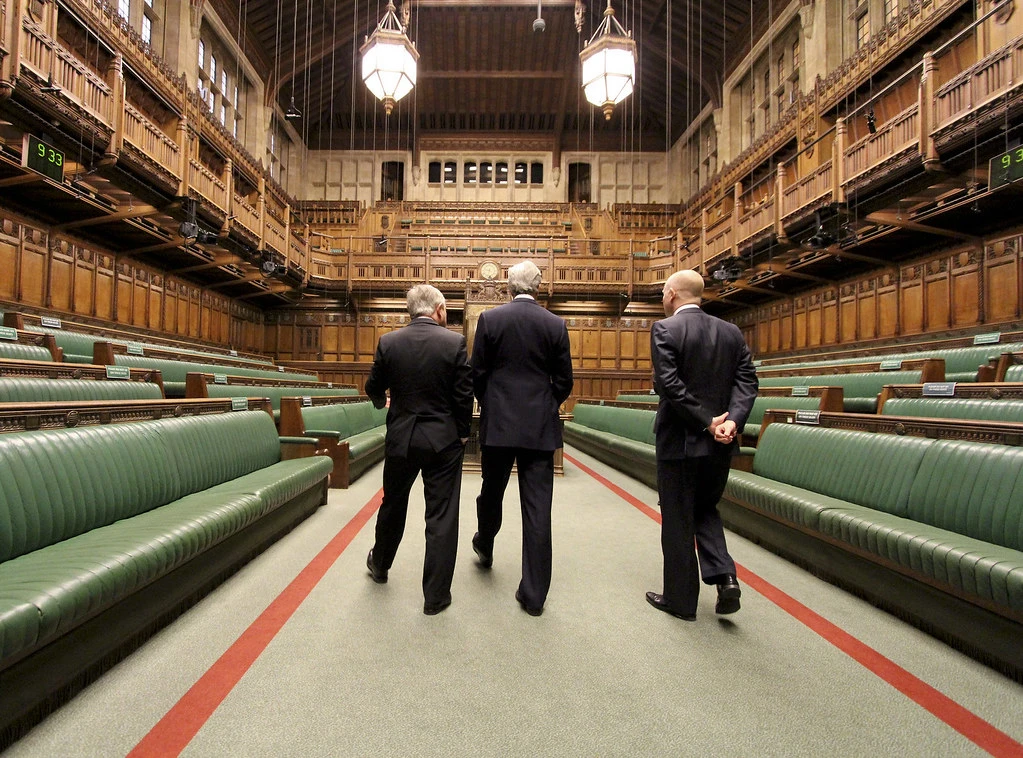
In one of the most prominent parliamentary sessions of the year, the House of Commons witnessed a pivotal, historic legislative moment late on Monday evening, 13 July 2026. The British Parliament voted by a comfortable majority to pass the ‘Immigration and Asylum Bill 2026’ in its second reading.
The outcome of the decisive vote, which took place at 10:16 PM London time, confirmed the dominance of the bill’s supporters within Parliament, with 264 MPs voting in favor and only 90 opposing. Minutes earlier, another vote was held on a ‘reasoned amendment’ tabled by the opposition Conservative Party, led by Shadow Home Secretary Chris Philp, who sought to defeat the bill on the grounds that it was ‘not stringent enough’. However, his amendment was overwhelmingly rejected by 358 votes to 97.
Although the bill passed successfully, the session laid bare deep fractures within the ruling Labour Party. Fourteen MPs from the party’s left wing rebelled and voted against the bill, joining members from other parties such as the Scottish National Party (SNP) and the Liberal Democrats, arguing that the legislation adopts an overly harsh approach toward those seeking protection. In contrast, the bill received absolute and complete backing from prospective Prime Minister and current MP Andy Burnham, who framed it as an indispensable step to restore public trust in the effectiveness and integrity of the British asylum system and boundaries.
Details of the new bill and key proposed changes:

1. Establishment of the “Independent Immigration Appeals Authority” (IIAA) as an Alternative to the Traditional Judicial System
Abolition of the Current Tribunal: The bill completely abolishes the “First-tier Tribunal (Immigration and Asylum Chamber) – FTT”, the traditional judicial body responsible for hearing appeals against asylum and deportation decisions.
Creation of the IIAA: The abolished tribunal will be replaced by a new administrative body named the “Independent Immigration Appeals Authority” (IIAA).
Appointment of Non-Judicial Adjudicators: Appeals will not be overseen by professional judges, but rather by “Independent Adjudicators and Mediators”. The government emphasizes that prior legal experience or judicial qualifications will not be required for these roles. This aims to facilitate rapid hiring to clear the asylum backlog, which has reached 150,000 pending appeals with an average waiting time of 61 weeks per case.
Powers Granted to the Home Secretary: The bill grants the Home Secretary the authority to implement strict new procedural rules, including non-extendable deadlines for submitting evidence, alongside the introduction of fees and costs designed to prevent appeals from being used as a tactic for delay and unlawful stay.
2. Mandatory Financial Contribution for Asylum Cost Recovery (“Refugee Tax”)
The bill introduces an unprecedented principle linking the granting of protection to a subsequent financial contribution to recover a portion of the support costs borne by the state during the asylum process.
The Contribution Principle: The law establishes a historic legal precedent requiring adult asylum seekers whose claims have been approved to pay fixed monthly amounts. This serves as a contribution toward recovering state expenditures spent on their financial and housing support while within the system.
Targeted Amount: Financial impact assessments and documentation, supported by humanitarian organizations (such as the Refugee Council), indicate that the cumulative target recovery amount per refugee is approximately £10,000.
Recovery as a Civil Debt: The bill authorizes the Home Office, in coordination with HM Revenue and Customs (HMRC), to pursue individuals and recover debts directly via payroll deductions once they secure employment and exceed a minimum income threshold.
Re-entry Ban for Non-Payment: Any beneficiary who leaves the United Kingdom without clearing this debt will have a re-entry bar placed against them, preventing them from returning under any visa category in the future unless the debt is settled in full.
3. Overhaul of the Former Refugee Protection System: The “Core Protection Model”
The bill seeks to restructure the legal protection framework by streamlining pathways and reducing the multiplicity of legal statuses.
Consolidation of Pathways: It eliminates long-standing bureaucratic distinctions between standard “Refugee Status” and subsidiary pathways like “Humanitarian Protection”, merging them into a unified framework known as the “Core Protection Model”.
Restriction on Repeated Appeals: Each case will be assessed once, leading to a single outcome. Recipients of subsidiary protection will be barred from launching successive appeals to obtain alternative, more privileged legal statuses; appeals will be restricted strictly to those whose claims have been rejected in their entirety.
Periodic 30-Month Reviews: The amendments mandate strict periodic reviews of security conditions in countries of origin every 30 months. If conditions are deemed to have stabilized, protection will be revoked and the individual will face immediate deportation.
4. Curtailing Article 8 ECHR Claims (European Convention on Human Rights)
The bill addresses one of the most contentious legal issues regarding the reliance on Article 8 of the European Convention on Human Rights to challenge deportation orders.
Limiting Humanitarian Appeals: Migrants and foreign nationals convicted of crimes have frequently relied on Article 8—which protects the “right to respect for private and family life”—to appeal against deportation.
Narrow Statutory Definition of Family: The legislation establishes a strict legal definition that narrows “family life” exclusively to the “core cohabiting family” (defined solely as spouses and minor children).
Public Interest Overrides Individual Rights: The bill compels courts and immigration officials to treat the deportation of immigration offenders and foreign criminals as a matter of overriding public interest, taking precedence over individual private life in the vast majority of cases.
5. Modern Slavery Reforms and Amendments to the 2015 Act
Among the most notable clauses are the wide-ranging amendments targeting the Modern Slavery Act and the mechanisms used to access its protections.
Tackling Loophole Exploitation: The bill introduces sweeping changes to the “Modern Slavery Act” to prevent it from being used as a mechanism to stall or delay deportation.
Credibility Restrictions on Late Disclosures: The law decrees that any unjustified delay by a migrant in disclosing that they are a victim of modern slavery or human trafficking will be treated as a primary factor undermining the credibility of their claim.
Facilitating Exclusion and Denying Protection: Foreign nationals sentenced to imprisonment or deemed a threat to national security will be disqualified from receiving recovery periods and state support earmarked for victims, paving the way for their immediate deportation.
Home Secretary Shabana Mahmood’s Speech on the Bill

The speech by Home Secretary Shabana Mahmood dominated a significant portion of the session, as she relied on field statistics and data to defend the stringent reforms, in an attempt to convince both the left and the right of the viability of the government’s plan. Below are the key highlights from her address:
1. Smashing Smuggling Networks and Achieving Record Numbers
Mahmood emphasized that tightening the laws complements unprecedented security success in combating smugglers: ‘Over the past two years, we have begun the hard work of restoring order and taking control of our borders. This started by taking the fight directly to the criminal people-smuggling gangs. In the last year alone, arrests of human smugglers have risen by 55%. Since taking office, we have successfully disrupted organized illegal immigration operations on 3,700 different occasions—a 46% increase compared to previous periods.’
2. Facing Hard Numbers and Exorbitant Costs
Shabana Mahmood clearly pointed out the staggering figures of asylum decisions, deportation rates, and current expenditures: ‘We have rebuilt a completely broken asylum system. Under the previous government, decision-making had ground to a halt; today, the pace of decision-making has reached its highest level in 24 years. As a result, deportations have hit their highest level in nearly a decade, marking a 41% increase. Yet, despite these significant strides, we must do more; approximately 94,000 individuals still reside in dedicated asylum accommodation, costing taxpayers a total of £3.7 billion annually.’
3. Protecting the System and the Erosion of Public Consent
Shabana Mahmood delivered a stern message regarding the necessity of maintaining the consent of British society to ensure the country’s stability: ‘This country has always provided a safe haven for those fleeing war and persecution, and I am immensely proud of this historic fact. However, we must honestly and unequivocally accept that public consent for our asylum system is eroding and collapsing. If we do not restore full control, we will lose the support and trust of the entire British public. There is no fairness or humanity in a system built on uncontrolled, unsafe, and illegal routes into our country. The only beneficiaries of this situation are the human smugglers.’
4. Announcing Safe Routes as a Civilized Alternative
Mahmood also defended the humanitarian vision that the government claims to establish, through introducing regulated, defined, and community-sponsored pathways: ‘This bill establishes an asylum system that is fair to genuine refugees and fair to British citizens. We will begin launching safe, legal, regulated, and protected routes to rescue those fleeing by autumn 2026, so that British communities, universities, and businesses can welcome the first cohorts of refugees legally, officially, and fully funded by their sponsors in autumn 2027. This will end the reliance on taxpayers and the chaos of dangerous maritime crossings.
Major Late-Stage Developments and Amendments

Just prior to the final vote, the session witnessed a striking development in the introduction of an exceptional and decisive amendment by Home Secretary Shabana Mahmood during the final hours leading up to the ballot.
- Abolition of Commonwealth Citizens’ Protection: This shocking amendment seeks to strip away the historic legal immunity that previously protected long-term British residents originating from Commonwealth countries from being deported after committing serious criminal offenses.
- The Motive Behind the Amendment: This measure was introduced to close a legal loophole, thereby enabling the Home Office to deport high-profile criminals, such as the leader of the Rochdale child grooming gang, alongside other Commonwealth nationals convicted of severe felonies who had previously evaded legal removal due to their prolonged residency in the country.
Timeline and Upcoming Legislative Steps
Having passed its second reading, the bill must still clear several legislative stages before it becomes law. The upcoming track involves the following steps:
- Public Bill Committee Stage: Following Parliament’s approval of the timetable, the bill moves immediately to a designated committee. There, it will be scrutinized line by line, and precise wording for amendments will be drafted.
- Committee Deadline: The committee is required to conclude all its reviews, clauses, and final drafting no later than 3 November 2026.
- Third Reading and the House of Lords: The final version will face another vote within the House of Commons before being sent to the House of Lords. The bill is expected to encounter fierce resistance there from legal and judicial peers opposing the abolition of immigration courts and the implementation of the cost-recovery scheme (the tax).
- Operational Implementation: The bill aims to have the new Independent Immigration Appeals Authority (IIAA) fully operational by late 2027, running in parallel with the old system for a brief transitional period to avoid any initial operational gaps.
Read More:
- Al Arab in UK Celebrates YouTube Silver Play Button Milestone
- Analysis: Five Years or Ten? The Permanent Residence Battle Testing Burnham’s Government Before It Begins
- Analysis: The Killing of Ann Widdecombe: When a Criminal Investigation Becomes Political Anxiety
ShortURL ⬇