

Before Citizenship: How to live at the heart of politics, not on the sidelines
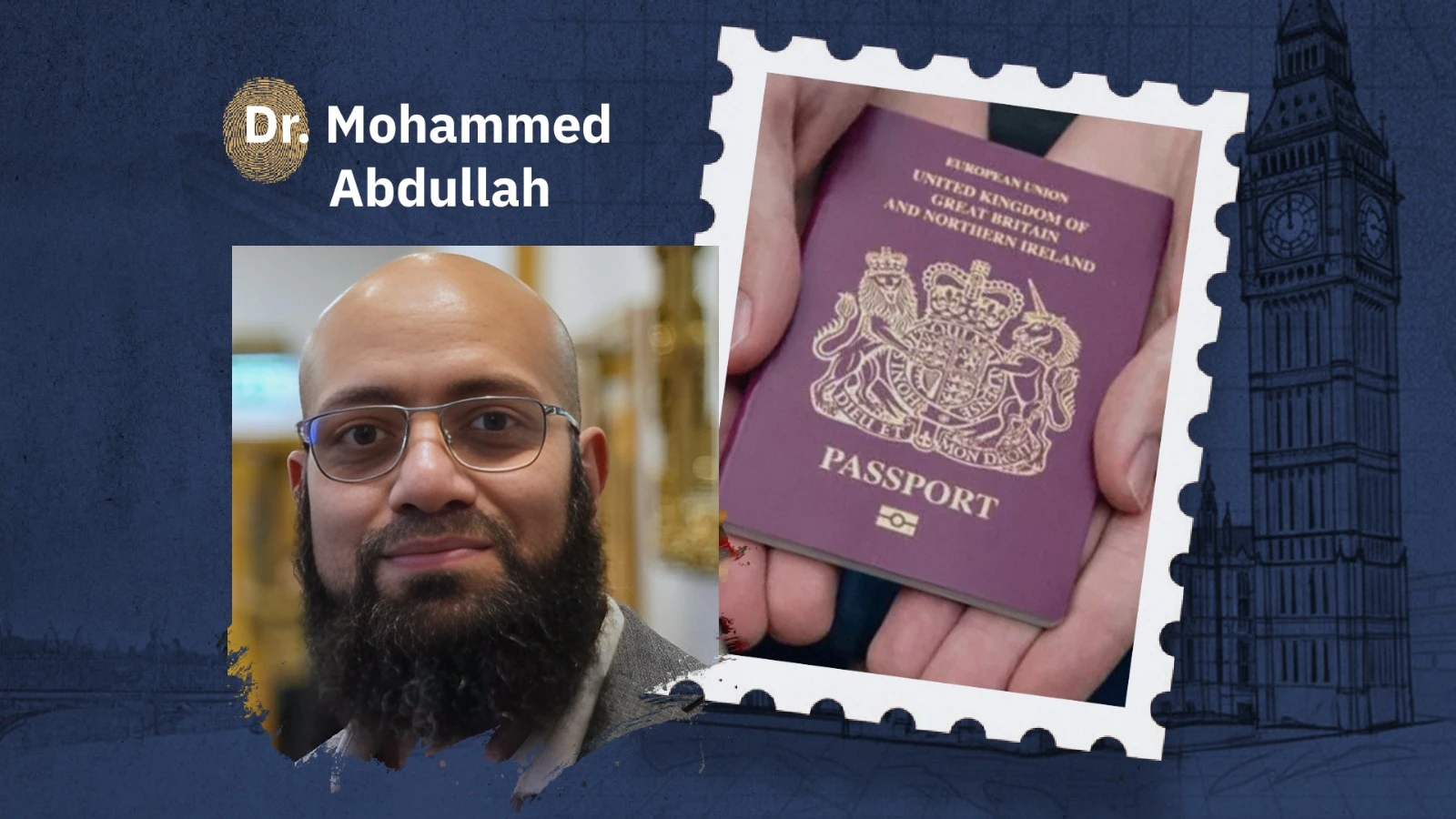
The moment you step out of the airport, with your suitcase rattling behind you on the polished floor, you might think that politics is far behind you.
Back in your homeland, or here in the halls of Parliament—behind heavy wooden doors, on news screens featuring anchors whose names you don’t yet know, and in debates whose language still feels cold to your ears.
But you don’t realize that politics walked out of the airport right beside you.
It walks with you in the entry stamp, the tenancy agreement, the doctor’s appointment, and the first letter from your child’s school. It’s in the Council Tax bill, the street where you live, the park where your children play, and in the news report on TV that sees you before it even knows your name: an immigrant, a Muslim, an Arab, a refugee, a doctor, a student, a worker, a stranger.
You may not have the right to vote. You may not even intend to stay long enough to get citizenship. You might tell yourself: ‘I’m only here temporarily, what do I have to do with politics?’
But the truth is simpler and deeper: you might be off the electoral register, but you are not beyond the reach of politics. Politics does not wait for your citizenship.
Politics doesn’t ask you first: ‘Do you hold a British passport?’ It enters your life long before that. It enters when you look for a home and find that housing laws dictate where you live and how much you pay. It enters when you visit the GP and realize that healthcare isn’t just about a doctor and a patient—it’s about systems, funding, waiting lists, and priorities. It enters when your child stands at the school gates, their small hand in yours, and you read a question in their eyes they don’t yet know how to phrase: ‘Does this place belong to me too?’
And it enters when you hear a public debate about immigration, refugees, or Muslims, only to discover that politics isn’t a distant news story. Sometimes, it becomes a description of you, before you even speak.
Therefore, the most dangerous mistake an expatriate can make is to believe that political life begins the day they receive citizenship. Citizenship may grant you a clear electoral right, but it does not create your relationship with the country from nothing, nor does it mark its beginning. Your relationship with the country begins the very first day you live under its laws, use its services, pay its bills, raise your children in its schools, and walk its streets.
“I am Temporary” Complex
Many newcomers live with a “waiting mindset.”
A student says: “I’m only here for one year.”
A doctor says: “I’m just in training; I’ll see what happens later.”
A family says: “We haven’t settled down yet.”
A refugee or a new resident says: “I don’t want to stand out too much.”
And another adds: “Back home, politics was a door to fear; why would I open that door here?”
And so, a person spends their first years in Britain like someone standing at the very edge of a room. They see the chairs, they hear the debate, and they understand that decisions are being made—yet they stay close to the exit, ready to leave, unsure if there is a place for them inside.
But the question is not: Will you stay in Britain forever?
The question is: Will you live here long enough to be affected?
If you are affected by housing, education, healthcare, taxes, the media, the police, schools, and how society perceives you—then you are already inside the political sphere. The real choice is not between being political or non-political; it is between being an agent of change or a subject of it.
Politics is more than just the ballot box
One of the greatest mistakes made by those coming from a politically turbulent Arab world is imagining that politics is only one thing: ruling power, parties, conflict, fear, security, opposition, and loyalists.
But political life in Britain is far broader than that. There is the Local Council, and there is the Member of Parliament (MP).
There is the school, and there is the Parent-Teacher Association (PTA).
There is the Public Consultation, and there is the Petition. There is the local media, and there is the Students’ Union.
All of these are small, recurring, and respected forms of presence that create an impact over time.
You may not be able to vote, but you can find out who represents your area. The UK government website allows anyone to identify their local councillors and how to contact them simply by entering their Postcode. This is not just a small piece of administrative information; it is the first map for escaping isolation.
How many expatriates know the name of the Prime Minister, but do not know the name of the Local MP responsible for the street where they live?
How many fathers follow the news of their home country hour by hour, but do not know who decides the services of the neighborhood where their sons go every morning?
How many mothers complain about a problem at school, but do not know that there are official ways to write, follow up, escalate, and attend?
Politics sometimes begins with knowing the right door.
From Grievance to Action
“In many of our home countries, we have grown accustomed to grievances being either a cry for help, a matter of ‘wasta’ (nepotism), or a feeling of utter despair. We complain at home, in the mosque, and over the phone. Yet, we write nothing. We do not document, we do not send, and we do not follow up.
However, in Britain, a large part of being effective starts with transforming emotions into institutional language.
Instead of saying: ‘The school doesn’t understand our children.’
Write: ‘We would like to request a meeting to discuss how to support children who are subject to religious or racial comments, and to understand the school’s policy regarding the recording and follow-up of such incidents.’
Instead of saying: ‘The Council doesn’t care about us.’
Write: ‘We request a clarification regarding the Council’s plan to improve lighting and safety in this area, particularly as families and children use this route in the evenings.’
Instead of saying: ‘The media hates us.’
Write a letter to the local newspaper, invite a journalist to a community event, share a story of genuine service, or help people see another side of the community.
Politics is not just about being angry; politics is about teaching your anger how to write.
The Petition: When a small voice turns into a visible number
Among the tools that many residents do not know is that the Government and Parliament petitions website allows for the creation or signing of petitions requesting a change in a law or government policy. If a petition reaches 10,000 signatures, it receives a response from the government, and if it reaches 100,000 signatures, it is considered for the possibility of a debate in Parliament.
This information breaks a major illusion. It is not true that you possess nothing until you obtain citizenship. Yes, you do not possess all the tools, and we should not exaggerate or sell an illusion. But you do not live without tools. You have small keys: a signature, a letter, attendance, a question, a petition, a testimony, participation in a public debate, support for a just campaign, influencing a voter, and raising children to understand. And politics, in many cases, does not move with one big blow, but rather through the accumulation of small voices until they become visible.
Public Consultations: Politics before it becomes a decision
In many countries, a decision arrives like a night without a window. You hear of it after it has occurred. You read it after it has been imposed. You suffer from it after it has become a reality.
In Britain, however, some decisions pass through a stage before they are issued called a consultation: a public inquiry. The government or public body publishes the questions and opens the door for responses; then, opinions are collected before the decision is made or amended. There is no single format for responding, but government consultations are mostly published online. Some planning consultations may last 21 days, while British government consultations have traditionally extended for about 12 weeks.
Here, the gap appears between the silent resident and the active resident. The silent resident hears of the decision after it is complete. The active resident looks for the door while it is half-open. The consultation might be about a school, urban planning, health services, community protection, or local policy. Your response alone may not change the decision, but your complete absence means that the decision file was void of your voice, your experience, and its impact on you.
Sometimes, we do not need to shout: Why didn’t they hear us?
Instead, we need to ask honestly: Did we speak in the place where they were listening?
When Politics Knocks on the Mosque’s Door
There are days that reveal to a person that politics is not an intellectual luxury. In the summer of 2024, following the killing of three girls in Southport and the spread of false allegations on social media, Britain witnessed a wave of riots and anti-immigration demonstrations between July 30 and August 7. Some of these demonstrations targeted mosques and hotels believed to be housing asylum seekers, and were linked to an atmosphere of incitement and misinformation.
In moments like these, politics is no longer just a debate between parties; rather, it becomes the sound of breaking glass. It becomes a mother clutching her child’s hand tighter and faster in the street. It becomes a young man opening his phone at night to see a rumor growing like wildfire. It becomes an Imam asking: ‘Should we increase the lighting around the mosque?’ It even becomes you—a father explaining to his son why some people hate us even though they do not know us.
Then the figures arrive to say that the fear was not an illusion. In the hate crime statistics for England and Wales for the year ending in March 2025, recorded religious crimes against Muslims rose by 19%, from 2,690 to 3,199 crimes, with a clear spike in August 2024 linked to the riots that followed the Southport events.
These numbers should not push us to shrink away; on the contrary, they should push us toward presence. Because a community that is only seen during a crisis leaves its image for others to imagine as they please. And a community that only speaks when it is afraid, its voice arrives late. But the community that is present before the crisis, serves before the crisis, and builds relationships before the crisis—when the crisis arrives, it does not start from zero.
No Political Romanticism
We should be honest: Britain is not a utopia. The system may contain cracks that can be used by some to produce injustice, inequality, racism, partisan interests, an occasionally biased media, tiresome bureaucracy, and doors that do not open easily. Even trust in politicians within Britain itself is not high. A parliamentary report published in 2025 indicated that data from the British Election Study showed an increase in the percentage of those with low or no trust in MPs from 54% in 2014 to 76% in 2024.
Therefore, we do not say to the expatriate: ‘Come to a perfect system.’ Rather, we say to them: ‘Come to a system that has tools.’ Learn them before you judge them. Use them before you despair of them. Understand them before you withdraw from them. For it is not required that you believe everything is fair; what is required is that you know how to move when it is not fair.
The Windrush Memory: When residency alone is not enough
In the history of migration to Britain, there is a painful story called Windrush. It is not a story far removed from our topic; rather, it is a long shadow cast behind every discussion about migration, rights, and voice.
The Windrush Lessons Learned Review, which was presented to Parliament on March 19, 2020, documented harsh lessons about people who lived in Britain for decades, only for some of them to find themselves facing a system that did not easily recognize their rights due to institutional policies and errors, missing documents, and harsh decisions. The lessons here do not mean that every expatriate will face the same fate, but they say something profound:
It is not enough to live in a country. You must understand your paperwork, your rights, the methods of appeal, support organizations, and how to raise your voice before the circle tightens around you.
Alienation is not only in language, food, and weather. Sometimes, alienation is living for years within a system you do not know how to address.
The Active Resident: A New Image of the Expatriate
Imagine an Arab doctor entering the hospital before dawn. He knows how to read blood pressure, ECGs, and lab results. He knows the protocols, the medications, and when to contact the consultant. However, he returns to his home in the evening not knowing who represents his area, nor how to write to the local council, nor how to attend a public meeting.
A person may be capable of reading a patient’s body, but remains unable to read the “body” of the city in which they live.
And imagine a mother standing at the school gate in the morning cold, her child’s hand in hers. She smiles at the [other] mothers, but she feels there is a transparent glass between her and the system: she sees everything, but does not know how to enter. She receives letters from the school and translates the words, but she does not translate the hidden political meaning: that the school is not just a place of education, but an arena for belonging, protection, representation, dialogue, and partnership.
And imagine a student who came for one year. He says: “I am just a passerby.” But in this year, he may see an issue related to housing, freedom of expression, prayer, discrimination, fees, or mental health. One year in a passport may be short, but in the formation of consciousness, it is not short at all.
The Active Resident is not someone who turns into a professional politician. They are simply someone who refuses to be a shadow.
They know where to go. They know how to ask. They know how to write. They know when to attend. They know how to cooperate with others. They know that a complaint, if it does not leave the room, will remain temporary steam on a windowpane.
Influencing Voters: Your Voice May Pass Through Others
Even if you do not possess the right to vote, you may possess the ability to influence those who do.
A son who is not entitled to vote may explain to his parents how to register. A wife who does not hold citizenship may remind her husband of the voting date. A new resident might design an awareness flyer. A student might lead a discussion in the community. An Imam or an educator might explain the value of public responsibility without turning the pulpit into partisan propaganda. An Islamic center might invite candidates so that people can ask them respectful questions about education, hate, housing, services, and the protection of liberties.
For politics does not hear the one who was angry at home, nor does it count the one who was sympathetic in their heart. It sees those who attended, who wrote, who signed, who organized, who voted, and who made their voice reach.
In the July 4, 2024 General Election, the turnout was only 59.7%, which is among the lowest modern participation rates. This fact means that absence itself makes politics, and that those who attend and organize themselves have a greater weight than they imagine.
From a Silent Community to a Present Society
In the 2021 Census in England and Wales, the number of those who described themselves as Muslim reached 3.9 million people, i.e., 6.5% of the population, after having been 2.7 million, or 4.9%, in 2011.
But numbers alone are not enough. A number without presence is like a large shadow without a body; the sun sees it, but no one shakes its hand. Demographic existence does not automatically transform into influence; rather, it transforms into influence when there is awareness, institutions, mature leadership, trained youth, present women, writing professionals, attending parents, centers that open their doors, and respectful relationships with neighbors, churches, schools, councils, the police, and the media.
This does not mean assimilation, nor does it mean abandoning religion or identity. Rather, it means the opposite: that you carry your identity with enough confidence to enter the public sphere with it, not that you hide it in a closed room and then complain that people do not know you.
Practical Tools for the Expatriate from the First Year
The beginning is not as difficult as we imagine. Start with five small steps:
- Know the name of the councillor in your area.
- Know the name of the MP (Member of Parliament) for your constituency.
- Follow your local council’s website.
- Attend at least one public meeting per year.
- Write your first formal, respectful letter regarding a real issue that concerns you or your community.
Then, expand the circle:
- Participate in school meetings.
- Volunteer in a local activity.
- Sign a petition that you understand.
- Respond to a consultation when it affects you directly.
- Support a campaign against hate, poverty, isolation, or poor services.
- Teach your children that a respectful question is power.
- Keep your documents safe.
- Document your problems.
- Do not leave everything to verbal outbursts.
Practical politics does not begin with a grand speech; rather, it may sometimes begin with an email with a clear subject line, respectful language, and a specific request.
Do Not Carry the Impotence of an Old System to a New Country
One of the most painful aspects of some migrants’ experiences is that they leave countries where political hope has been killed, and then they carry the funeral with them.
They live in Britain with the mindset of: “No one listens,” “They are all the same,” “It is useless,” “Stay away from politics,” “We are guests,” and “Do not open a door [of trouble] for yourself.”
This is psychologically understandable. A person does not leave their old experiences behind upon the stamping of a passport. They leave with their body, but their memory travels with them: the memory of fear, nepotism (wasta), corruption, waiting, whispering, and half-heard words. However, the expatriate must learn a new lesson:
Do not project the impotence of a previous system onto a new system before you learn how it works. And do not judge a door before you know where its handle is.
The door may not open from the first knock. You may need to knock more than once. You may need to come with others. You may need to write in better language, with clearer evidence, and a more specific request. But all of this is different from impotence.
Stepping Out of the Margin
The margin is not a geographical place. The margin is a psychological state. You may live in the heart of London, Birmingham, or Newcastle, and yet live on the margin; because you do not know who addresses you, who serves you, who decides around you, how to ask, how to object, how to give thanks, or how to build a relationship.
And you may live in a small town, but you are inside public life; because you are present at the school, known in the neighborhood, a volunteer in a local project, writing when needed, attending during a crisis, and building a clean image of yourself and your community.
The margin is not that you do not hold citizenship. The margin is to live without an impact.
Conclusion: Before Citizenship, and After
The expatriate is not required to turn into a professional politician, nor to carry the concerns of the entire country on their shoulders, nor to enter into battles they do not understand, nor to replace the struggle of alienation with the alienation of struggle.
What is required is simpler and deeper: To step out of the shadows, to know the doors of the country in which they live, to transform their fear into knowledge, their complaint into a message, their alienation into a presence, and their temporary residency into an impact that remains after them.
For you may not remain in Britain until you obtain citizenship, but you will remain in it long enough to leave an image: of yourself, of your religion, of your language, and of the community to which you belong. You may not possess the ballot paper today, but you possess what precedes it: awareness, the word, presence, relationship, questioning, upbringing, and influence.
Politics is not only the right of the one who places a paper in the box. Politics is also the right of the one who refuses to live in a country whose doors they do not know. And whoever knows the doors is no longer entirely a stranger. Whoever knocks on them with politeness and persistence is no longer a margin. And whoever teaches their children and those around them how to enter through them has begun—even before citizenship—to create citizens who are not merely acted upon, but who participate in making what happens around them.
Read More:
ShortURL ⬇