

Misan Harriman Faces Coordinated Media Backlash from The Telegraph and Jewish Chronicle

Nigerian-British photographer and cultural figure Misan Harriman has found himself at the centre of a growing media storm in Britain, following coordinated criticism led by The Daily Telegraph and The Jewish Chronicle over comments he made regarding a stabbing incident in north London.
The controversy has reignited broader debates around freedom of expression, media narratives and the limits placed on public figures working within publicly funded cultural institutions.
Questions over the Golders Green stabbing case

The dispute began after Harriman used his social media platforms to raise questions surrounding the stabbing attack in Golders Green.
According to Harriman, information available to him suggested the existence of a third victim who had received little attention in early media coverage of the incident. He stated that his intention was to seek “the full truth” and ensure that no aspect of the case was overlooked.
Harriman did not present definitive claims, but framed his comments as questions arising from information he had encountered during the unfolding coverage.
Criticism from Telegraph and Jewish Chronicle
The response from sections of the British press was swift.
The Telegraph criticised Harriman’s comments, portraying his questions about the incident as conspiracy-driven speculation and arguing that they risked contributing to public misinformation surrounding the case.
A parallel attack followed from the Jewish Chronicle, which accused Harriman of promoting misleading narratives and questioned whether someone holding a senior position at the publicly funded Southbank Centre should engage in such commentary.
The criticism was widely interpreted by observers as an implicit call for institutional consequences.
Wider debate over freedom of expression
The backlash against Harriman has since prompted responses from journalists, commentators and civil liberties advocates who view the episode within a wider climate of pressure on cultural figures in Britain.
While The Guardian did not engage in a prolonged direct dispute over the case, several commentators writing within the paper’s broader cultural coverage argued that public figures working in the arts increasingly face scrutiny and professional pressure when expressing personal political views or raising controversial questions.
Some defenders of Harriman argued that branding public questioning as “conspiracy theory” can function as a means of shutting down debate and discouraging scrutiny of dominant narratives.
Supportive commentary also stressed that Harriman had not presented conclusions as fact, but had instead engaged in what they described as legitimate personal inquiry.
Harriman: “I won’t apologise for asking questions”
Responding to the controversy, Harriman defended his position by insisting that his focus remained solely on uncovering facts.
He stated that he would not apologise for asking questions “at a time marked by uncertainty”, adding that his professional experience documenting social movements and global protests had taught him the importance of critically examining official narratives.
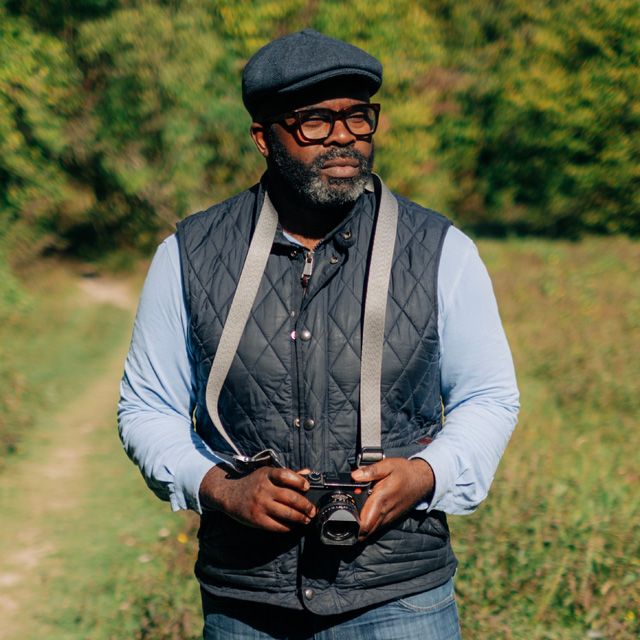
Harriman is internationally known for his documentary photography and portrait work, including widely recognised images connected to social justice movements and public figures.
A deeper cultural and political fault line
As the debate continues, analysts suggest the controversy reflects a deeper struggle within Britain over the boundaries of permissible speech for influential cultural figures — particularly those capable of challenging dominant media assumptions.
For critics of the attacks on Harriman, the issue extends beyond a single social media post, touching instead on broader questions about dissent, institutional pressure and the narrowing space for public questioning within Britain’s cultural sphere.
Read more:
ShortURL ⬇