

The Message British Local Elections Sent to Arab and Muslim Voters
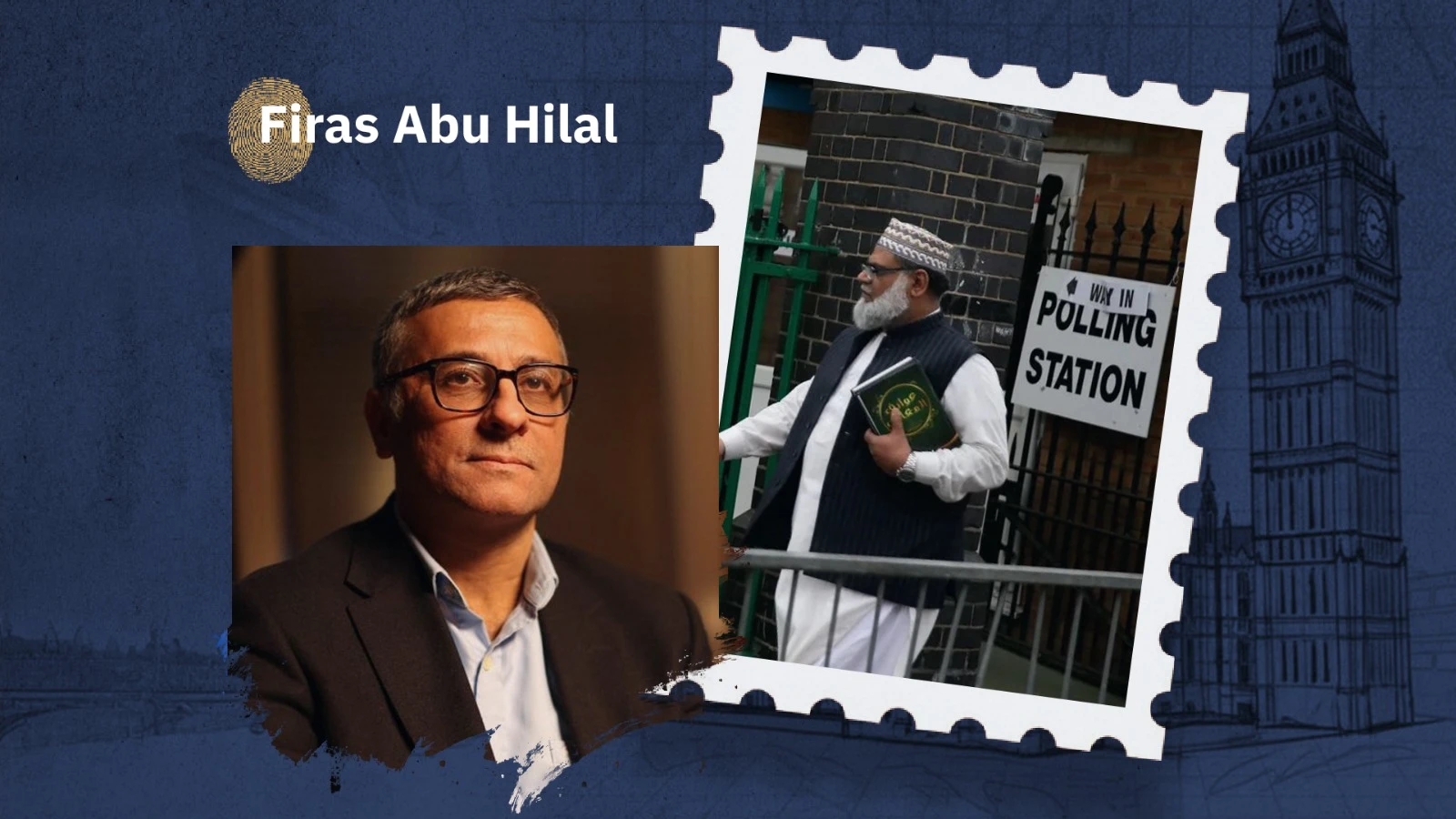
If British Arabs and Muslims want to understand the message emerging from the latest elections, the starting point must be identifying the political frame of reference through which these communities view themselves, and the ground on which they choose to stand.
The proper frame of reference, in my view, is for them to act according to what they truly are: British Muslims and British Arabs — not as outsiders or unwanted groups, but as British citizens who take pride in their religious and ethnic backgrounds within the country’s wider social and cultural fabric, and who vote on that basis.

This does not mean British Arabs and Muslims should become a single voting bloc. People are naturally diverse, and democratic societies are built upon difference. What matters instead is developing a deeper awareness of the importance of elections in a democratic country, building institutions capable of strengthening that awareness, and — most importantly — creating real influence within Britain’s major political parties around the importance of Arab and Muslim voters.
Tactical voting and the message it delivered
It appears that large numbers of Arab and Muslim voters embraced what is commonly known as “tactical voting” during the latest local elections, as well as the 2024 general election.
This form of voting may not decisively reshape national outcomes, but it can produce important local victories — and, more importantly, it sends messages to political parties and political actors.
Tactical voting, and at times punitive voting against Labour by British Arabs and Muslims, achieved its purpose across the last two electoral cycles in several ways.
First, it forced issues important to Arab and Muslim communities — particularly Gaza — onto the political agenda.
Second, it helped elect independent MPs during the 2024 general election and contributed to strengthening the position of the Green Party of England and Wales under its new leadership. It is not an exaggeration to say that if the party continues at the same pace into the next parliamentary elections, it may complete a transition from the margins of British politics — where it has traditionally existed — towards something much closer to the political centre.
Third — and perhaps most importantly — tactical voting delivered a clear message to the parties themselves. Labour realised after the last two election cycles that Arab and Muslim votes could no longer be treated as guaranteed. The party understood that it would need to offer something tangible to voters from these communities. Indeed, Labour reportedly conducted internal studies after the 2024 election and adjusted parts of its rhetoric on issues important to Arab and Muslim voters.
Other parties received a message too: that they can no longer afford to ignore these two large electoral constituencies — particularly Muslim voters — and that it is possible to develop policies and language capable of attracting at least part of their support.
From sending messages to building influence
The more important question now is this: what is the most effective path forward for Arabs and Muslims in future elections?
First, there must be a transition from merely sending political messages — which have already been delivered — towards building genuine influence. Arab and Muslim voters must develop the ability to offer both reward and punishment to political parties, encouraging them to take these communities seriously.
Second, Arab and Muslim votes should not be permanently placed in the hands of any single party. No political party should feel entitled to those votes by default.
Entering politics through its real doors

The third issue is entering politics through its real gateway: political parties themselves.
Much Arab and Muslim political participation in Britain appears to have emerged through the language of protest. Protest is important and often necessary, but it cannot remain the only avenue forever. The future requires combining both approaches: protest and party politics together.
Politics in Britain, as we know, is a profession as much as it is a public arena. That is why the first generation of British Arabs and Muslims must encourage younger generations to engage politically through all mainstream parties — not only one party — while remaining firmly distant from racist movements and organisations.
Class, economics and political positioning
There is also a deeper issue that deserves greater attention: strengthening Arab and Muslim belonging in Britain on a social, economic and political class basis.
Political parties and social movements in democratic societies are not built around ethnicity or religion alone. They are primarily shaped around social and economic interests and class positioning. British Arab and Muslim politicians should therefore situate themselves within the social and economic groups that most closely represent their realities.
This means the political demands of these communities should not revolve exclusively around foreign policy issues such as Palestine or opposition to authoritarianism. They must also include economic and social concerns rooted in everyday life and class realities.
The importance of civil society
Finally, there is the issue of civil society and social movements.
Arab and Muslim communities in Britain need stronger institutions, greater diversity in those institutions, and wider specialisation across social and political work. Too much energy is often wasted chasing the illusion of total organisational unity, when coordination is far more important than uniformity.
The existence of numerous institutions serving Arab and Muslim communities is, in fact, a healthy phenomenon. The more diverse these institutions become, the greater their potential influence — provided they share at least a minimum common understanding of their broader social, political and economic interests.
The next phase

The era of merely sending messages through tactical voting may now be reaching its limits.
The time has come for British Arab and Muslim political engagement to move fully into politics through all its real avenues: political parties, class positioning, social movements, civil society, and protest alike.
Read more:
ShortURL ⬇