


Fasting and the Making of Human Willpower in an Age of Defeat and Despair
As the end of Ramadan approaches, a question quietly returns to many minds: what, in truth, remains with us from this month?
Was it merely a stretch of days in which we abstained from food and drink, only to resume our ordinary routines once it passed?
Or was it something far deeper — a journey that reordered a fundamental element within us known as willpower?
Ramadan, in reality, is not simply a time-bound act of worship. It is an annual school that retrains the human being in something increasingly lost amid the noise of modern life: the capacity for self-control.
Learning the Power to Say “No”

In a world where happiness is measured by the volume of what we consume, and where individuals are constantly urged to surrender to their desires without pause, Ramadan arrives to reverse the equation entirely. Suddenly, one discovers the power to say “no”.
No to food.
No to water.
No to the most basic bodily urges —
and all of this for long hours, in obedience to God.
This experience is far less simple than it appears. At its core, it is a reconstruction of the relationship between the individual and the self.
The person who can restrain themselves from what is permissible can also restrain themselves from what is forbidden.
The person who learns to regulate desire becomes better equipped to regulate fear, despair, and anger.
Here lies the deeper meaning of fasting.
The Crisis of Will in the Modern World
We are not living merely through an era of economic hardship or political instability. We are living in a time when the very will of the individual is under assault.
An entire global order works tirelessly to reduce human beings to mere consumers — creatures preoccupied only with what they buy, what they eat, and what distracts them.
At the same time, when great tragedies unfold, the same individual is pushed towards a profound sense of helplessness, until they begin to believe they play no role in shaping reality at all.
Look around at what is happening across the Arab and Islamic worlds — at the recurring scenes of suffering in Gaza and elsewhere.
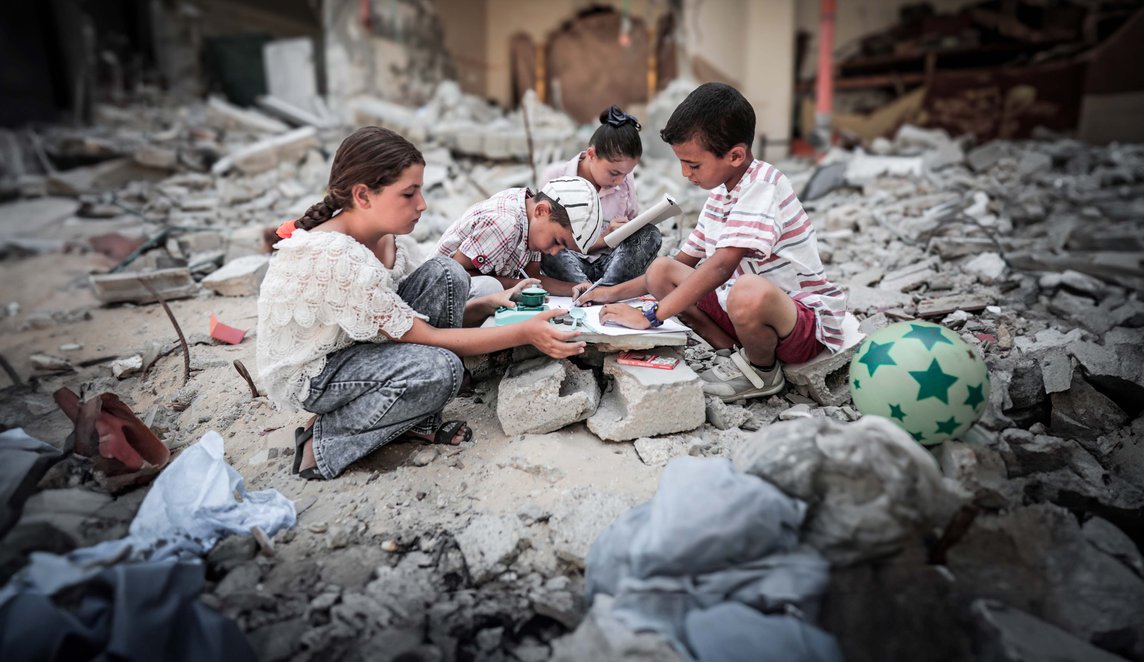
Many feel powerless. Some even surrender to the belief that reality is simply too vast to be altered by human effort.
Yet Ramadan returns each year to gently dismantle that notion.
It tells you, quite simply:
You are capable.
You are the one who managed to abstain from food and drink throughout the day, even though both were within reach.
You endured thirst, hunger, and exhaustion.
You restrained your tongue and tempered your anger in countless moments.
If you are capable of all this, how can you convince yourself that you are powerless to reform yourself, your society, or your circumstances?
Fasting as Training in Freedom and Responsibility

In its essence, Ramadan is a training in freedom.
A person ruled by their appetites is not truly free, even if they possess wealth or authority.
But the person who can curb their impulses is the one who ultimately owns their decisions.
For this reason, fasting in Islam has never been merely a private act of devotion. It has always been tied to the cultivation of strong personalities capable of bearing responsibility.
Perhaps one of the most beautiful aspects of this month is that it does not demand heroic feats.
Instead, it calls for seemingly modest acts:
to abstain from food,
to discipline one’s speech,
to increase in acts of kindness,
to remember the poor,
and to engage in honest self-reflection.
Yet when these simple practices are repeated day after day, over the course of an entire month, they generate a profound transformation within the individual.
It becomes a kind of intensive training programme that replenishes the willpower eroded by the pressures of life.
The Lesson That Must Continue Beyond Ramadan
Thus, as Ramadan draws to a close, the real question is not how many days we fasted, but what fasting has taught us.
Have we emerged with stronger resolve?
Have we become more capable of saying “no” to what harms us?
Have we learned that human beings can change themselves — if they truly choose to?
The difficulty is that many treat Ramadan as a fleeting stop along the way.
The month ends, and old habits swiftly return, as though nothing has happened.
But those who grasp the spirit of Ramadan understand that it is not the end of the journey — it is its beginning.
Fasting is not the ultimate goal; it is a means of shaping a person who is more resilient in spirit, clearer in vision, and more patient in adversity.
A nation composed of individuals with strong will cannot remain defeated forever.
Conversely, societies that lose their sense of agency gain little from weapons or wealth.
The gravest affliction that can strike any nation is neither poverty nor siege, but the loss of will.
When people become convinced they are incapable of change, reality itself begins to resemble a sealed prison.
Yet Ramadan returns each year to remind us of a different truth: human beings are stronger than they imagine.
If one can triumph over oneself for thirty days, one can also overcome weakness and fear.
As this blessed month nears its conclusion, perhaps each of us should ask a simple yet profound question:
Was Ramadan merely a passing experience of hunger and thirst?
Or was it a moment of awakening for a will that had almost fallen asleep?
Nations are not built by speeches alone, nor by grand slogans. They are built first by individuals who know how to master themselves.
Perhaps this is the most important lesson Ramadan whispers into our hearts each year:
the path to changing the world always begins with the moment a person conquers their own self.
Read More:
ShortURL ⬇