


Global Oil Markets Cautious After US-Iran Ceasefire Announcement
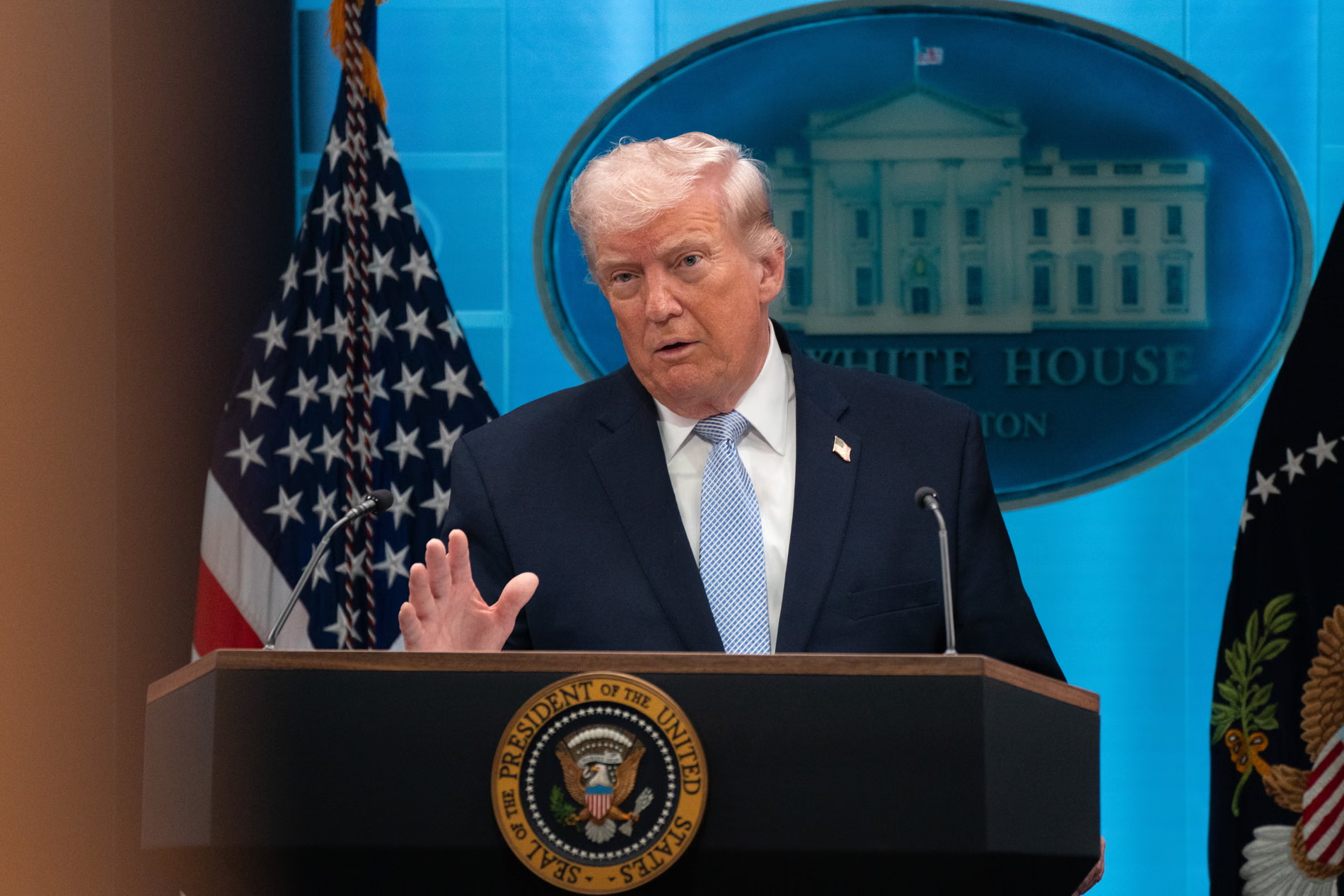
Global energy markets are on edge after US President Donald Trump announced a two-week ceasefire in the escalating tensions with Iran.
The development has prompted a key question for both consumers and investors: will a temporary halt in hostilities be enough to bring down record-high fuel prices?
Oil Prices React Quickly
Crude oil prices fell immediately after the announcement as the “geopolitical risk premium” that had driven prices higher began to ease.
With the threat of a closure of the Strait of Hormuz reduced, Brent crude dropped from levels above $110 a barrel. Traders welcomed the initial relief, though analysts caution that lower oil prices may not reach petrol stations quickly.
Economists describe the phenomenon as “rockets and feathers”: fuel prices surge like rockets during crises but fall slowly like feathers once tensions ease.
In the UK, the AA reports that petrol prices peaked at 157.2 pence per litre, with diesel reaching 189.2 pence. AA spokesperson Luke Bosdet warned that suppliers and fuel stations may wait to cut prices until the ceasefire proves sustainable, noting that two weeks is a very short period in supply chain terms.
Damage to Infrastructure

Physical damage from recent US strikes on Iran’s Kharg Island — a key hub for Tehran’s oil exports — is another factor keeping prices high. Experts say halting attacks does not immediately restore oil flows, as repairing pipelines, energy facilities, and rail lines could take much longer than the two-week ceasefire.
Fatih Birol, head of the International Energy Agency, warned that the current supply disruption is more severe than the major oil crises of 1973 and 1979. He noted that the near-blockade of the Strait of Hormuz, through which one-fifth of the world’s oil passes, created a gap in supply that a temporary truce cannot quickly resolve.
Financial Markets Respond
London’s FTSE 100 index has begun recovering some of the £19 billion it lost during the escalation.
However, analysts including Axel Rudolf of IG warn that tensions will remain the dominant factor, as markets continue to price in the risk of renewed conflict after the two-week period. Any current decline in fuel prices is likely to be “cautious and temporary.”
The two-week truce has eased some pressure on prices, but lasting relief depends on turning the temporary ceasefire into long-term stability. This would ensure safe navigation through key international shipping routes and allow repair of damaged energy infrastructure.
Read More
ShortURL ⬇