

Analysis: Revolt in Britain’s Ministry of Defence – Or Exploiting Starmer’s Moment of Weakness?
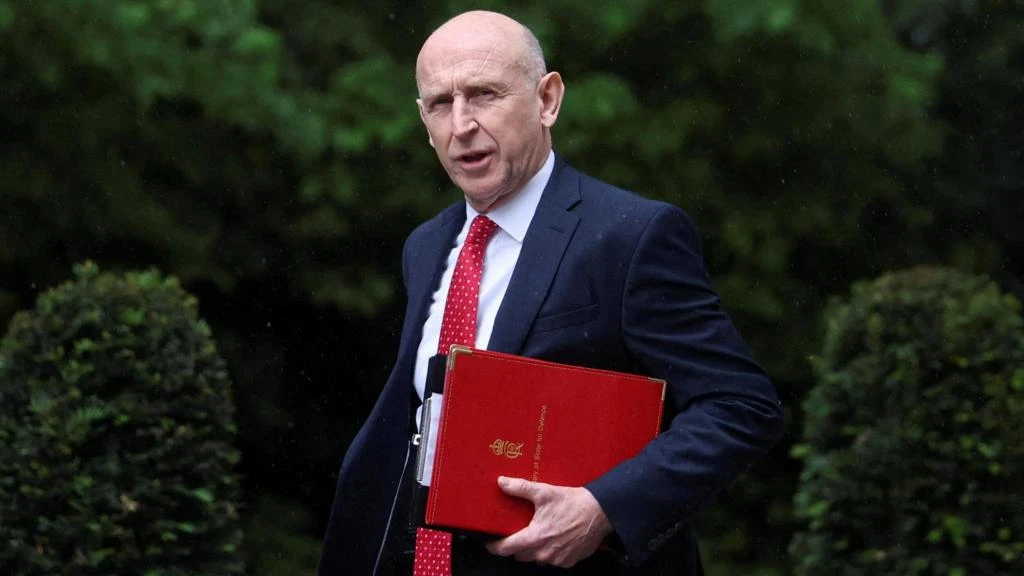
The most damaging line in John Healey’s resignation letter was not the one accusing the Treasury of being “unwilling” to provide the funding Britain’s armed forces need.
It was the sentence that came before it.
“You have been unable to take the necessary decisions.”
Directed at Prime Minister Keir Starmer, those words amounted to something far more serious than a disagreement over budgets or defence priorities.
They carried a harsher accusation: that the government understands the scale of the threat it faces, but lacks the ability to do what confronting it requires.
In British politics, few charges are more devastating for a prime minister. It questions not only their judgement, but their fitness to lead.
That is why Healey’s resignation does not look like the departure of a defence secretary over a funding dispute.
It looks like a rare moment of candour at the heart of government — one in which an argument over spending targets became a more unsettling question:
Is this government still capable of making the decisions demanded by a more dangerous world?
More Than a Defence Crisis

It would be easy to read what happened as simply another chapter in the story of Keir Starmer’s political weakness.
The resignation came after painful local election losses, growing speculation about potential rivals within the Labour Party, and a succession of departures that have prompted serious questions about the prime minister’s ability to maintain discipline and cohesion within his government.
But reducing the episode to a leadership crisis risks missing the larger story.
What Healey’s letter revealed is that Britain is no longer debating whether the threats it faces are real.
The argument has moved on.
The harder question now is how the country should prepare for them. The letter suggests that Healey and Starmer were not divided in their diagnosis of the world.
Both appear to recognise the same dangers: the war in Ukraine, tensions surrounding Iran and the Strait of Hormuz, growing pressure on Britain’s armed forces, and concerns that Russia could pose a greater challenge to Nato in the years ahead.
Agreeing on the nature of the threat, however, is not the same as agreeing on what to do about it.
That is where the real disagreement began.
If We Know the Risks, Who Pays the Price?

Starmer had pledged to increase defence spending to 3.5% of GDP by 2035.
Healey, by contrast, reportedly viewed reaching 3% by 2030 not as an ambitious political aspiration but as an urgent security necessity.
Between those two timelines lies the entire dilemma.
The Treasury is reluctant to borrow more.
Taxes are already high.
Public services remain under intense strain.
And British voters do not appear eager to sacrifice elements of the welfare state in preparation for threats that may still feel distant or abstract.
The question, then, is no longer whether defence spending should rise.
It is where the money will come from. For years, Britain — like much of Europe — managed to avoid that conversation.
In a world that appeared relatively stable, under the protection of a broad Atlantic security umbrella, governments could maintain comparatively generous welfare systems while keeping defence spending politically manageable.
That balance now looks increasingly fragile.
More Than One Thing Can Be True
John Healey may genuinely believe that Britain is failing to prepare adequately for a more dangerous world.
He may also believe that Keir Starmer has lost the ability to impose his priorities on the Treasury.
And perhaps, like many within Labour, he recognised that the prime minister has entered a period of unusual political vulnerability following a series of setbacks and resignations — making it less costly to take a principled stand against a weakening leader than it would have been a year ago.
It is always easier to score points against authority when authority is already faltering.
But these explanations do not cancel one another out.
They may all be true at the same time. That is precisely what makes the resignation more significant, not less. This was not a technical disagreement over a few extra billion pounds.
It was a severe political verdict on the prime minister’s capacity to lead at a moment demanding difficult choices.
An Age in Crisis as Much as a Man

Perhaps that is why John Healey’s resignation feels like more than another episode in Keir Starmer’s troubles.
It is more than the familiar clash between a spending department and a cautious Treasury.
It marks the point at which the realities of a more dangerous world collided with the constraints of a less generous economy and a political system increasingly reluctant to make painful choices.
For years, Britain and much of Europe managed to postpone this reckoning.
Today, the question has reached the cabinet table itself:
If everyone agrees on the scale of the threat, who has the political courage to pay the price of confronting it?
Perhaps the most alarming aspect of Healey’s resignation is not that it claimed the government does not know what needs to be done.
It suggested something more troubling. That it knows exactly what must be done.
But may no longer be capable of doing it.
Read more:
ShortURL ⬇