


Trump and the Strangulation of the World through the Strait of Hormuz
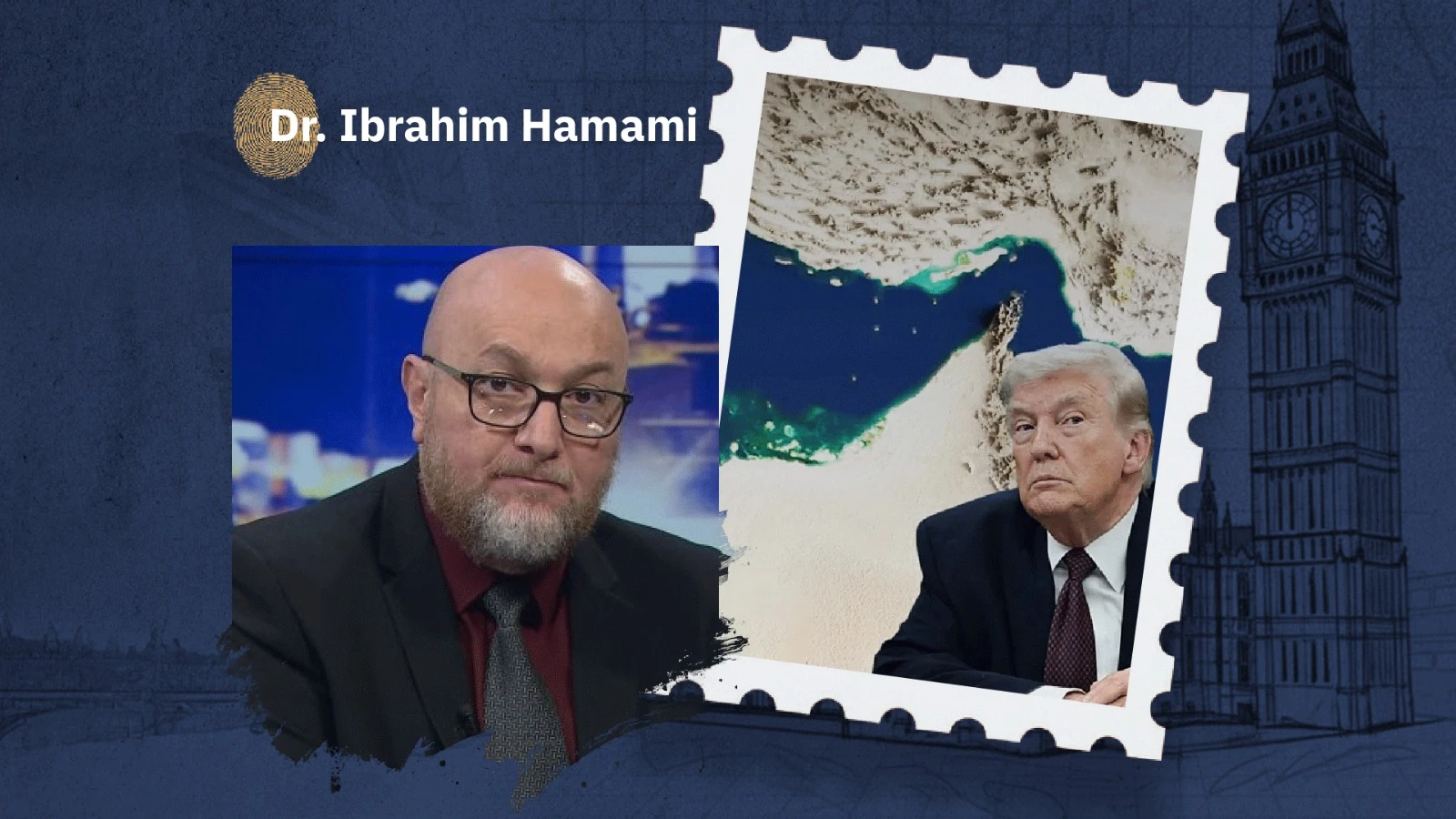
If we assume the emergence of a functional paralysis in the Strait of Hormuz as a result of the convergence of two mutually incompatible dynamics – strict Iranian transit fees on one hand, and American pursuit of any vessel complying with those conditions on the other – then the analytical starting point requires recalling that this strait had, prior to the recent phase of military escalation, been effectively open to international navigation without any significant obstacles, and was not in itself a justification for escalation, as it was already functioning efficiently.
The paradox, however, lies in the fact that the objective of “ensuring freedom of navigation” later became a central demand after the dynamics of escalation themselves contributed to creating an environment that disrupted passage or rendered it so risky as to undermine its economic viability. Thus, the causal sequence becomes inverted: a measure ostensibly intended to safeguard maritime flow ends up effectively undermining it, transforming freedom of navigation from an existing condition into a contested issue.
In this context, the discussion is not about a conventional “closure” imposed by a unilateral decision, but rather about a functional disruption arising from the interaction of conflicting policies that produce a commercially unworkable environment.
The first and most immediate impact emerges in global energy markets, where approximately 20–25% of global oil trade – around 17 to 20 million barrels per day – passes through the strait. Any significant disruption to this flow, even if partial, effectively removes a substantial volume from the market within a short time frame, driving prices sharply upward.
In such a scenario, prices could rapidly rise to the range of $120 – 150 per barrel within days, with the potential to exceed $180 if the disruption persists or intensifies. This surge should not be understood merely as a price increase, but as a breakdown in pricing stability itself, as markets enter a phase of acute volatility and uncertainty.
Natural gas is no less critical in this context. Roughly one-third of global liquefied natural gas (LNG) trade transits through the strait, with heavy reliance on Gulf exports, particularly from Qatar. Disruption of this route places immediate pressure on Europe and Asia, potentially recreating an energy crisis exceeding the severity of that seen during the Ukraine war. As gas prices rise, the cost of electricity generation and heavy industry escalates, broadening the economic impact.
The effects extend further into the agricultural sector through fertilisers, as Gulf countries are key producers of ammonia and urea. Supply disruptions could drive prices of these inputs up by 50 – 100% within a few months, increasing global agricultural production costs and, consequently, food prices. This form of inflation carries significant social and political risks, as it directly affects food security, particularly in lower-income countries.
At the same time, global supply chains would face mounting disruption. Maritime insurance companies would likely classify the region as a high-risk war zone, sharply increasing premiums or withdrawing coverage altogether. Shipping companies would reassess routes, either avoiding the strait or diverting via longer alternatives such as around Africa, increasing both time and cost. The immediate result would be delayed deliveries, higher prices, and renewed bottlenecks in global supply chains.
This interaction between rising costs and slowing economic activity leads to stagflation, where inflation rises alongside weakening growth. In such conditions, central banks tend to raise interest rates to control inflation, further pressuring investment and financial markets. Global stock markets could experience sharp declines, while capital flows shift toward safe-haven assets such as gold, alongside a short-term increase in demand for the US dollar.
Among the sectors most rapidly affected is aviation, as jet fuel is closely tied to oil prices. With oil prices rising by 50 – 100% in such a scenario, jet fuel costs would increase correspondingly. Given that fuel accounts for approximately 20 – 30% of airline operating costs – rising to over 40% during crises – this would place immediate strain on airlines. The result would be higher ticket prices, reduced flight frequencies, and rerouting to avoid conflict zones, increasing flight durations and fuel consumption, thereby reinforcing inflationary pressures within the sector.
At the level of global power dynamics, China emerges as one of the most affected actors due to its heavy dependence on Gulf energy imports. With up to a fifth of its oil imports potentially disrupted via this route, it faces difficult choices, including drawing on strategic reserves, increasing reliance on alternative suppliers such as Russia, intensifying diplomatic pressure, and potentially engaging in limited naval measures to protect its shipping if necessary. This places China in a delicate position between safeguarding its interests and avoiding direct confrontation.
Meanwhile, Gulf states themselves face direct consequences despite being primary energy exporters. The disruption of exports translates into an immediate loss of revenue, placing significant pressure on public finances, especially given their dependence on continuous hydrocarbon income. The disruption of 17- 20 million barrels per day does not merely reduce income; it disrupts fiscal planning, delays major projects, and increases reliance on reserves or borrowing.
Available alternatives, such as pipelines to the Red Sea or the Arabian Sea, can only offset a limited portion of the disrupted volumes, leaving much of the production without an effective export outlet. This creates a stark paradox: the capacity to produce without the ability to export, and thus an inability to benefit from rising global prices.
The impact extends beyond direct revenues to energy-related industries such as refining, petrochemicals, and logistics, as well as increased insurance and shipping costs. Politically, these states find themselves balancing strategic alliances with vital economic interests, forcing a delicate recalibration amid escalation that could also generate internal pressures and raise broader questions about reliance on geographically constrained trade routes that represent both strength and vulnerability.
These impacts can be summarised as follows:
- Disruption of 17-20 million barrels of oil per day (around a quarter of global trade).
- Impact on roughly one-third of global LNG trade.
- Oil prices rising to $120-150, potentially exceeding $180.
- Fertiliser prices increasing by 50-100% within months.
- Rising shipping and insurance costs with global trade rerouting.
- Entry of the global economy into stagflation.
- Significant increases in aviation costs and ticket prices.
- Direct impact on Gulf economies despite their central role.
In conclusion, the danger of this scenario lies not merely in a formal military closure, but in the creation of an economically unworkable environment in which risks and costs exceed what market actors can bear. Thus, disruption is achieved in practice without formal declaration, and geography becomes a lever reshaping the global economy at unprecedented speed, in one of the most sensitive moments in the history of the international economic system.
Trump is leading the world into a dark tunnel through decisions marked by impulsiveness, personalisation, and inconsistency, despite warnings from his advisers and military leadership.
There is no visible end to this tunnel in the foreseeable future.
Read More:
ShortURL ⬇