

From Riyadh to London: Banan Launches a Specialised Training Programme to Develop Leaders in Saudi Arabia’s Restaurant and Hospitality Sector
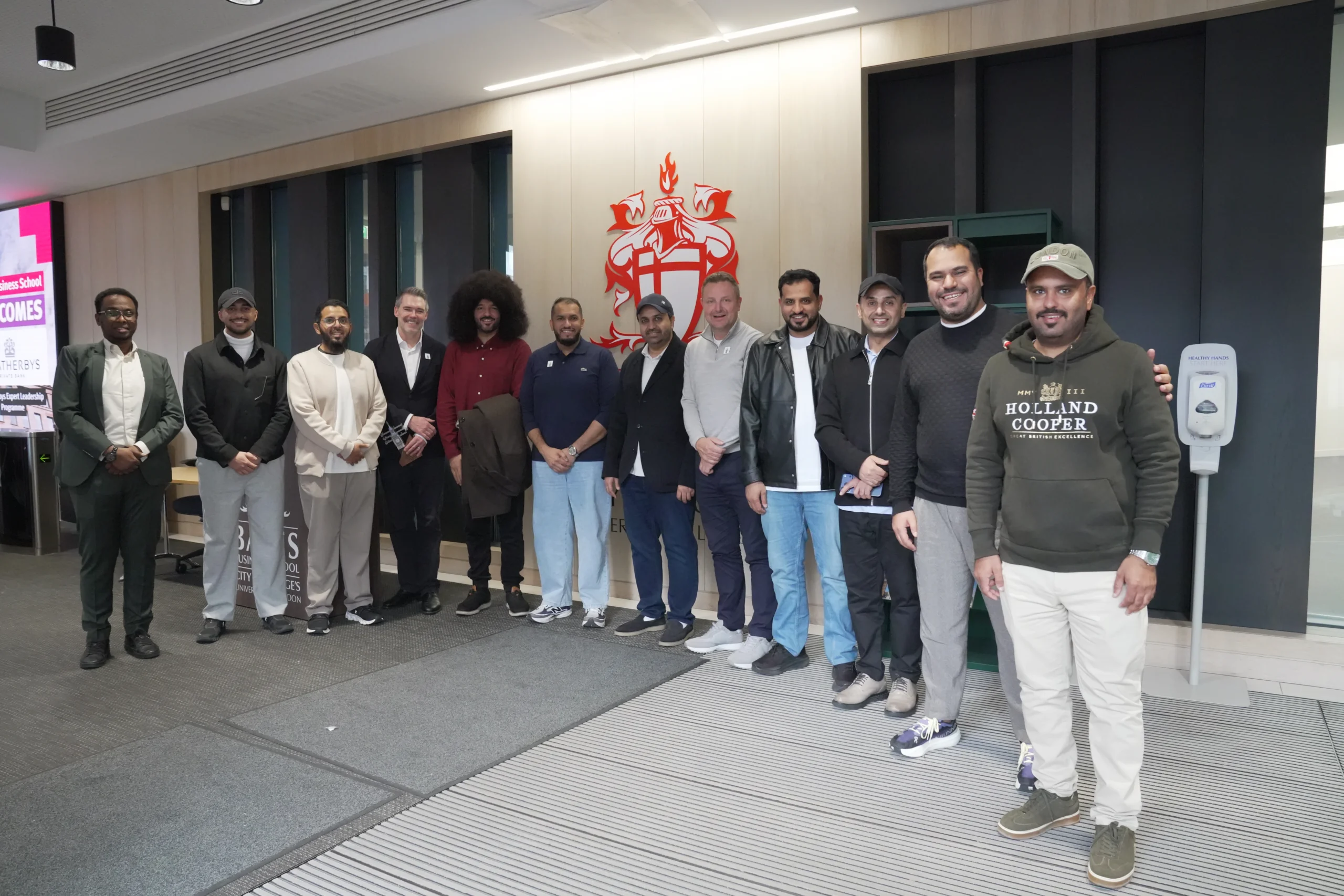
Competition in the restaurant and café sector is no longer determined solely by attractive design or the quality of a menu. Instead, it increasingly depends on businesses’ ability to build integrated business models that combine market understanding, operational efficiency, revenue management, customer experience development, and readiness for expansion at both local and international levels.
Against this backdrop, Banan, a company specialising in the design and delivery of restaurants and cafés and the development of hospitality projects, organised a training programme in London from 13 to 17 October 2026. The programme targeted entrepreneurs, chief executives, investors, and owners of restaurant chains from Saudi Arabia and the wider Gulf region.
The programme comes amid significant changes in Saudi Arabia’s hospitality sector, as the market expands, competition intensifies, and ambitions grow to build brands capable of achieving sustainable growth and expansion. The challenge is no longer limited to launching a new restaurant. It increasingly involves turning an idea into a commercially and operationally viable business that can maintain its quality and profitability as it grows.
Banan’s decision to organise a training programme in Britain reflects an effort to connect Gulf business leaders with practical experiences, academic institutions, and professional expertise in an international market. The programme combines field visits, specialised training sessions, and professional meetings rather than relying solely on theoretical content or conventional introductory tours.
A Programme That Goes Beyond Introductory Visits to Specialised Training
According to the information provided about the programme, it is presented as the first of its kind to target this group of Gulf business leaders through a training tour in Britain, combining academic knowledge with practical applications in the restaurant and hospitality industry.
Its significance lies in its focus on decision-makers themselves: from investors determining where to allocate capital, to chief executives leading business growth, and entrepreneurs seeking to develop commercial concepts and transform them into scalable brands.
The programme was led by Dr Mohammed Al-Humaizi, co-founder and chief executive of Banan. According to his professional biography, he has more than 20 years of experience in leadership, organisational transformation, and business development, alongside a PhD in Transformational Leadership and Innovation from the University of Birmingham in Britain.
Banan operates in the design and delivery of restaurants and cafés and the development of their brand identities. Its services include interior design, brand development, fit-out and implementation, and consultancy related to establishing hospitality businesses. The company says it has more than 15 years of experience in the field. Its official website showcases projects across more than 30 cities, with over 200 restaurants and cafés listed in its portfolio.
The programme therefore carries particular significance because it has been organised by a company operating at the intersection of design, operations, and investment, with the aim of broadening the discussion from how to create a restaurant to how to build a commercially competitive and sustainable business.
Bayes: Putting Academic Knowledge at the Heart of the Experience
An Academic Visit to Bayes Business School

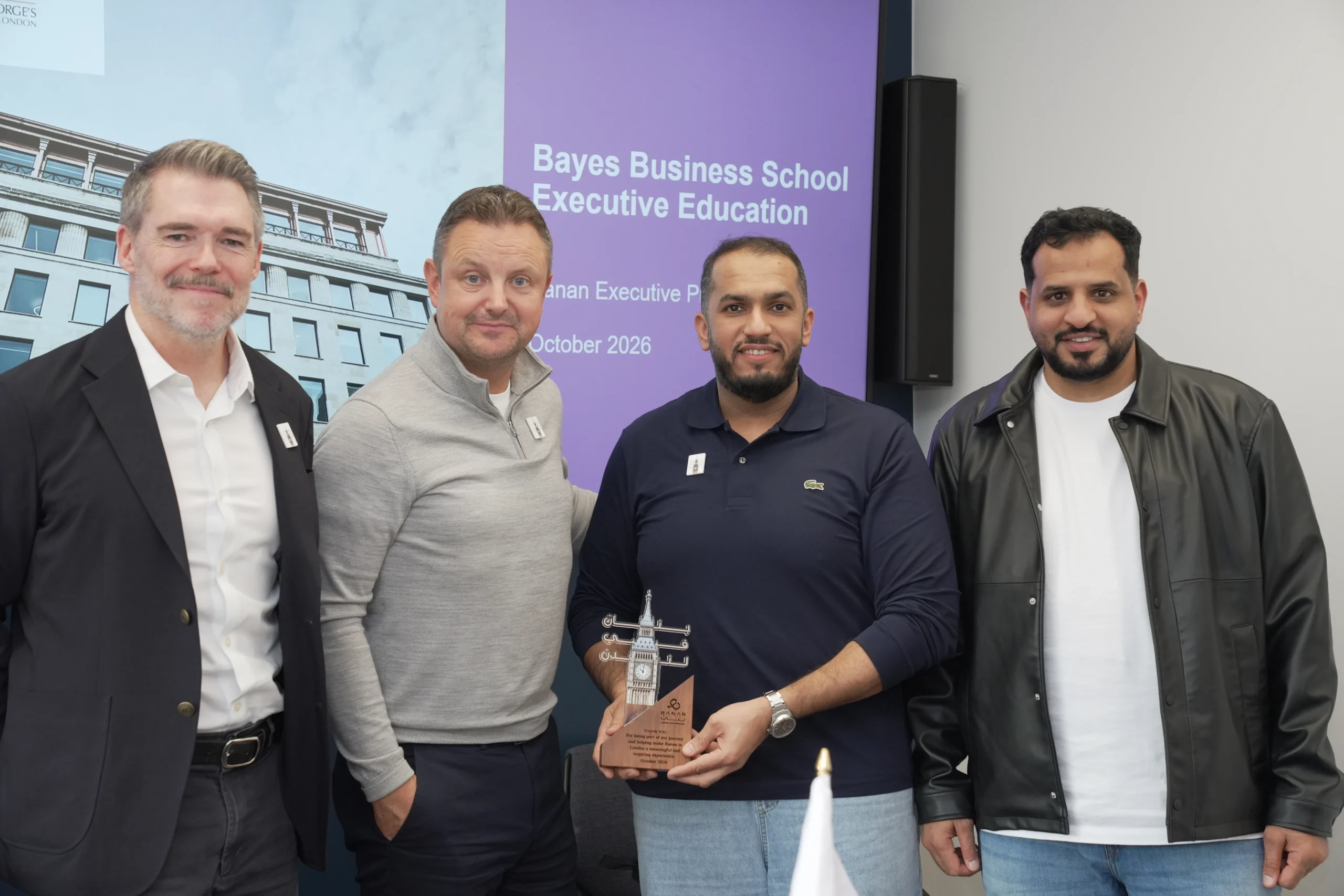
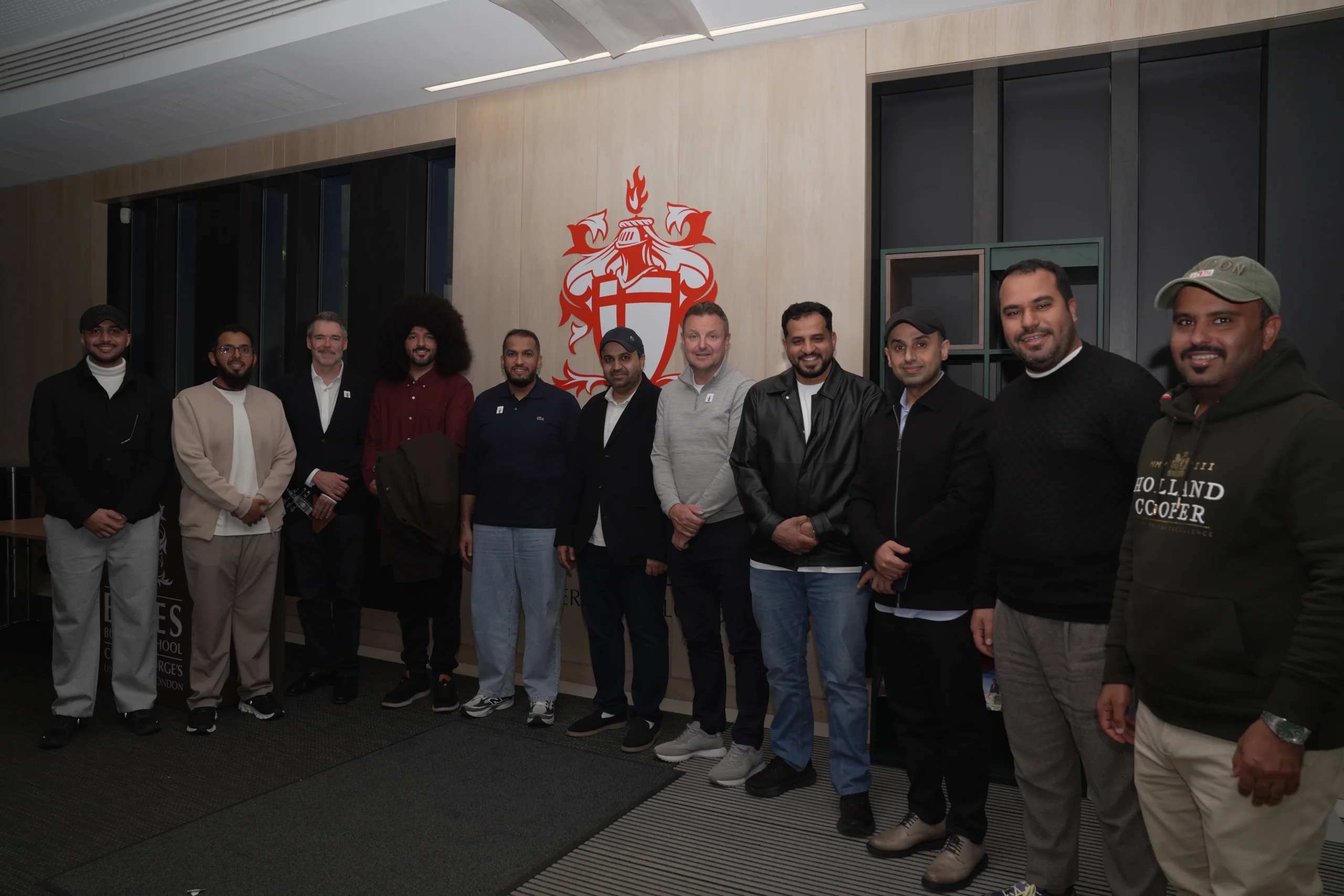
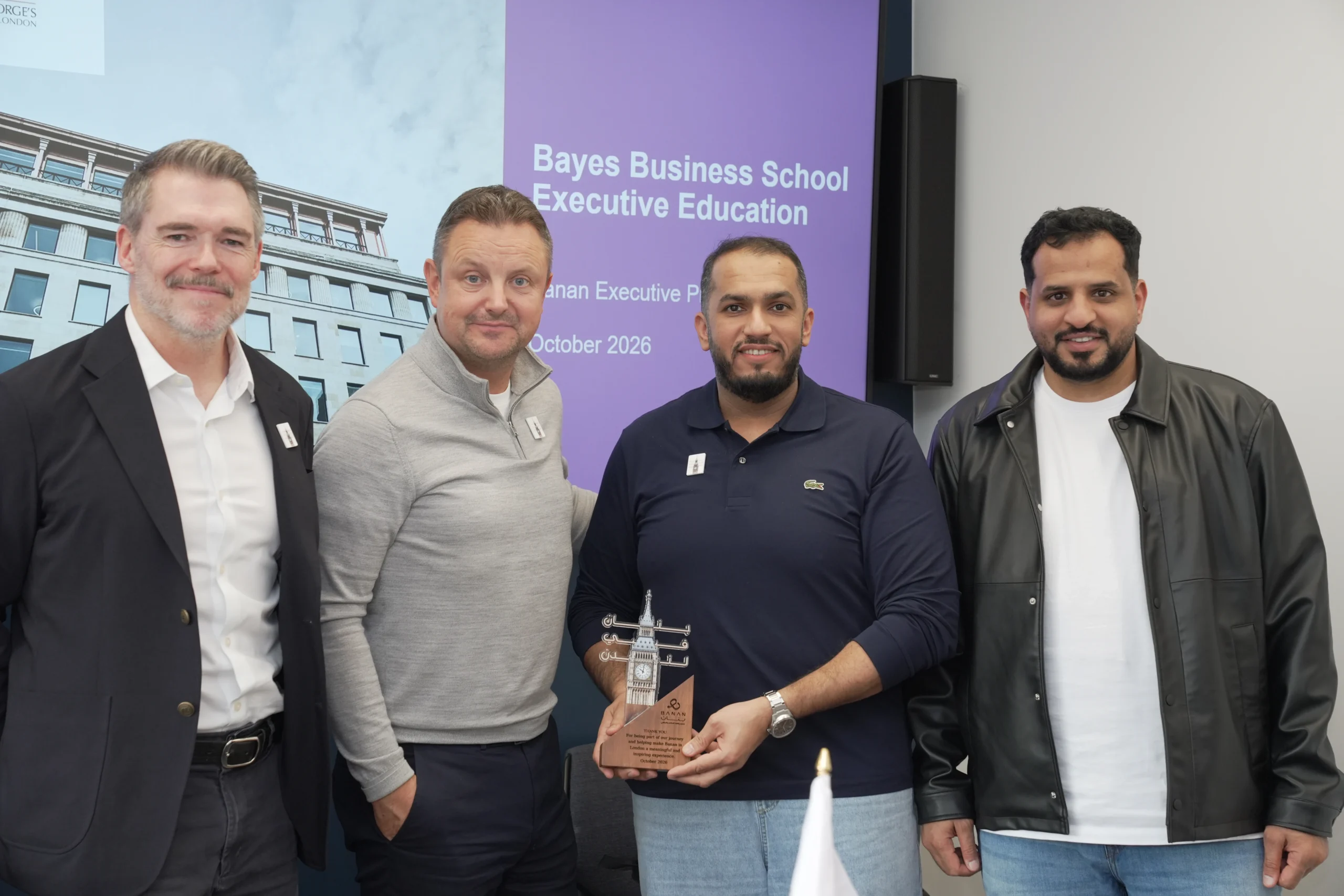
A visit to Bayes Business School, part of City St George’s, University of London, was one of the programme’s academic highlights on 14 October.
Bayes Business School is an internationally recognised business school. Its location in London, one of the world’s leading financial and business centres, provides an environment that brings together academic research, professional practice, and engagement with the business community.
The school covers fields including management, strategy, entrepreneurship, finance, marketing, organisational behaviour, and human resources. It also offers executive education programmes designed to develop professional leaders’ skills, linking research-based knowledge with the practical challenges faced by organisations and businesses.
The visit is particularly relevant to Gulf restaurant leaders because managing restaurant chains is closely connected to broader concepts in management, strategy, and finance. Expansion, for example, does not depend solely on the success of the first branch. It also requires the ability to assess investment viability, standardise quality, manage resources, and build an organisational structure capable of supporting multiple branches across different markets.
Exposure to Britain’s business education environment also gives participants an opportunity to explore approaches to entrepreneurship as an integrated process that begins with identifying a commercial opportunity, proceeds through testing the business model, and culminates in building an organisation capable of growth. Through its programmes for entrepreneurs, Bayes offers content that combines management knowledge, practical application, and business development.
This approach aligns with the needs of Saudi Arabia’s restaurant sector, which is moving away from reliance on individual initiatives towards more structured commercial groups with clear operating systems, data-driven decision-making, and the capacity to expand while maintaining brand identity and service quality.
The Saudi Embassy in London: Expanding into International Markets
A Diplomatic and Commercial Stop
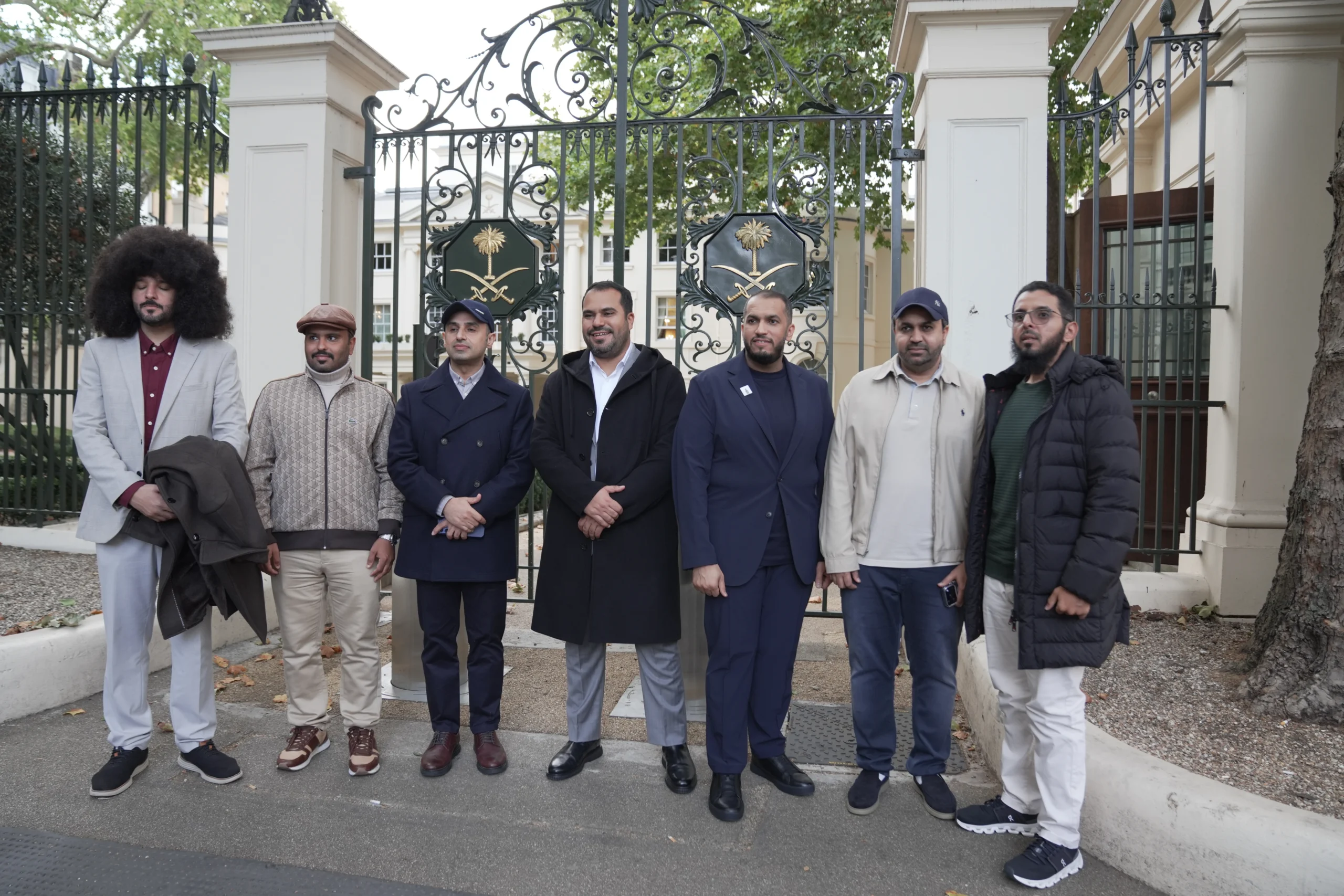
The Saudi Embassy in London welcomed the participants on 15 October as part of a programme that included meetings and information related to commercial expansion in Britain.
The tour included a visit to the Saudi Embassy in London, where embassy officials received the participants and shared information and expertise concerning commercial expansion opportunities in Britain, as well as the importance of preparing Saudi companies and institutions to enter international markets.
This stop is particularly significant as Saudi brands increasingly seek to move beyond the domestic market and take advantage of opportunities abroad, whether by opening new branches, establishing commercial partnerships, or developing franchise models that can be scaled.
Entering an international market requires more than operational success. It also demands an understanding of the commercial and legal environment, consumer requirements, the competitive landscape, and partnership-building mechanisms, alongside the ability to present a brand in a way that reflects its identity and values.
From this perspective, the visit offered participants an opportunity to explore the institutional and diplomatic dimensions of commercial expansion and understand the importance of aligning a company’s own readiness with the information, guidance, and relationships available in its target market.
International expansion also carries significance beyond direct commercial returns. Through their international presence, Saudi brands can help introduce the Kingdom’s culture, cuisine, and diversity to new audiences, while showcasing the development of its business sector.
This supports the ambitions of Saudi Vision 2030 to diversify the economy and strengthen the global presence of national companies.
From Operational Efficiency to Revenue Growth
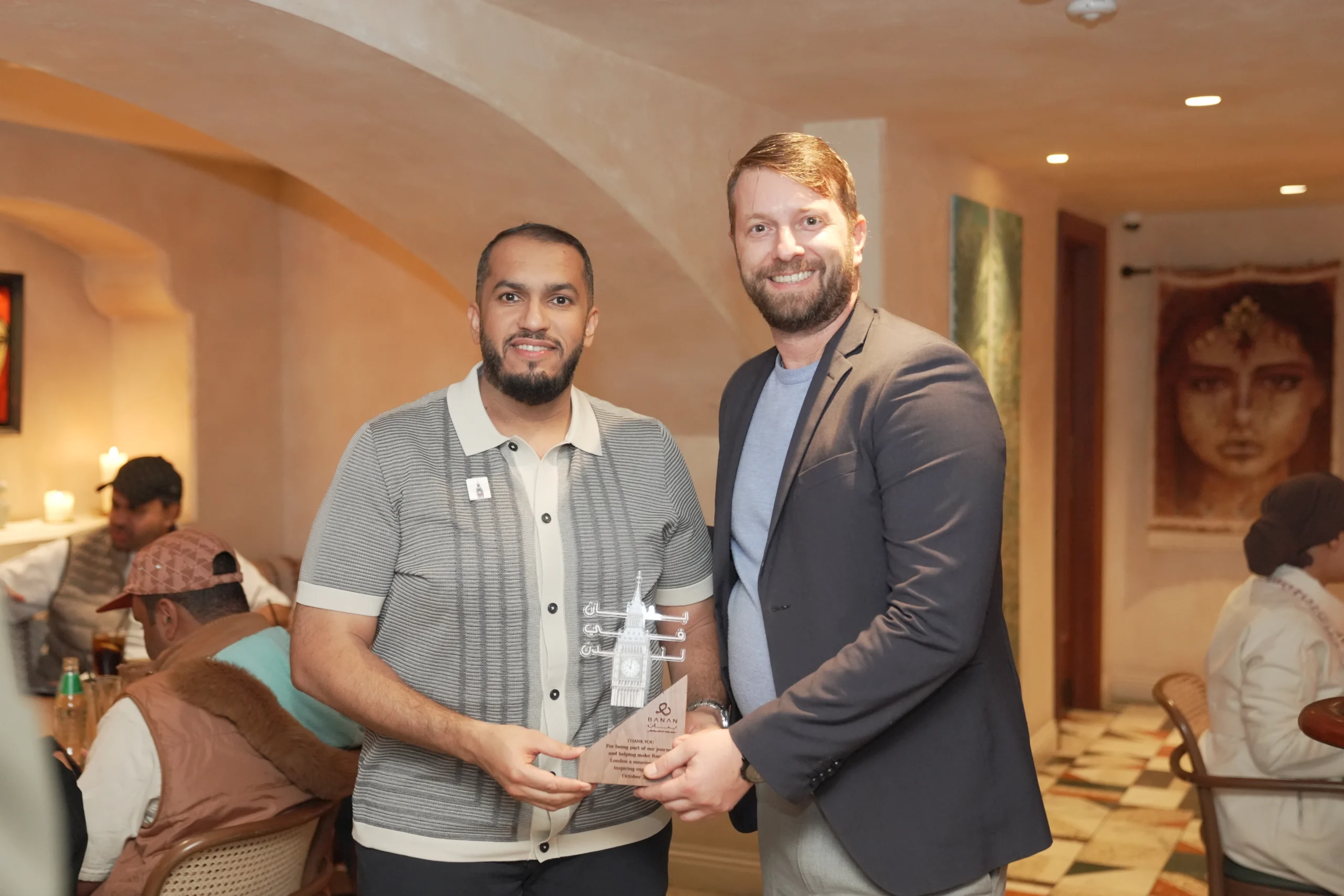
The programme was not limited to institutional and academic visits. It also included training sessions addressing operational and financial aspects central to restaurant and café performance, ranging from service management to revenue growth and the development of commercial concepts.
On 14 October, Joanna Abidan delivered a session entitled Cross-Sector Efficiency in Hospitality, focusing on the potential to improve hospitality businesses’ performance by drawing on operational practices and shared expertise across different sectors.
The following day, the programme featured a keynote session delivered by Youssef Mousa entitled UK Market Extension for KSA Brands. The session focused on a subject directly linked to the ambitions of Saudi brands seeking to enter international markets.
The importance of this topic lies in the fact that international expansion cannot be achieved simply by transferring a brand name and design to a new market.
It requires an assessment of how well the product fits the target market, an understanding of consumer behaviour, identification of the audience the brand seeks to reach, accurate estimates of operating costs, and the development of a business model capable of accommodating differences between the two markets.
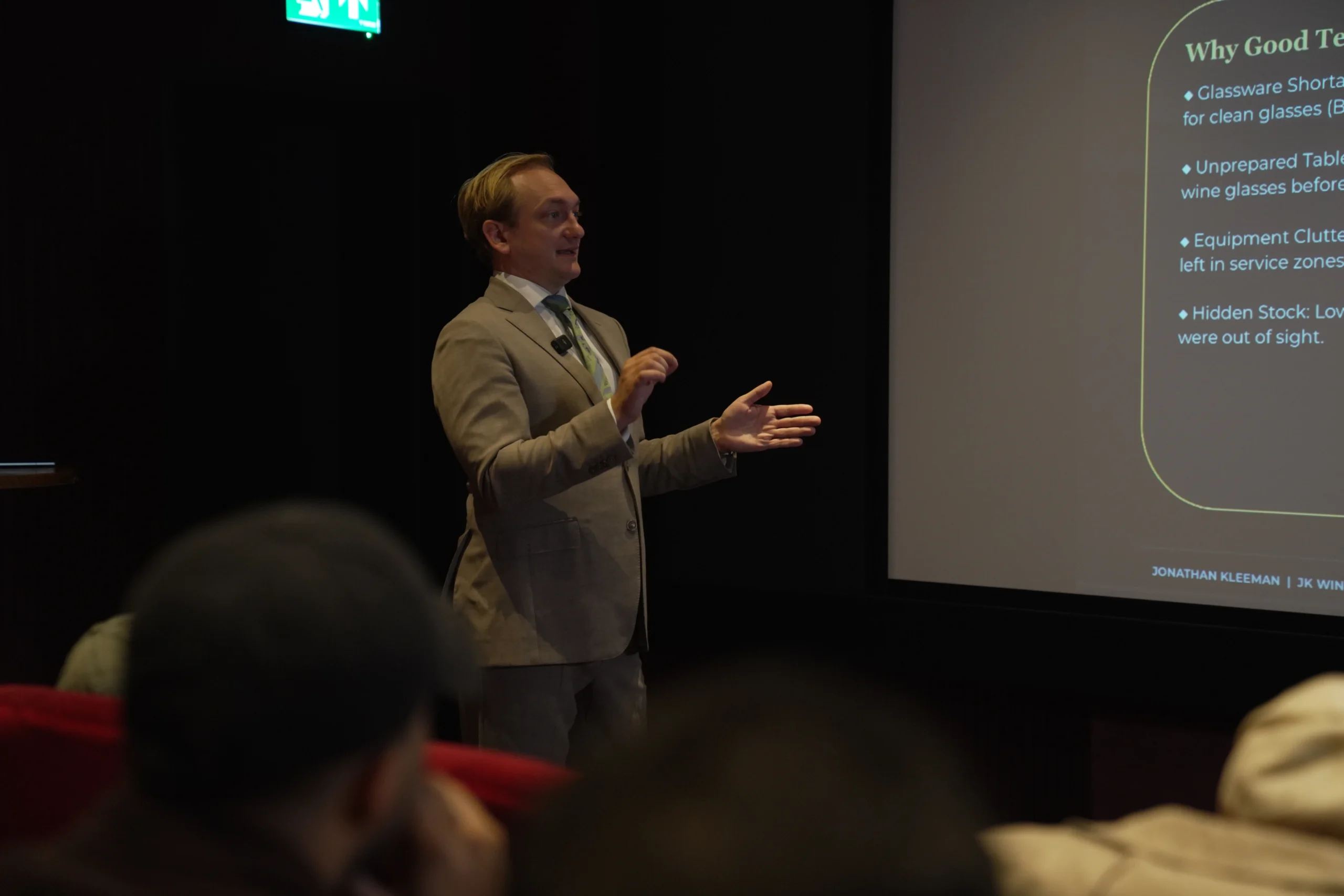
On 16 October, the programme featured two specialised sessions. The first was delivered by Jonathan Kleiman and entitled FOH Revenue & Average Spend. The second, delivered by Olivia Reed, was entitled Multi-Vendor F&B Concepts.
Both sessions have practical relevance for operators and investors. Average customer spend, for example, is one of the indicators that helps management assess commercial performance, but it cannot be considered in isolation from visitor numbers, cost of sales, labour costs, rent, and profit margins.
Meanwhile, multi-vendor food and beverage concepts offer an opportunity to explore business models that bring together a variety of offerings within a single hospitality experience, along with the operational considerations involved in managing such concepts, allocating space, and coordinating services.
These topics reflect a management approach that goes beyond focusing on sales alone to examine the relationship between revenue, costs, and customer experience.
This relationship is crucial in an industry where results are influenced by everyday details such as service speed, space utilisation, staff efficiency, and repeat visits.
British Restaurants as a Testing Ground for Experience and Learning
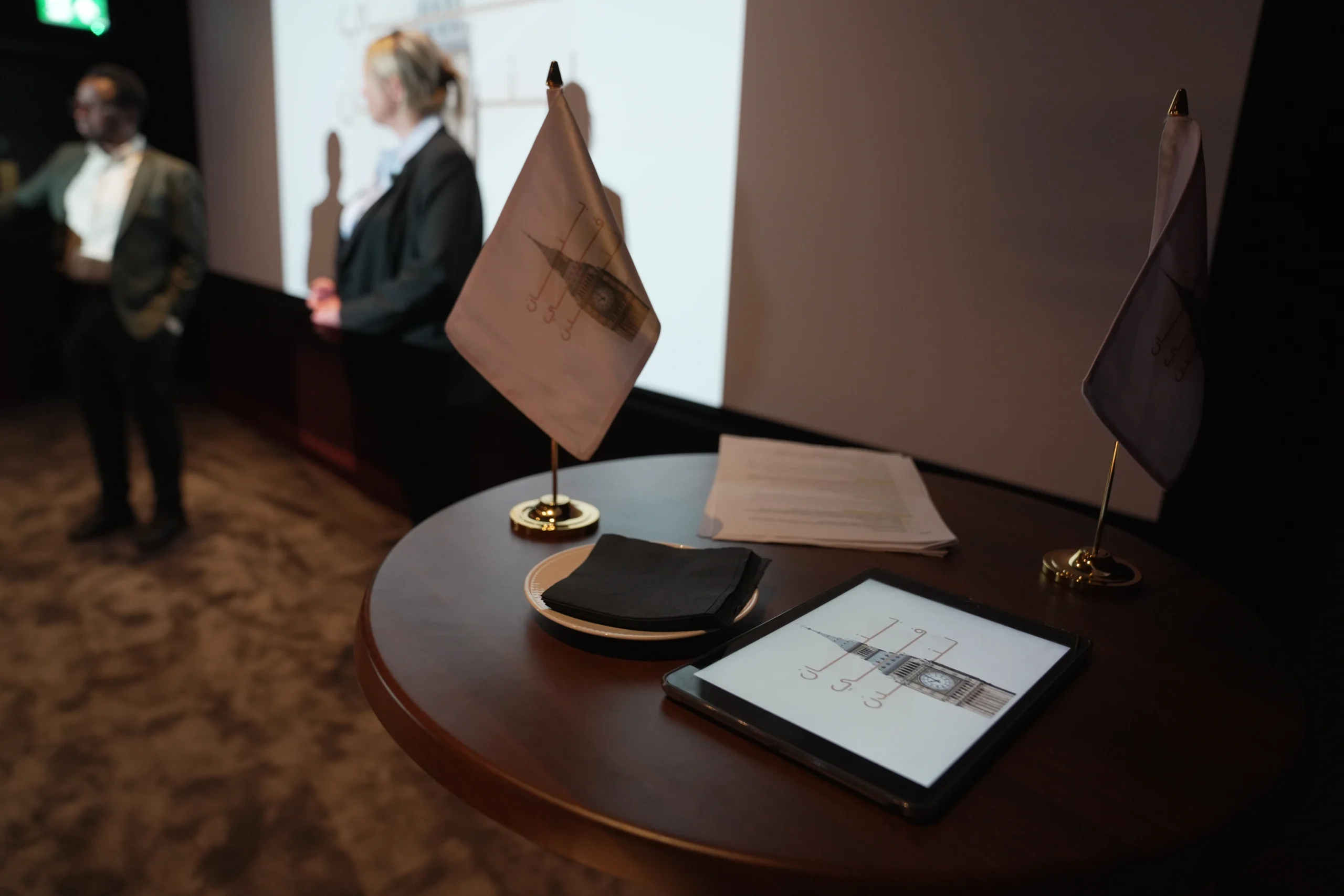
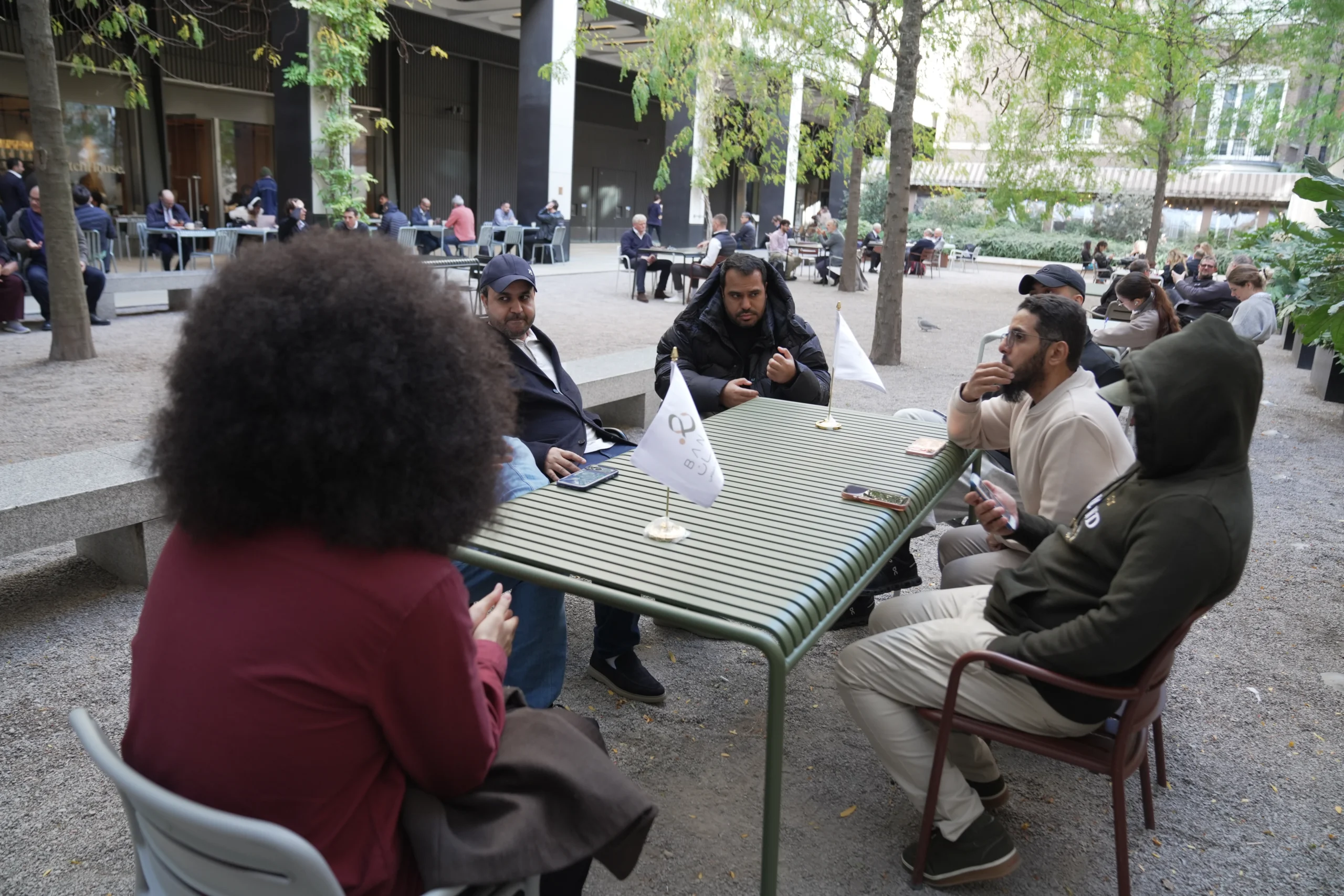
Alongside the training sessions, the programme included field visits and practical experiences at several restaurants and cafés in London. These included Granger & Co, WatchHouse, Jacuzzi, Apple Butter, KOUB Café, and Qima Café, as well as Berenjak.
These visits gave the programme a practical dimension, allowing participants to explore a variety of hospitality experiences and observe how brands present themselves to customers, organise their spaces, create an atmosphere, and integrate service elements with their commercial identities.
Field visits offer a different perspective from viewing project photographs or floor plans. First-hand observation allows participants to notice details that may not necessarily be apparent in the final design, such as customer flow, reception arrangements, seating layouts, the relationship between service areas and preparation spaces, and how a consistent experience is maintained in a live operating environment.
The diversity of restaurants and cafés included in the programme also allows participants to compare different commercial concepts rather than treating a single model as a universal formula for success. What works for a specialist coffee shop may not suit a restaurant offering a comprehensive dining experience, while a concept that succeeds in a central London location may require adjustments before being introduced in Riyadh or Jeddah.
This highlights the value of transferring knowledge selectively and thoughtfully: identifying practices that can be adapted to the Saudi market rather than simply reproducing designs or imitating popular trends.
A Growing Saudi Market Where Competition Demands More Professional Management
The initiative comes at a time when Saudi Arabia’s foodservice sector is experiencing notable growth, driven by changing consumption patterns, the expansion of tourism and entertainment activities, and increasing demand for diverse restaurant and café experiences.
Mordor Intelligence estimates that Saudi Arabia’s foodservice market was worth approximately $30.12 billion in 2025 and projects that it will reach around $44.67 billion by 2030, representing a compound annual growth rate of 8.2% over the forecast period.
Other research estimates place the market at higher levels, reflecting differences in measurement scope and the definitions used in market reports.
These figures do not mean that growth is guaranteed for every business. A growing market creates substantial investment opportunities, but it also increases the importance of financial and operational discipline, careful site selection, an understanding of customer needs, and the ability to stand out amid competition.
An investor may have the capital and the idea, but a project’s success remains dependent on several interconnected factors: an appropriate location, rent levels that align with projected sales, a carefully developed product menu, a qualified team, a clear operating system, a consistent brand identity, and an experience that encourages customers to return.
Building a scalable brand therefore requires establishing a successful model that can be replicated while retaining the flexibility needed to adapt to different locations and customers.
This is one of the issues that gives specialised training programmes their value: they encourage decision-makers to consider investment viability and business sustainability, rather than focusing solely on appearance or the appeal of a new opening.
What Could the Tour Bring to Saudi Arabia’s Restaurant Industry?

The programme’s anticipated value will depend on its ability to translate the knowledge gained into practices that participating companies can implement.
Its potential impact could be seen across several areas:
- Improving operational efficiency: Developing day-to-day procedures, strengthening team management, and reviewing resource allocation to help reduce waste and improve service quality.
- Enhancing investment decisions: Strengthening the ability to assess locations, rents, establishment costs, and operating expenses, rather than relying solely on impressions when launching a new business.
- Developing the customer experience: Connecting design and brand identity with the customer journey through a restaurant or café, from arrival to the completion of the visit.
- Strengthening scalability: Establishing operating standards that can be replicated across new branches while preserving brand identity and service standards.
- Preparing for international markets: Deepening participants’ understanding of the requirements for expansion into Britain and similar markets, while using professional and institutional connections to develop more realistic plans for entering them.
Potential beneficiaries include investors and restaurant-chain owners, executive management teams, operations and development departments, and entrepreneurs seeking to move from running an individual business to building a structured brand.
At the sector level, initiatives that connect knowledge with practical application could help strengthen professionalism and encourage the exchange of expertise, provided they are followed by a genuine review of business practices and an assessment of results.
The real value of any training programme is not measured solely by the number of visits or sessions it includes, but by the changes implemented after participants return to their businesses.
Banan: From Designing Spaces to Building Businesses
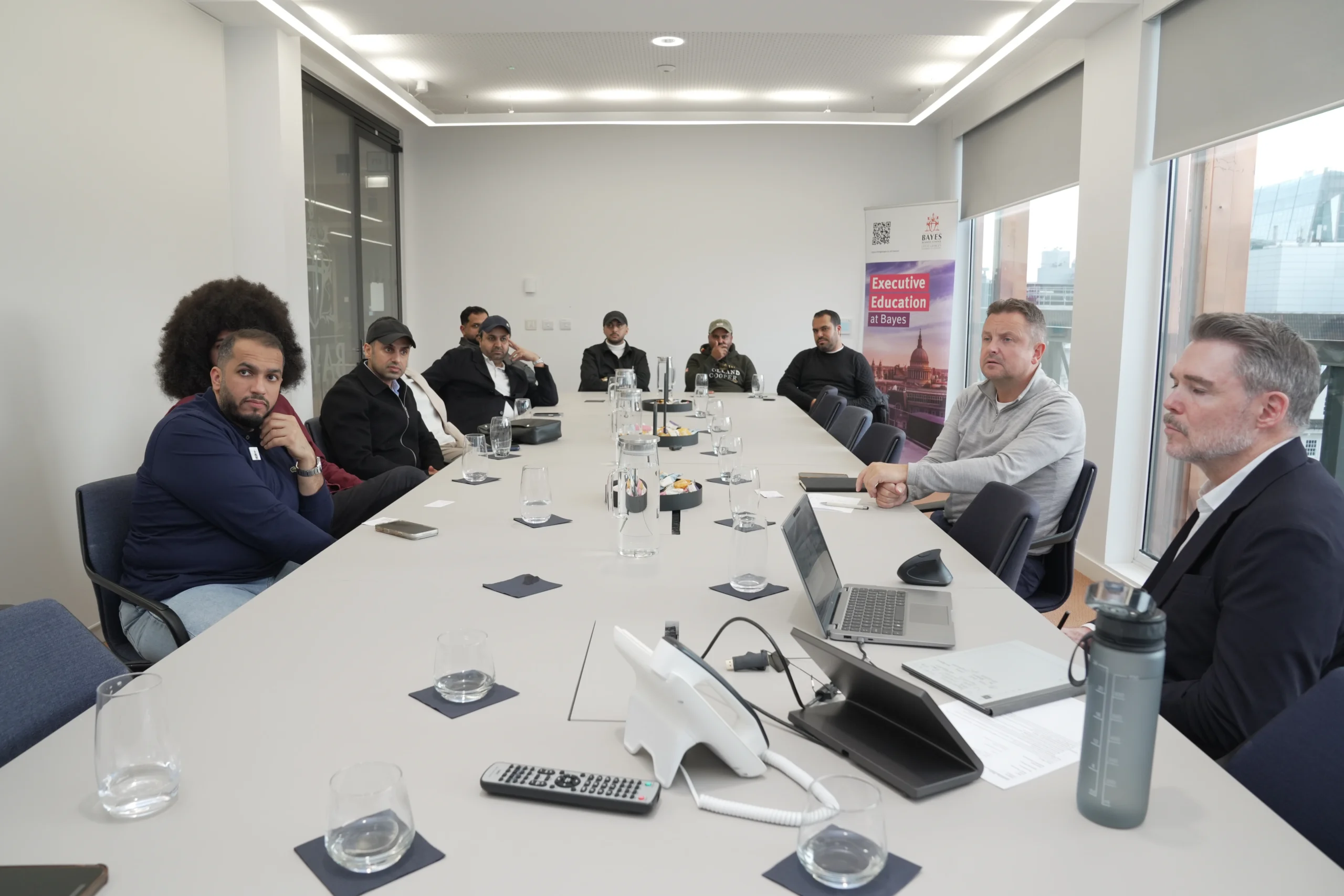
The tour reflects Banan’s broader approach to viewing hospitality projects as integrated systems rather than simply well-designed spaces. Design is an important element in shaping the customer experience, but it operates within a wider framework that includes market research, target audience identification, brand development, implementation, operations, and commercial performance management.
The company presents itself as a partner to investors and brand owners, supporting them from the initial development of an idea through to implementation. Its services include interior design, brand identity, fit-out, consultancy, and training.
From this perspective, the programme held in Britain represents an extension of this approach, linking the development of projects in the Saudi market with exposure to international expertise that could help improve investment efficiency and the quality of implementation and operations.
Dr Mohammed Al-Humaizi’s professional background combines leadership, organisational transformation, and business development. These are areas directly related to the challenges companies face as they move from establishment to growth and expansion.
The most important step after the programme ends will be transferring the knowledge gained into participating organisations by reviewing operating models, developing performance indicators, assessing investment opportunities, and turning observations from British hospitality businesses into action plans suited to the needs of the Saudi market.
In the restaurant industry, the real competition does not begin when the doors open. It begins with the ability to sustain a business after the excitement of its launch fades, and when success evolves from a promising experience at a single location into a commercial model that can be developed, replicated, and scaled.
More photos:

Source: Training programme provided by Banan, October 2026.
ShortURL ⬇