

Report: Holborn and St Pancras by-election — who will win Starmer’s old seat?
On paper, Labour enters the Holborn and St Pancras by-election as the clear favourite. The party has never lost the constituency since it was created in 1983, and Keir Starmer retained it at the last general election with a majority of more than 11,000.
Yet a seat that looks safe on the strength of its history appears less secure when its demographics and most recent results are examined. Labour’s vote share fell sharply in 2024, independent candidate Andrew Feinstein finished second, and the Greens then narrowed the gap in the 2026 local elections.
With Green Party leader Zack Polanski announcing his intention to stand, the contest becomes a test of Labour’s ability to win back voters who drifted away during Starmer’s premiership — and of whether the Greens can bring left-wing and pro-Palestinian voters together behind a single candidate.
The real question is not whether the constituency leans left; its history and results leave little doubt about that. The question is which part of the left can consolidate its support on polling day.
Young, highly educated — and marked by sharp inequality
Holborn and St Pancras lies entirely within the London Borough of Camden. It stretches from Bloomsbury, Holborn and Covent Garden in the south, through King’s Cross, St Pancras and Camden Town, to Kentish Town and parts of Primrose Hill in the north. It contains universities, teaching hospitals and three of London’s largest railway stations, as well as affluent neighbourhoods and social-housing communities facing very different economic pressures.
Aggregated data from the 2021 census helps explain the character of the contest. The average age is around 32.6, nearly 47.7 per cent of residents are aged between 18 and 34, and 51 per cent have a university degree or higher qualification.
Housing tenure is especially striking. Around 75.6 per cent of homes are rented: 43.3 per cent in the social sector and 32.2 per cent privately. Owner-occupied housing accounts for just 23.2 per cent. Estimates of the constituency’s vote in the EU referendum also suggest that around 73.3 per cent backed Remain.
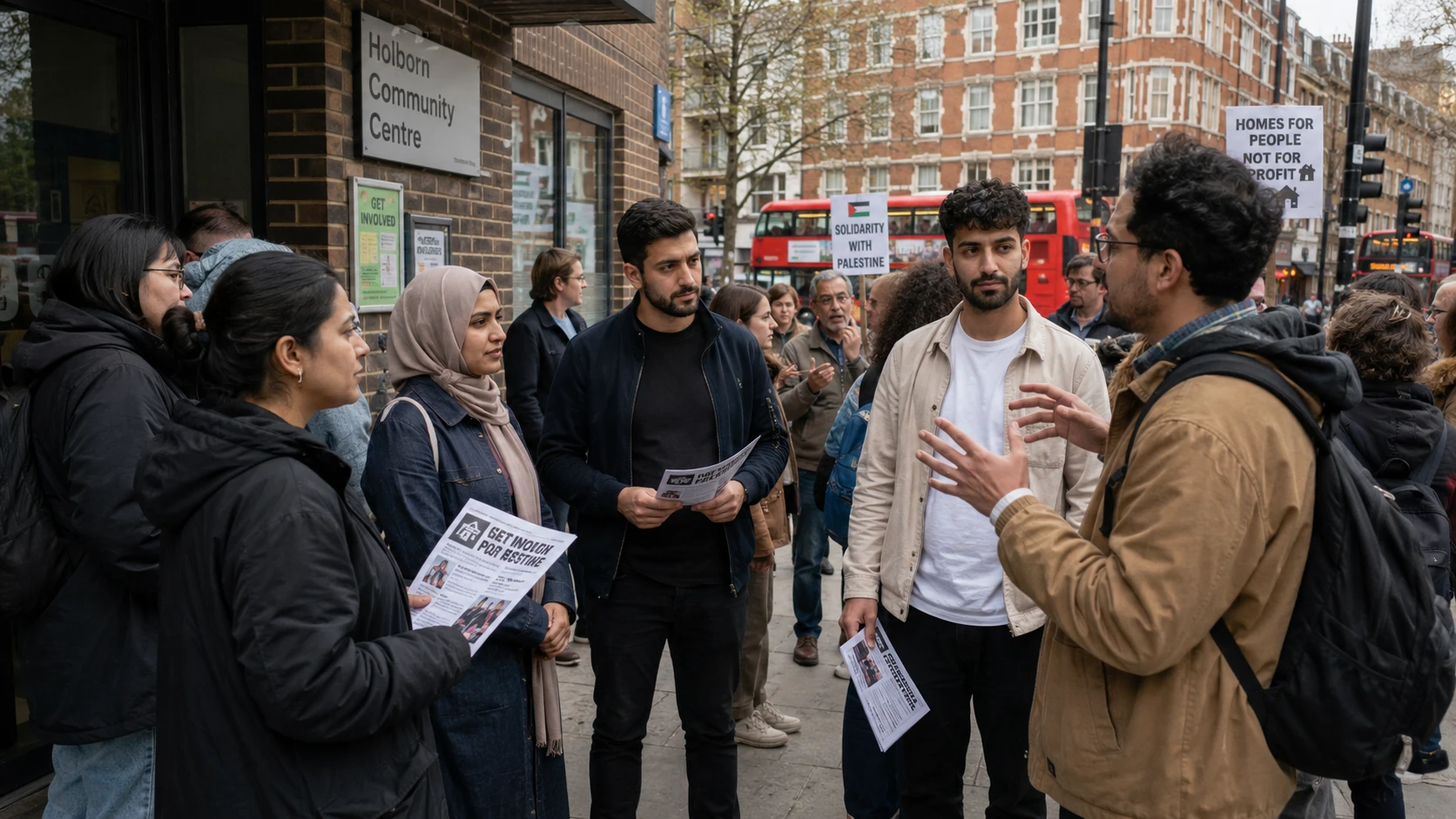
2021 census figures published by the House of Commons Library show that Muslims make up 21.7 per cent of the constituency’s population, or 20,906 people. That is a share of the total population, not of registered voters, and Muslim voters do not behave as a single electoral bloc. Even so, their presence could carry considerable weight in a close by-election with low turnout, particularly with Gaza emerging as a prominent issue, Andrew Feinstein potentially entering the race and Sagal Abdi-Wali being considered as Labour’s candidate.
Taken together, these characteristics make rents, housing, the cost of living, public services, climate policy and Palestine particularly salient issues. At first glance, the constituency looks close to ideal territory for the Greens: it is young, urban, highly educated, strongly pro-Remain and dominated by renters. Labour, however, retains deep roots among social-housing tenants, trade unionists and minority communities, as well as a local party network built over several decades.
A Labour stronghold that has become less secure
Only two MPs have represented Holborn and St Pancras since the constituency was created, both of them Labour: Frank Dobson from 1983 to 2015, followed by Keir Starmer until his resignation from the House of Commons.
Labour won 70.1 per cent of the vote in 2017, while notional results calculated on the constituency’s current boundaries put its 2019 share at 66.3 per cent. In 2024, however, Labour’s vote fell to 48.9 per cent — a drop of 17.3 percentage points — although Starmer still won by 11,572 votes, according to the official parliamentary result.
That lost support did not flow to a single opponent. Feinstein, who stood as an independent on a platform focused heavily on Gaza and foreign policy, took 18.9 per cent, while the Green candidate received 10.4 per cent. Together, they won 29.3 per cent — still 19.6 points behind Labour.
The figures suggest that discontent among left-wing and pro-Palestinian voters was substantial, but divided and insufficient to defeat Starmer. Nor can Feinstein’s vote simply be transferred to Polanski on paper: voters are not parcels to be redirected from one candidate to another.
What did Camden’s local elections reveal?
The clearest sign of change came in May 2026. Aggregating the results from wards within the parliamentary constituency, Labour won around 38.8 per cent of the vote, compared with 28.8 per cent for the Greens, 10 per cent for the Conservatives, 8.5 per cent for Reform UK and 6.9 per cent for the Liberal Democrats.
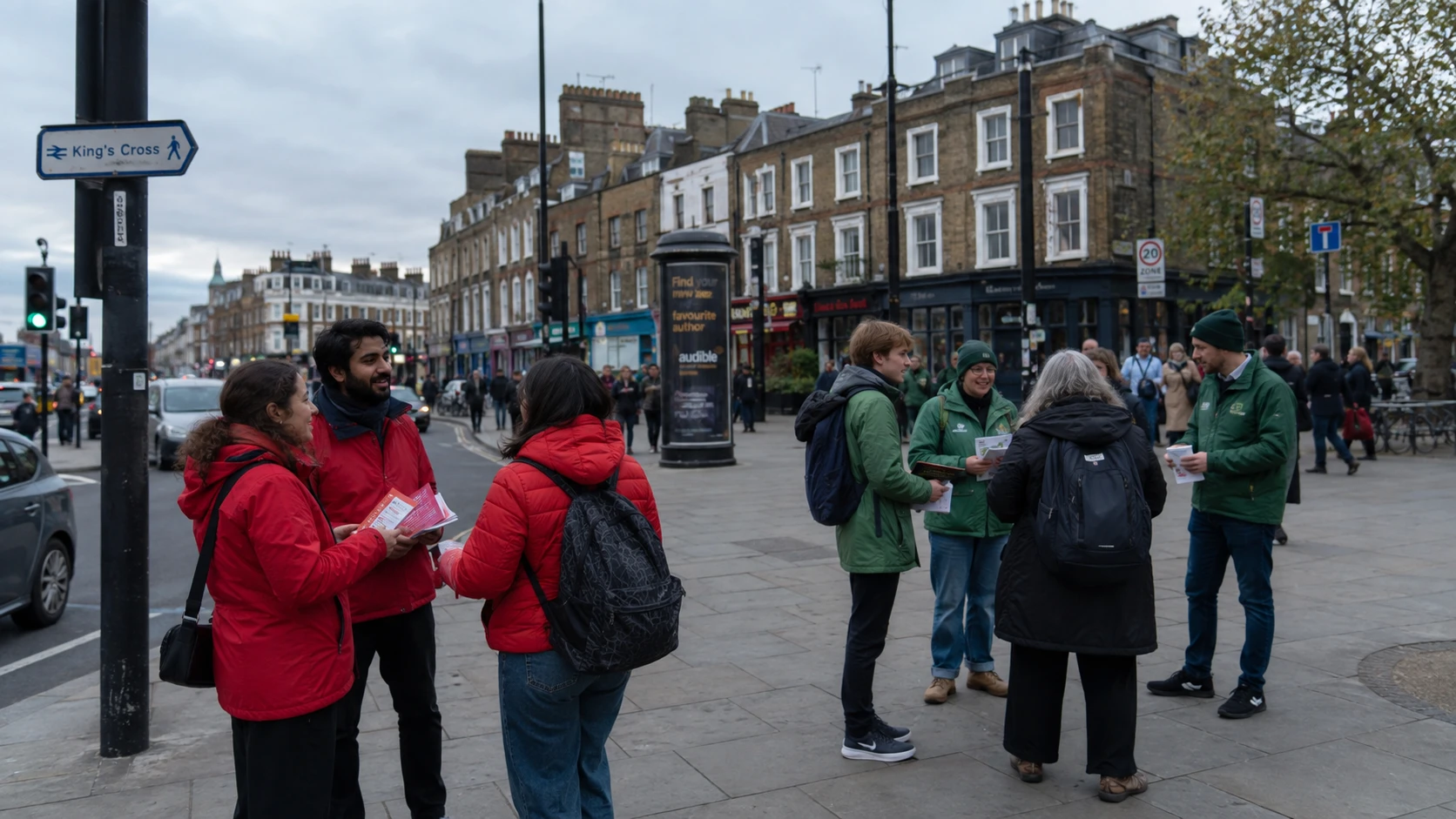
The Greens captured all three seats in Holborn and Covent Garden ward, polling around 41.6 per cent against Labour’s 30.5 per cent. They also finished ahead in Regent’s Park and ran Labour close in Bloomsbury, Camden Square, Kentish Town South and several other wards.
Regent’s Park nevertheless offered the Greens a warning. At a ward by-election in July, Labour regained the seat with 32.4 per cent of the vote, against 27.2 per cent for the Greens, winning by just 94 votes, according to Camden Council’s result. An independent candidate took 22.9 per cent, again demonstrating how a strong third candidate can alter the balance of a contest.
These results show that the Green advance is more than campaign spin, but it is not an unstoppable wave. Labour remained ten points ahead across the constituency in May and, two months later, demonstrated that it could recover a seat it had lost.
Comparisons between local and parliamentary elections must also be treated with caution. Turnout differs, voters in some wards can choose more than one candidate, and local issues and personal reputations tend to matter more. So far, no constituency-level poll of the by-election has been published, making any precise estimate of a candidate’s chances closer to guesswork than measurement.
Labour: still ahead, but candidate selection could strengthen — or squander — its advantage
Labour enters the contest with three principal advantages: an unbroken electoral record stretching back more than four decades, a local base that remains the largest, and a new government hoping to recover voters who deserted the party in protest at Starmer.
The party has yet to choose its candidate, but Sagal Abdi-Wali, the leader of Camden Council, is regarded as the frontrunner. Her local profile, her personal story as a former Somali refugee and her potential appeal among Muslim and minority voters could give her an advantage over a candidate brought in from outside the constituency.
Her selection would also make it harder for the Greens to frame the contest as a choice between a remote Labour establishment and an insurgent local movement. But she would enter the race carrying Camden Council’s record on housing and public services, as well as her association with Starmer — two obvious lines of attack for her opponents.
If Labour instead chooses someone with weak local ties, it may hand Polanski a gift wrapped in a red ribbon. He could then present the contest as one between a candidate who says he has lived and worked in the area and another imposed on it by the party leadership.
Polanski: favourable terrain, but the arithmetic is not enough
Zack Polanski has announced his intention to stand, although his formal selection remains in the hands of local Green members, most of whom are thought to support him.
Polanski has several advantages that are difficult to dismiss. He is a party leader with a substantial media profile, represents London as a city-wide member of the London Assembly, and would be campaigning in a constituency whose demographics closely resemble the groups among whom Green support has been growing: younger voters, graduates, renters and people on the left.
The Greens’ victory in the Gorton and Denton by-election in February 2026 also showed that the party can concentrate resources and volunteers on a single contest and take a Labour seat, rather than merely recording a respectable protest vote.
Polanski still faces a steep climb. The Greens began with just 10.4 per cent at the last general election, and even their 28.8 per cent in the local elections left them ten points behind Labour. To win, he must do more than mobilise the established Green vote: he needs to win over most of Feinstein’s supporters, attract a further section of Labour voters and turn media attention into an effective ground campaign in what is likely to be a low-turnout election.
His national profile will be a double-edged sword. It gives the Greens a level of coverage unavailable to an ordinary local candidate, but it also allows Labour to portray the contest as an attempt by a party leader to use the constituency as his route into the House of Commons.
Feinstein: the potential candidate who could decide the outcome
Andrew Feinstein has not yet confirmed whether he will stand, but he has one number the Greens cannot ignore: the 7,312 votes he won in 2024, enough to finish second ahead of their candidate.
Reports have suggested contact between Feinstein and the Greens aimed at avoiding a split in the left-wing and pro-Palestinian vote. If he runs as an independent against Polanski, he could reproduce the division that benefited Labour in 2024 and become the greatest obstacle to a Green victory, even if he does not have a realistic path to winning himself.
If he stands aside or endorses Polanski, the contest would become closer. But simply adding their 2024 vote shares together does not produce a guaranteed result. Some voters backed Feinstein because of his personal appeal or because he was directly challenging Starmer, who will no longer be on the ballot.
At this stage, Feinstein therefore looks more like a potential kingmaker than the favourite. Standing independently would strengthen Labour’s position; an agreement with the Greens could turn a relatively comfortable Labour defence into a genuine contest.
Do the other parties have a chance?
Recent results offer the Conservatives, Reform UK and the Liberal Democrats no realistic path to victory. In 2024, the Conservatives took 7.2 per cent, Reform 6.1 per cent and the Liberal Democrats 5.8 per cent.
The Conservatives perform better in Primrose Hill and a few wealthier pockets, but their collapse across the constituency means they are more likely to influence the size of the winning margin than the result itself. Reform’s usual electoral coalition is a difficult fit in a young, highly educated and strongly pro-Remain seat. The Liberal Democrats may see theoretical space among pro-European voters, but a contest polarised between Labour and the Greens risks squeezing that space through tactical voting.
Who is best placed to win?
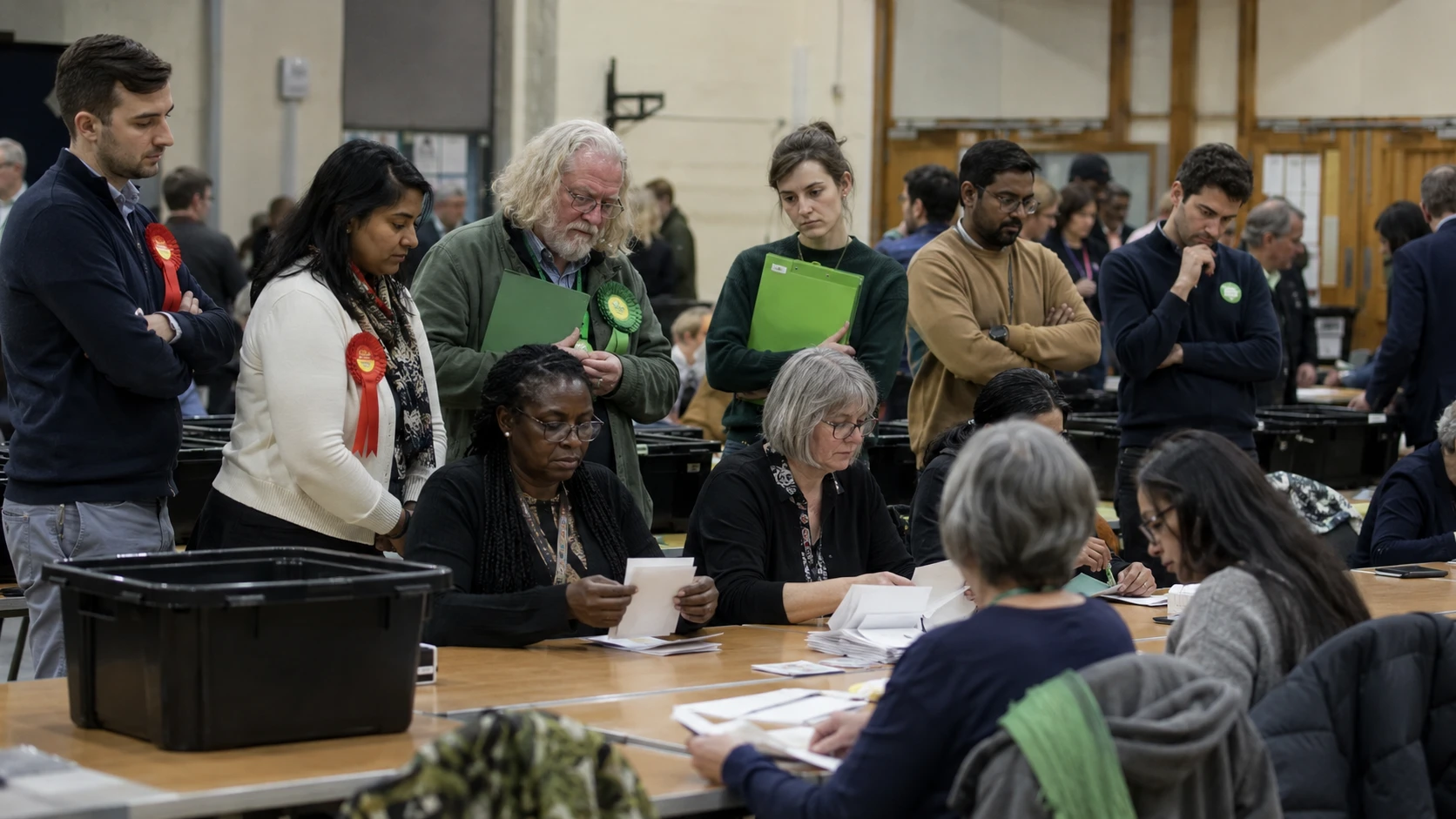
Labour remains the favourite, based on its 2024 result, its lead in the local elections and the depth of its organisation in Camden. But describing the seat as “safe” in the old sense is no longer accurate. The Greens now have a growing local base and a high-profile prospective candidate, while Feinstein has shown that a substantial section of the electorate is prepared to vote outside Labour.
A Labour victory becomes more likely if the party selects a strong local candidate, benefits from the early momentum of Andy Burnham’s government and faces both Feinstein and Polanski on the ballot. Conversely, the race could become extremely close if left-wing and pro-Palestinian voters unite behind Polanski and Labour’s candidate fails to persuade voters that a change of leadership represents a genuine change of policy.
The seat has not slipped from Labour’s grasp, but it no longer rests there quite so comfortably. Labour holds the advantage, Polanski has fertile electoral ground, and Feinstein may hold the key to deciding who takes Starmer’s old seat.
Read more:
ShortURL ⬇