

Report: Why Britain can’t release its way out of the prison crisis
Andy Burnham has spent his first weeks in Downing Street confronting a problem with no politically painless solution: England and Wales are running out of prison space.
The immediate answer has been to release some prisoners earlier. But after a backlash over the prospect of people convicted of serious offences benefiting from the new rules, Burnham has tightened the scheme, excluding manslaughter, causing death by dangerous or drink-driving and historic child sexual offences.
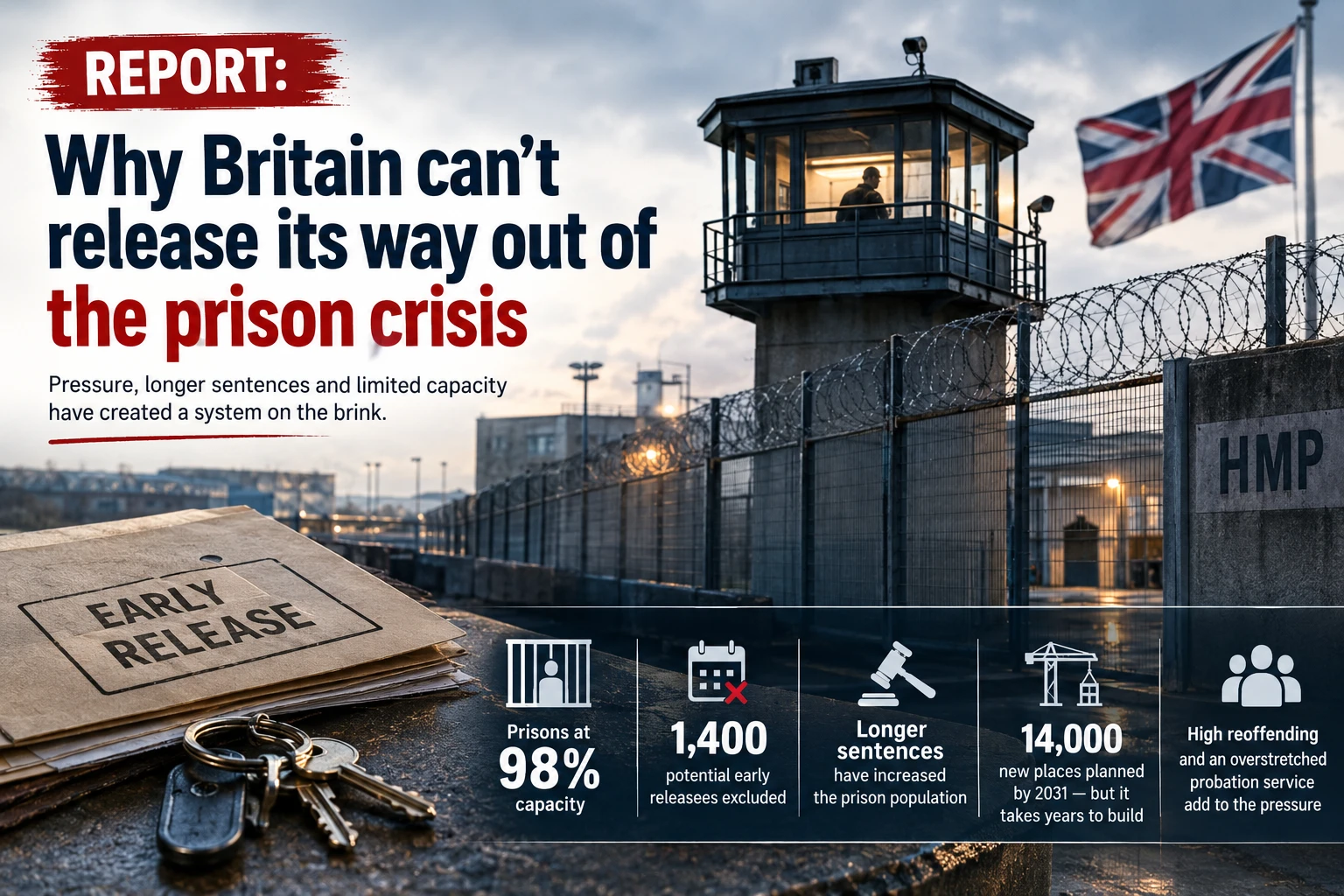
Around 1,400 prisoners who might otherwise have qualified will now remain behind bars.
The decision may reassure victims and a public uneasy about early release. But it also sharpens the problem the policy was designed to solve. The male prison estate is operating at about 98% of capacity, leaving the government with very little room for manoeuvre.
And overcrowding is only part of the story.
Britain’s prison crisis is the product of several pressures that have accumulated over years: longer sentences, insufficient capacity, a growing number of prisoners recalled after release, and an overstretched probation service expected to supervise more offenders in the community.
Taken together, they have created a cycle in which solving one part of the crisis can add pressure somewhere else.
Britain did not simply run out of cells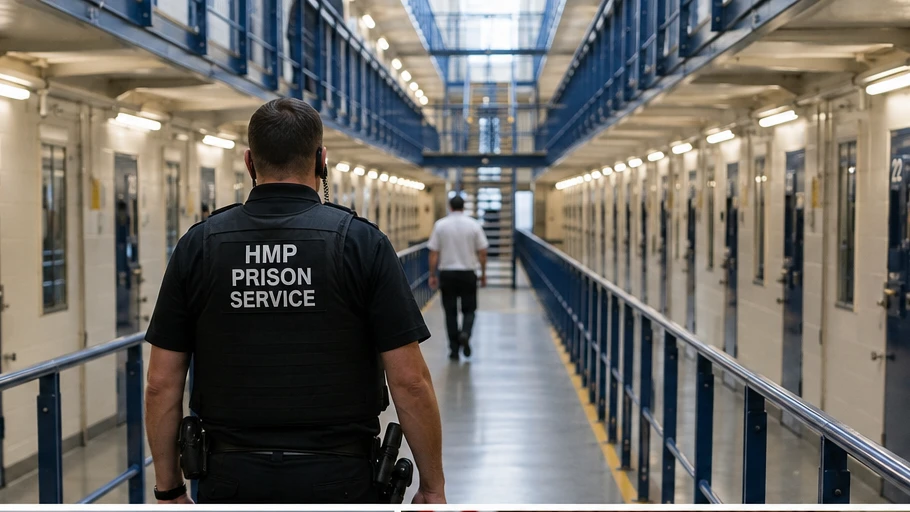
The shortage of prison places has been years in the making.
England and Wales came within fewer than 100 available prison places at points during the summer of 2024, after years in which the prison population grew faster than the estate’s capacity to accommodate it.
According to the Ministry of Justice, the net increase in prison places over more than a decade was only about 500.
At the end of June 2026, there were 85,858 prisoners in England and Wales. The overall system has more operational capacity than that figure, but the headline disguises much tighter conditions in parts of the estate, particularly men’s prisons, which are currently operating at about 98% capacity.
Overcrowding also affects more than the availability of a bed. It puts additional pressure on prison officers, healthcare and rehabilitation programmes — the very services intended to reduce the chances that prisoners will return after release.
Longer sentences have changed the equation
Building too few prison places is only one explanation.
England and Wales have also become significantly more punitive.
In 2024, four former Lords Chief Justice and a former head of criminal justice warned that custodial sentence lengths had approximately doubled over the previous half-century.
They argued that decades of “sentence inflation”, rather than simply a shortage of cells, were a primary cause of prison overcrowding.
More recent research by the Sentencing Academy reinforces that argument. It estimates that sentencing severity has risen by 62% since 2005, while the seriousness of the cases passing through the courts increased by only 8%. Its analysis suggests sentencing practice accounts for most of the difference.
That does not mean longer sentences are unjustified in every case. Parliament has repeatedly increased penalties for serious offences, often in response to legitimate public concern.
But the cumulative effect is straightforward: if more offenders spend longer behind bars, the prison population rises unless capacity expands at a comparable rate.
It did not.
Building more prisons will not solve today’s shortage
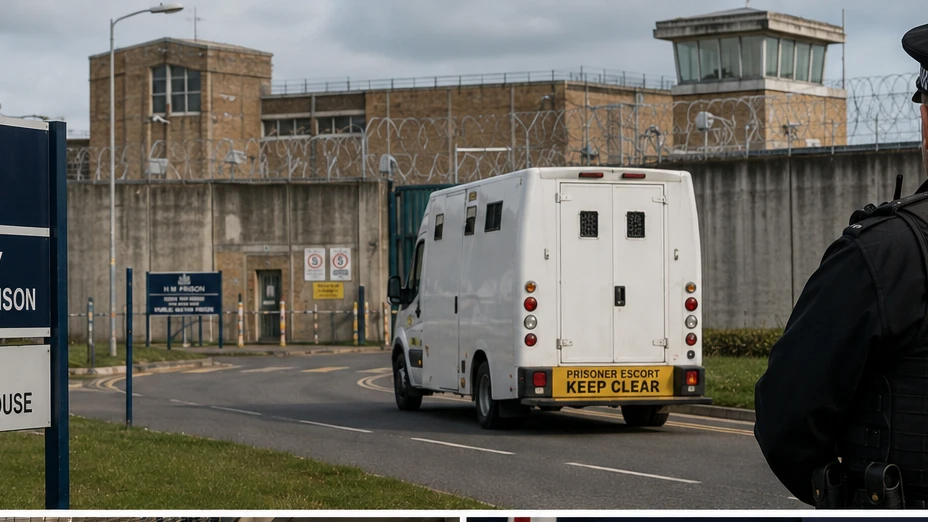
The government says thousands of additional prison places have already been delivered and plans to provide another 14,000 by 2031.
But new prisons take years to plan and build.
A parliamentary investigation into prison capacity found that plans to deliver 20,000 additional places had slipped by about five years, while projected costs had risen by at least £4.2bn.
That leaves ministers facing a capacity problem today with infrastructure that will not be ready until later.
This is why successive governments have turned to the politically more difficult alternative: changing how long prisoners actually spend behind bars.
Early release solves one problem — and creates another
The Sentencing Act 2026 changes the point at which many prisoners serving standard determinate sentences can be released.
From October, some offenders who would previously have spent 40% or 50% of their sentence in custody can be released after a third, while another category can leave after half rather than two-thirds.
The policy was inherited by Burnham from Keir Starmer’s government, but the new prime minister paused and reviewed it after taking office.
Following public anger over the range of offenders who could qualify, Burnham first excluded rape and a number of child sexual and grooming offences. He has now gone further, excluding manslaughter and several other serious offences.
The changes reduce the expected number benefiting from the scheme from around 5,900 to about 4,500 over the next year.
Politically, that gives Burnham a stronger answer to accusations that dangerous offenders are being released simply because prisons are full.
Operationally, however, every additional exclusion means another prisoner occupying scarce capacity.
Burnham acknowledged the dilemma himself, saying there were “no easy answers” and that pushing the system further risked a serious prison crisis.
Then there is the unfinished business of IPP
At the same time as keeping more offenders behind bars, Burnham has promised to address one of the most controversial legacies of British sentencing policy.
Imprisonment for Public Protection, or IPP, was introduced in 2005. It allowed offenders to remain in prison beyond their minimum tariff if they were considered a continuing risk to the public.
The sentence was abolished for new cases in 2012, but not retrospectively.
As a result, people sentenced under the old regime remain trapped within it more than a decade later.
At the end of June, 856 unreleased IPP prisoners remained behind bars. Eight in 10 had been imprisoned for at least 10 years beyond the point at which they first became eligible to seek parole.
Another 1,415 had been released but subsequently recalled to prison.
Burnham has now pledged to bring what he called the “injustice” of IPP sentences to an end during this parliament.
Campaigners have welcomed the announcement, but it presents another version of the same dilemma confronting the wider prison system: how to correct a sentencing policy widely acknowledged to be flawed while safely managing prisoners who may still be judged a risk to the public.
The revolving door back into prison
Perhaps the least visible part of the capacity crisis happens after prisoners have already been released.
Between January and March 2026 alone, there were 13,193 recalls to custody, 31% more than in the same period a year earlier.
Recall does not necessarily mean someone has committed another crime.
Released prisoners remain subject to licence conditions and can be returned to custody for breaching them — for example, by failing to attend probation appointments or displaying behaviour considered to indicate an increased risk.
That is essential when an offender genuinely poses a renewed threat. But penal reform groups argue that excessive use of recall for less serious breaches is contributing unnecessarily to overcrowding.
The result can become circular: prisoners are released partly to create space, supervised in an already stretched community system, and then some are returned to the prisons whose overcrowding prompted the release policy in the first place.
Can probation absorb the pressure?
That makes the probation service crucial to whether the government’s strategy succeeds.
A prisoner released early does not disappear from the criminal justice system. Part of the burden simply moves from a prison officer inside the estate to probation staff outside it.
That service is already under strain.
Probation officers have warned that excessive workloads are compromising their ability to protect the public. The government says it is investing an additional £700m and recruiting 1,300 officers.
Yet a further controversy has emerged just as the new release arrangements approach. The government is scrapping the central Workload Measurement Tool used since 2018 to assess whether probation officers are carrying manageable caseloads.
The probation union Napo argues that removing it without a direct replacement could make it harder to identify dangerous levels of pressure.
That matters because early release is only as safe and sustainable as the system supervising offenders once they leave prison.
More surveillance, fewer recalls, more cells
The government’s emerging response therefore stretches well beyond early release.
It plans tougher supervision in the community, including new exclusion zones around victims and the greater use of GPS tagging for some violent and sexual offenders. Breaching those restrictions can result in a return to prison.
At the same time, reformers want the government to reduce unnecessary recalls, while ministers are promising thousands of additional prison places and an end to the remaining IPP regime.
The government has also commissioned an independent review of the prison system, led by former home secretary Amber Rudd, covering capacity, security, safety and rehabilitation.
Each policy addresses a different part of the problem. None offers a quick solution to all of it.
The prison overcrowding trap
For decades, British governments have faced strong political incentives to increase sentences in response to serious crime. But longer sentences require either a much larger prison estate or fewer people entering custody elsewhere in the system.
When capacity runs out, governments then face pressure to release prisoners earlier — only to encounter another political backlash for appearing soft on crime.
Release more prisoners and probation carries a heavier burden. Recall more of them and prisons fill again. Exclude serious offenders from early-release schemes and public confidence may improve, but the capacity crisis becomes harder to manage. Build more prisons and the pressure eases eventually, but at considerable cost and only after years of construction.
That is why the question facing Burnham is no longer simply how to find more cells.
It is whether England and Wales can break a cycle in which sentencing policy, prison capacity, early release and probation repeatedly shift the same pressure from one part of the criminal justice system to another.
Read more:
- Report: The Economy Is Improving, but the Treasury Is Falling Behind – How Should We Read Burnham’s Economic Dilemma?
- Report: Where Should New Homes Be Built – and Who Are They For? Government Plan Reopens Housing Debate
- Analysis: The honeymoon is ending – Burnham’s government moves from popular wins to the cost of governing
ShortURL ⬇