

Analysis: “I Trust Nobody”: How JD Vance Is Redefining America’s Relationship with Israel
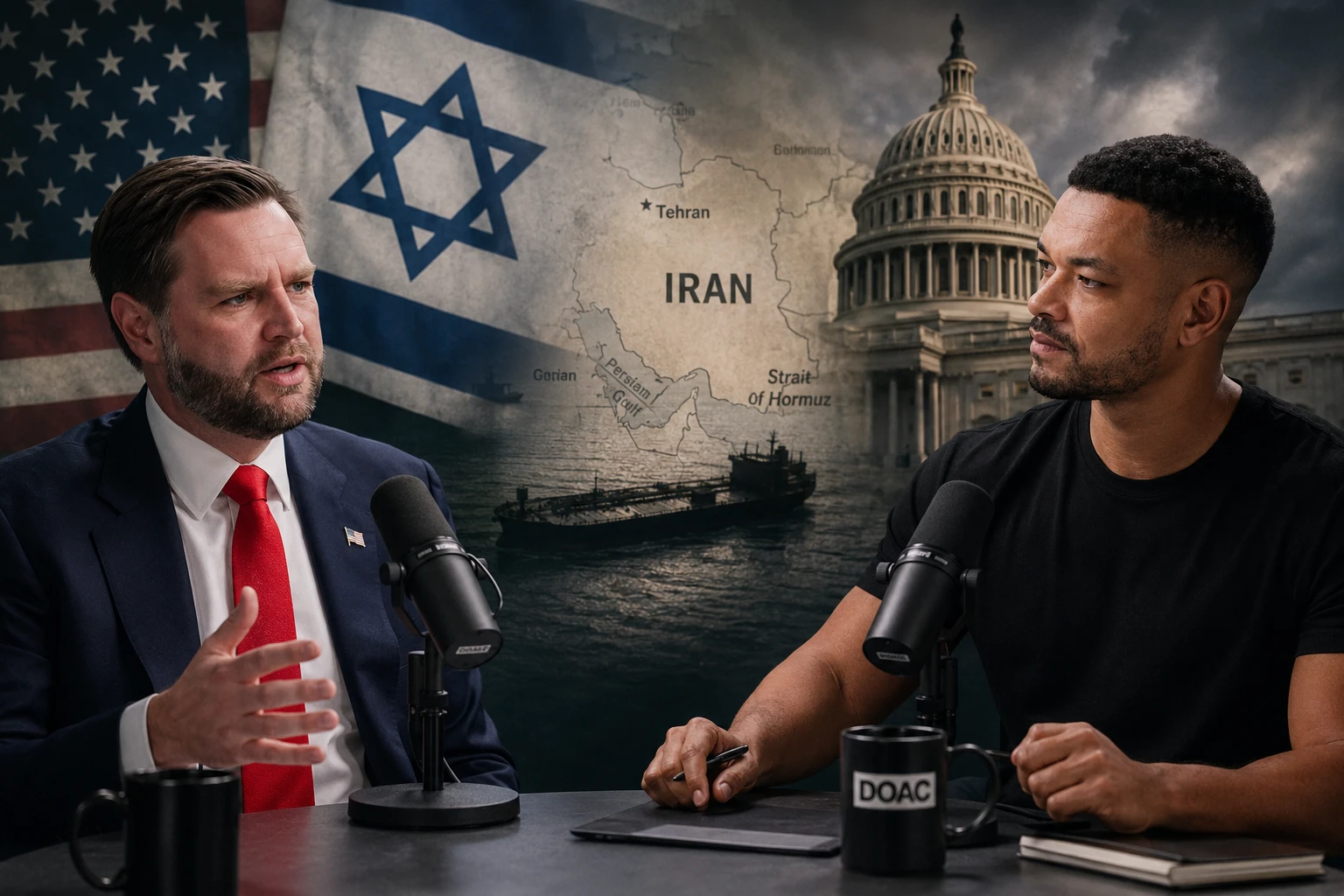
JD Vance’s remark — “I trust nobody” — was not an offhand response during a lengthy interview on a popular British podcast.
It was a cautious way of saying something far more politically significant.
Even within parts of America’s governing right, Israel is no longer being treated as an ally whose interests are automatically assumed to be identical to those of the United States.

When Stephen Bartlett, host of The Diary of a CEO, asked Vance whether he trusted Israel, the Vice President did not answer yes.
Nor did he answer no.
Instead, he chose a broader formulation.
“I trust nobody in international politics and diplomacy.”
On the surface, the answer sounded like little more than political realism.
Its significance lay elsewhere.
It came during a discussion about Israel, growing tensions between Washington and Tel Aviv following the US memorandum of understanding with Iran, and Donald Trump’s reported frustration over Israeli strikes that threatened to derail the agreement.
The remark therefore sounded less like diplomatic caution than evidence of something deeper taking shape inside the MAGA movement.
American interests are no longer automatically being presented as an extension of Israeli interests.
A Message Beyond America
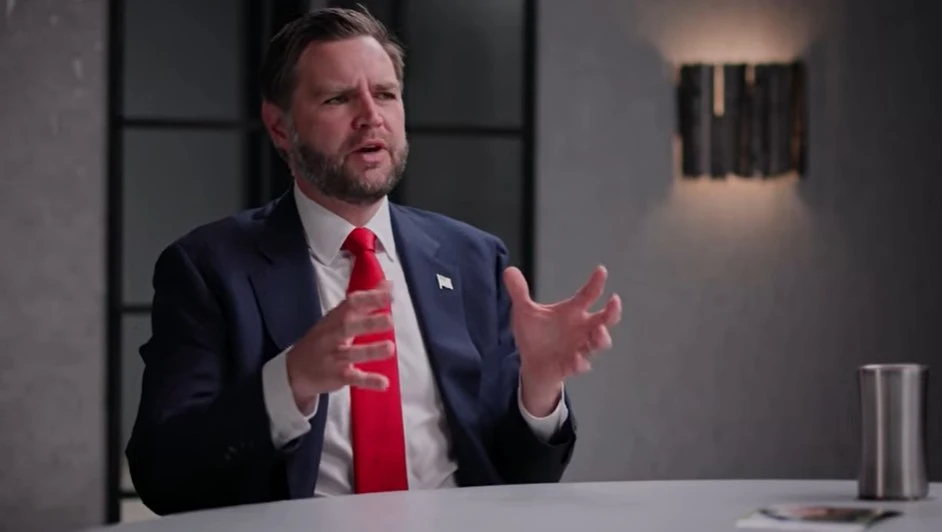
It was hardly accidental that Vance chose to make those remarks on one of Britain’s most influential podcasts, hosted by Stephen Bartlett, one of the country’s most recognisable digital media personalities.
The interview was not directed solely at an American audience.
It also spoke to a broader English-speaking world: Britain, Canada, Australia and millions of people who increasingly follow American politics because they understand that decisions made in Washington shape their own political and security futures.
Viewed through that lens, Vance appeared to be explaining what “America First” means beyond America’s borders.
Israel Is an Ally. It Is Not America.

The most important point Vance made was not criticism of Israel itself.
It was a redefinition of the relationship.
He described Israel as an advanced ally with a strong economy, sophisticated intelligence capabilities and a broad strategic partnership with the United States.
But he rejected one of the central assumptions that has traditionally underpinned pro-Israel thinking in Washington: that American and Israeli interests are always identical.
The United States and Israel, he argued, are different countries with different interests, different needs and different geography.
That is no ordinary observation.
It represents the beginning of a political separation that, until recently, would have been difficult to express openly inside the Republican Party.
For decades, the strength of the US-Israel alliance rested not only on military cooperation and diplomatic support, but on a broader narrative: what benefits Israel ultimately benefits America.
Israel’s security was presented as America’s security.
Israel’s enemies as America’s enemies.
Israel’s regional priorities as Washington’s own.
Vance acknowledged that the two countries share extensive common interests.
But he insisted that common interests are not the same as identical interests.
That may sound like a subtle distinction.
In politics, it is not.
“A Persian Libya”

Vance’s comments cannot be separated from the aftermath of the war with Iran.
Washington wanted to consolidate its memorandum of understanding with Tehran, reopen negotiations, secure freedom of navigation through the Strait of Hormuz and prevent the conflict from escalating into a wider regional war.
Israel, or at least influential circles within its government, appeared to be operating according to a different logic: maintaining military pressure until Iran itself was fundamentally weakened, while resisting any diplomatic process that might constrain Israeli military operations against Iran or its regional allies.
It was here that the divergence became unmistakable.
Speaking about Benjamin Netanyahu, Vance stopped short of claiming to know precisely what the Israeli Prime Minister wanted.
But he suggested that some voices inside Israel might favour turning Iran into “a Persian Libya” — a large, fragmented and failed state.
He then made the crucial point.
That outcome, he argued, would not serve American interests.
This was the heart of his argument.
Vance was not calling Israel an adversary.
Nor was he declaring the alliance finished.
He was arguing that an Israeli objective of dismantling Iran should not automatically become an American objective.
A Debate Leaves Closed Doors

This language does not pass unchallenged inside the American right.
The reaction to Vance’s remarks revealed a Republican movement that is no longer united in its approach to Israel.
One faction continues to believe that support for Israel should remain close to unconditional, and that any public criticism during wartime is both politically and morally misguided.
That view remains influential within the Republican Party, conservative media and religious and nationalist circles that regard Israel as an integral part of modern American conservatism.
The backlash came quickly.
Republican Congressman Randy Fine described Vance’s remarks as inappropriate and “disgusting”, arguing that the Vice President needed to study Israeli history more carefully.
Fox News presenter Brian Kilmeade questioned why Vance appeared more willing to criticise Israel than Iran.
Former House Speaker Newt Gingrich rejected any suggestion that Israel bore responsibility, insisting that criticism should instead focus on the Iranian regime.
These responses underline an important point.
Vance was not speaking from politically safe ground.
He had entered one of the Republican Party’s most sensitive internal debates.
Alongside the traditional pro-Israel wing, another current is becoming increasingly visible inside the MAGA movement.
Its argument is not that Israel is unimportant.
Rather, it is that Israel remains an ally, not the ultimate decision-maker in American questions of war and peace.
Israel’s security matters.
But it should not automatically outweigh a broader American diplomatic settlement with Iran or the wider region.
American Voters Are Ready to Hear It

What would have been politically difficult to say only a few years ago has become considerably easier.
Not because Americans have necessarily become hostile towards Israel.
But because something deeper has accumulated within American society: fatigue with open-ended conflicts, frustration over paying the costs of distant wars, and growing suspicion that foreign policy sometimes serves allies and interest groups more effectively than it serves ordinary American voters.
According to the Pew Research Center, attitudes towards Israel became significantly more negative in 2026. Sixty per cent of Americans expressed an unfavourable opinion of Israel, while only 37% viewed it positively.
Perhaps more significant, the shift is no longer confined to Democrats.
Among Republicans under the age of 50, 57% also expressed unfavourable views.
The same pattern appears in polling on Iran.
Another Pew survey found that 59% of Americans believed the use of military force against Iran had been the wrong decision, while only 38% supported it.
An Ipsos poll similarly found that 66% wanted the United States to end its military involvement in Iran quickly, even if Washington had not achieved all of its objectives.
Vance would not have adopted this language unless he believed the political coalition that returned Donald Trump to the White House was increasingly prepared to hear it.
That is the constituency upon which MAGA now rests.
“America First” no longer means only opposition to immigration, criticism of globalisation or hostility towards political institutions.
It also asks a simple foreign policy question.
What does the United States gain from this commitment?
When applied to Ukraine, that question has become familiar.
When applied to NATO, it has been central to Trump’s rhetoric for years.
When applied to Israel, it becomes considerably more sensitive.
A Carefully Calculated Phrase
That is precisely why Vance’s answer — “I trust nobody” — was politically astute.
Had he simply declared that he did not trust Israel, the political cost inside the Republican Party would have been immediate.
Instead, he broadened the statement.
He trusts nobody.
By doing so, he avoided singling Israel out for distrust while simultaneously removing the assumption that it deserved exceptional trust.
He did not say Israel alone was untrustworthy.
He said it was no longer exempt from the logic of national interest and strategic scepticism.
The formulation was less provocative.
But considerably more revealing.
It allowed him to say exactly what he intended without handing his critics an easy accusation that he had abandoned Israel.
From Unconditional Alliance to Conditional Partnership
A debate long postponed inside the Republican Party has now begun to surface.
The question is no longer simply whether Israel is America’s closest ally.
It is whether Israel remains an exceptional ally standing above the logic of “America First”, or whether it has become an important ally whose relationship with Washington is ultimately governed by the same calculation of interests that applies to every other partner.
Either way, the era in which American and Israeli interests were assumed to overlap automatically appears less secure than it once did.
Not because the alliance is ending.
But because, for the first time in many years, the assumptions underpinning it are being openly questioned from within.
And it was America’s Vice President who chose to raise those questions — not in a closed meeting in Washington, but before a British and wider English-speaking audience that understands one simple reality:
What changes in Washington rarely stays in Washington.
Read more:
ShortURL ⬇