

Analysis| After a Night of Missiles, Can Washington Still Impose Restraint?
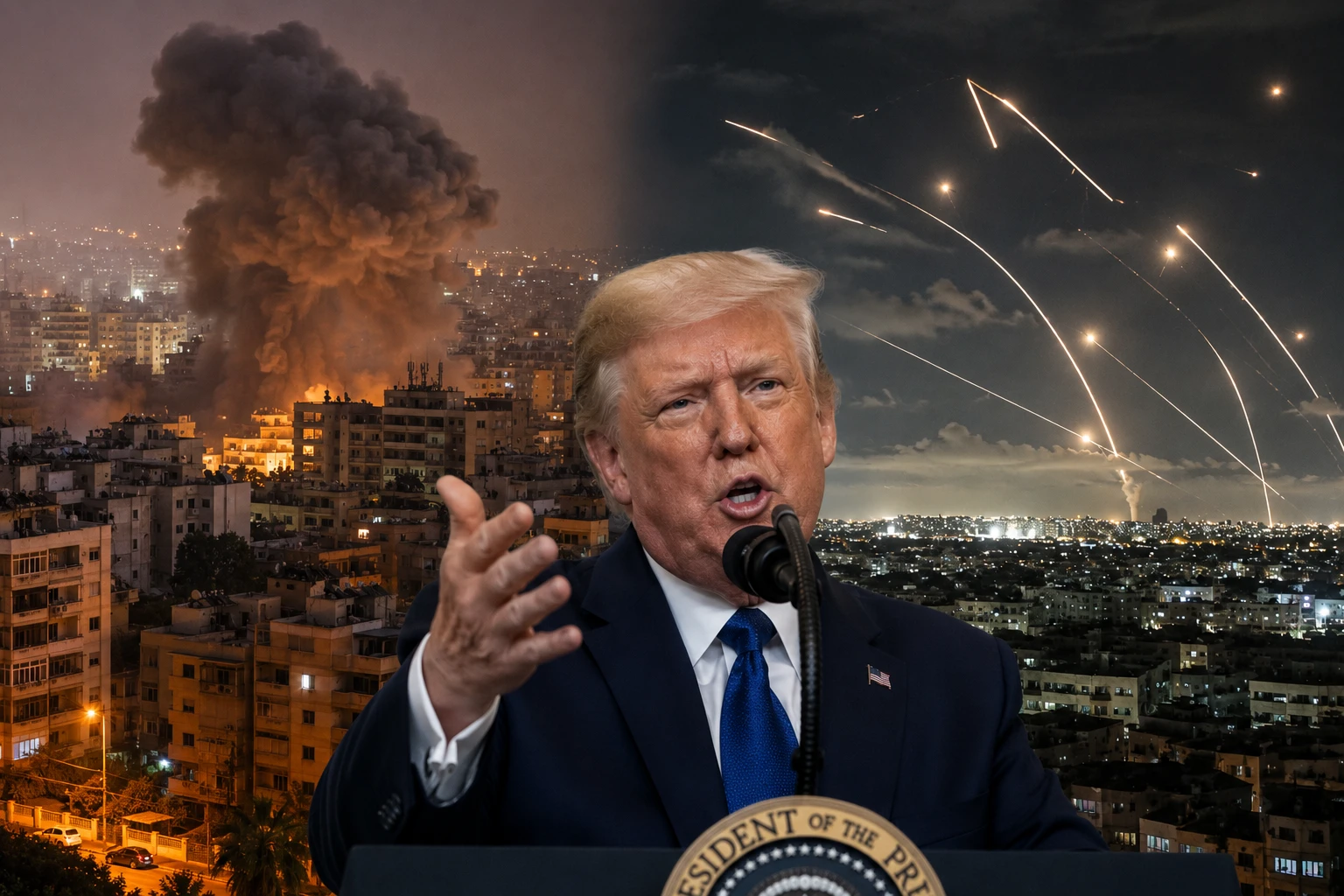
While Donald Trump was talking about the prospect of a deal with Iran, events across the Middle East were moving in the opposite direction. Within days, bombs fell on Beirut’s southern suburbs despite American warnings. Iranian missiles were launched despite calls for de-escalation. Israel responded with air strikes deep inside western and central Iran.
What is striking is that a confrontation that began with a decision taken in Washington now appears to be moving beyond Washington’s control.
Trump, who chose to shift from containment to confrontation, finds himself struggling to stop a cycle of escalation that his own policies helped unleash. He cannot persuade America’s adversaries to step back. Nor can he convince its closest allies to pause.
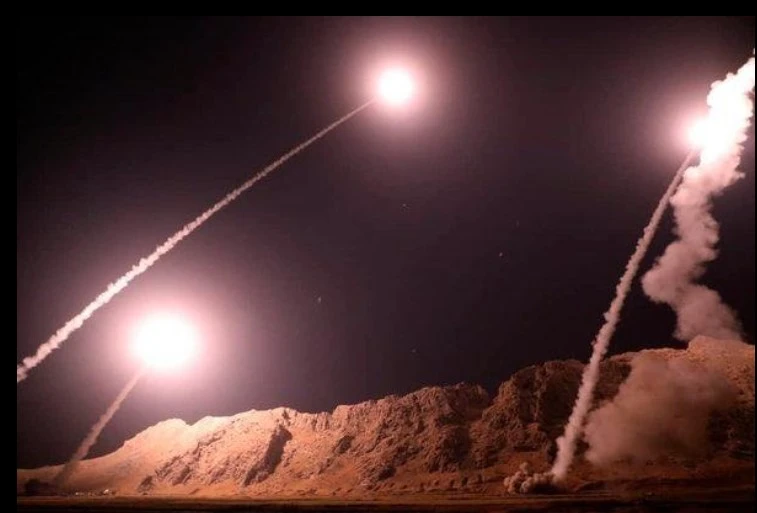
The exchanges of missiles and air strikes over recent days have exposed a rare political dilemma.
Everyone insists they want to avoid a regional war. Everyone talks about de-escalation.
Yet every move on the ground pushes events in precisely the opposite direction.
The problem is not a lack of desire for restraint. It is the absence of a power capable of enforcing it.
The Logic of War Is Stronger Than the Logic of Restraint
Viewed from a distance, the crisis can look like a sequence of events.
A strike on Beirut.
Missiles crossing the region.
A retaliation followed by a counter-retaliation.
Then another round.
But that view misses the deeper dynamic driving events.
Each side is operating according to calculations that differ fundamentally from Washington’s calls for restraint.
For Israel, failing to respond to an Iranian attack risks undermining the deterrence it has sought to restore since the beginning of the war. Silence could be interpreted across the region as weakness.
For Iran, failing to respond to Israeli strikes—whether against its territory or its allies—risks damaging the credibility of a regional network it has spent decades building. In Tehran’s view, restraint may simply invite further pressure.
De-escalation may appear logical to outside powers seeking to contain the conflict.
It appears far less convincing to the actors directly involved in it. Each side says it wants to avoid a wider war. Each side behaves in ways that make avoiding one increasingly difficult. This is the classic security dilemma. The fear of appearing weak pushes all parties towards actions whose consequences they insist they do not want.
That is why the crisis is no longer moving according to what Trump wants, or what diplomacy recommends.
It is moving according to a much simpler—and more dangerous—logic. Every strike creates pressure for another strike. Every response creates pressure for another response.
War begins to generate its own momentum, continuing through political inertia even as everyone claims they want it to stop.

The Limits of American Influence
The crisis exposes another problem that extends beyond the exchange of missiles itself.
For decades, American influence in the Middle East rested not simply on military power, but on Washington’s ability to use that power in ways that made its actual deployment unnecessary.
The most effective force is often the force that never has to be used.
The threat alone can shape behaviour. Recent events raise a more uncomfortable question. This time, Washington did not merely threaten force. It became directly involved in the conflict.
The United States crossed the line between deterrence and participation. Yet the result was not a more stable settlement. Instead, the region slipped into another cycle of strikes and counter-strikes. That is where part of the problem lies.
The power that was meant to restore deterrence has become, at least in part, another variable within the escalation itself.
The pressure that was supposed to force restraint has failed to prevent a return to confrontation only weeks after a ceasefire.
The issue is not that Washington has lost all influence. It is that possessing power and using power no longer automatically translate into the ability to shape events.
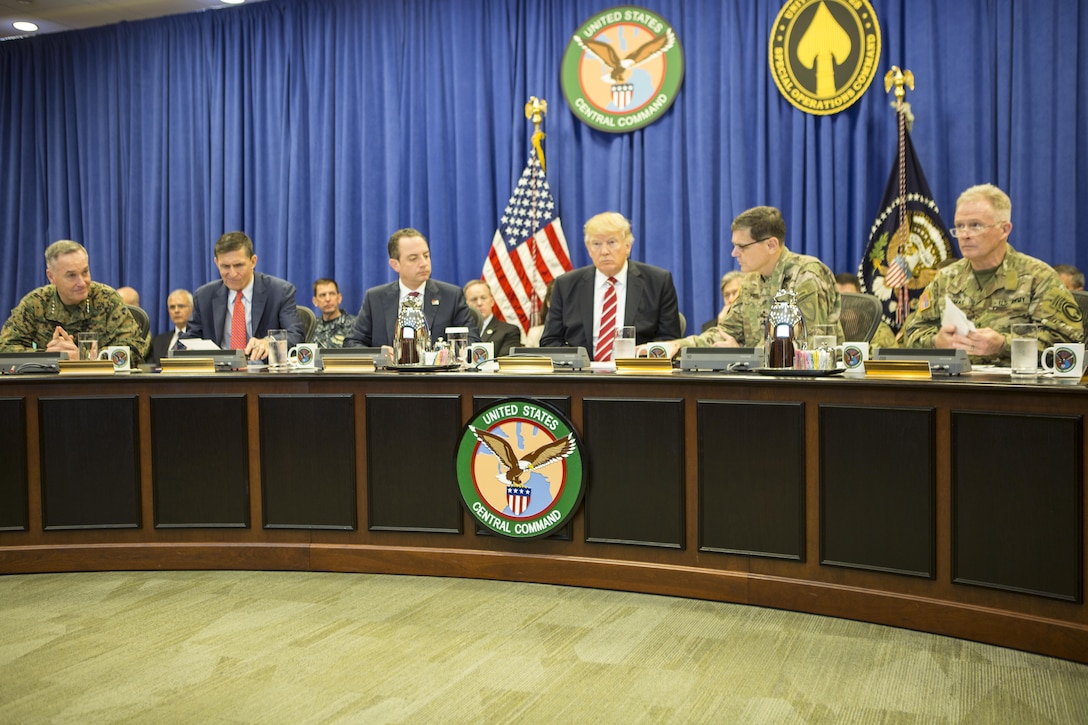
Trump can ask Benjamin Netanyahu to hold back. He can urge Iran to give diplomacy another chance.
Recent events suggest that the parties directly involved are increasingly operating according to their own calculations of deterrence, credibility and risk rather than the timetable Washington would prefer.
Britain and Europe Are Watching Closely
At first glance, this may look like a distant Middle Eastern crisis.
For Britain and Europe, however, it touches on a question that has become increasingly important in recent years.
For decades, European allies relied not only on American military power but on Washington’s role as the ultimate manager of crises within the Western alliance.
Part of the value of the American security umbrella was psychological. It did not simply provide protection. It offered reassurance that major crises would ultimately remain containable.
What the current confrontation reveals is that the question is no longer only about America’s willingness to defend its allies. It is also about its ability to influence events once cycles of escalation begin to take on a life of their own. Seen from this perspective, the exchange of strikes between Iran and Israel is not merely a Middle Eastern story.
Every time American calls for restraint fail to halt escalation, an uncomfortable question re-emerges in London and across Europe.
How much confidence can allies place in a security system that depends, in part, on America’s ability to manage crises and prevent them from spiralling beyond control?
Who Can Impose Restraint?
The current crisis raises a question that extends beyond Iran, Israel and even the United States itself.
The problem is not simply that the parties involved are unwilling to compromise.
It is that the actor that traditionally served as the final arbiter of regional crises appears less capable of imposing its preferred rhythm on events.
That is why the latest escalation is more than another round of military exchanges.
It is a test of Washington’s ability to convert military superiority into effective political influence.
The most important outcome may not be the number of missiles launched or targets struck.
It may be the return of a question that is increasingly heard across both the Middle East and Europe:
What happens when power remains intact, but the ability to direct events begins to fade?
That is the real issue at stake.
The question is not simply whether the current round of fighting will end.
It is whether Washington can still perform the role that gave it its greatest influence for decades: not imposing outcomes through force, but imposing the conditions for containment when crises begin to spiral out of control.
It is a question that reaches far beyond the Middle East.
And it is one that America’s allies in Britain and Europe are now asking with growing urgency.
Read more:
ShortURL ⬇