

Analysis: Who Speaks for Britain’s Working Class Now?
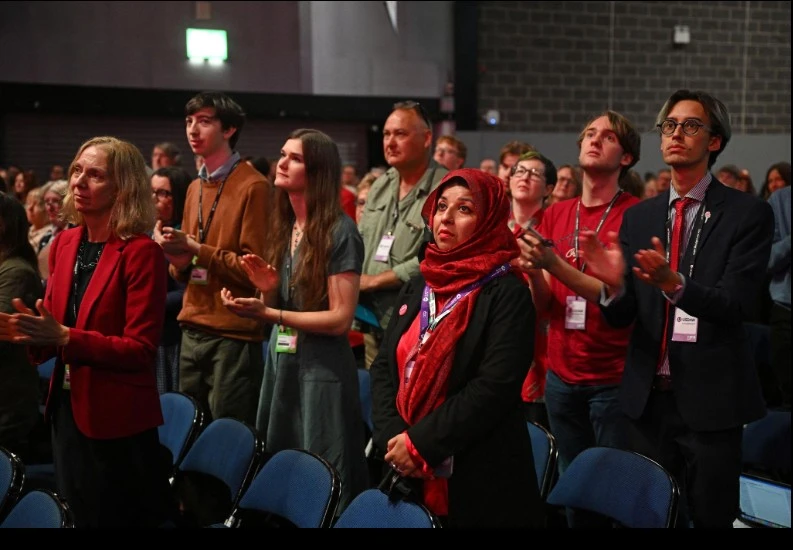
Who Speaks for Britain's Working Class Now?
For decades, the answer seemed obvious.
Labour was not merely a party seeking working-class votes; it was the political expression of the working class itself. Born out of the trade union movement, it relied on organised labour for funding, mobilisation and political legitimacy. The relationship between Labour and the unions became so deeply embedded that it was effectively part of the party’s identity.
But British politics has changed.
Traditional industrial sectors have declined. Services, higher education and the knowledge economy have expanded. Britain’s major cities have become centres of an educated professional class rather than the industrial workforce that formed Labour’s backbone throughout much of the twentieth century.
As Britain changed, Labour changed with it.
The scale of that transformation is visible in a striking set of recent figures. A JL Partners poll published in The Times found Reform UK level with Labour among trade union members, with both parties polling 28%. Labour’s support among union members had fallen by 20 percentage points compared with the 2024 election, while Reform gained 12 points.
The picture becomes even more striking within Britain’s largest unions. Reform leads Labour among Unite members by 36% to 30%, and among GMB members by 31% to 22%. Meanwhile, 62% of union members believe Labour has “lost touch with the working class”.
These are not merely difficult numbers for Labour.
They raise a more fundamental question: if Labour is no longer the natural political home of organised labour, what exactly has changed?
From Labour to New Labour
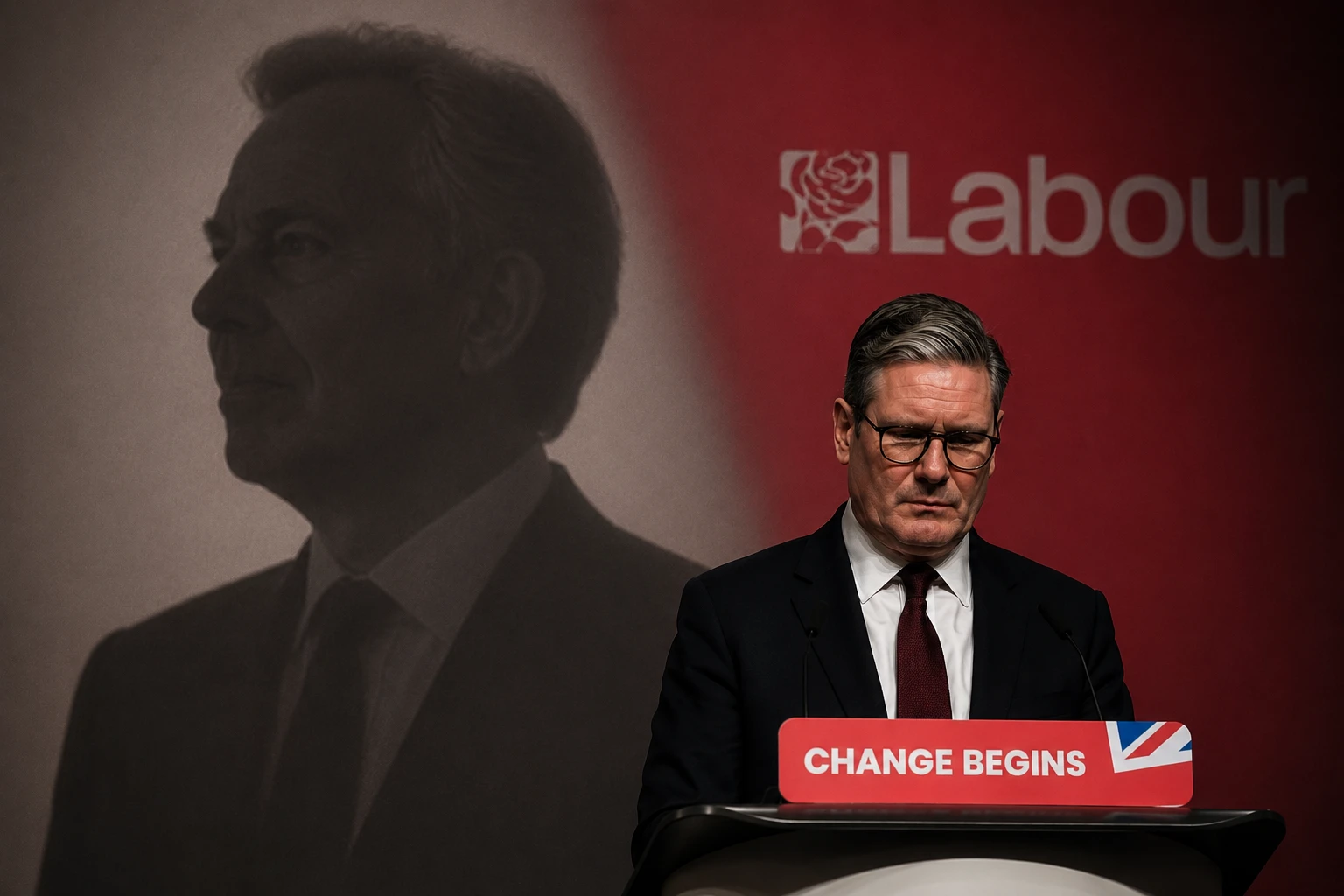
Tony Blair’s rise was never simply a change of leadership.
It was a redefinition of the party itself.
Rather than presenting Labour primarily as the party of trade unions and industrial workers, New Labour sought to appeal to the urban middle class, financial markets and large numbers of politically undecided voters.
Electorally, the strategy was extraordinarily successful. Indeed, it may have been one of the most successful political projects in modern British history.
But electoral success does not always resolve the tensions it creates.
As Labour moved towards the political centre, it gradually moved away from parts of its traditional base. For many years this shift remained largely invisible because there was no credible alternative capable of attracting those voters.
Today there is.
Reform UK has emerged as a populist challenger capable of appealing to sections of the electorate that once formed Labour’s historic strongholds.
Why Are Some Working-Class Voters Turning to Reform?

The answer is about more than immigration, Brexit or dissatisfaction with the government.
Those issues matter, but they do not fully explain what is happening.
The deeper change is that the British left is no longer the relatively unified coalition it once was.
For much of the twentieth century, Labour brought together trade unions, working-class communities and a broad range of progressive movements under one political umbrella. Over recent decades, however, that coalition has become increasingly fragile.
Within the left itself, a growing divide has emerged between two distinct traditions.
The first is a more traditional economic left, focused on work, wages, trade unions, wealth redistribution and the welfare state.
The second places greater emphasis on questions of identity, migration, cultural representation and minority rights.
For years these two currents coexisted within the same political family. But economic and social changes have made the tensions between them increasingly difficult to ignore.
Here lies one of the most important paradoxes in contemporary British politics.
Many working-class voters continue to support strong public services, social spending, trade union rights and an active role for the state in protecting economic security — positions traditionally associated with the economic left.
Yet some of these same voters hold more conservative views on immigration, multiculturalism or certain identity-related issues.
At the same time, other groups may not share the traditional economic priorities of the left, but feel closely aligned with it on questions of diversity, immigration, social inclusion and civil rights.
The result is that the main political divide no longer runs solely between left and right.
Increasingly, it runs through the left itself.

The debate is no longer simply about taxes, public spending or the size of the state. It is also about who gets to define the issues that dominate the political agenda.
Viewed from this perspective, part of Reform UK’s appeal becomes easier to understand.
Some of its supporters are not necessarily abandoning the economic assumptions of the left. Rather, they are distancing themselves from a political coalition whose cultural and social priorities no longer feel aligned with their own.
More Than an Electoral Problem

For Labour, this is about more than a difficult election cycle.
Leaders can be replaced. Polling numbers can rise and fall.
The deeper challenge concerns the party’s relationship with the social groups it was created to represent.
Perhaps the real problem is not that Labour is losing votes.
It is that the different constituencies it historically united under one banner are beginning to move in different directions.
Once that happens, the question ceases to be how a party wins back lost voters.
It becomes how it preserves the coalition on which its existence has always depended.
Some electoral crises can be resolved through a change of leadership.
Crises that touch a party’s social foundations are usually more complex—and far more enduring.
That is why the question facing Labour today is not simply how to defeat Reform UK.
It is how to persuade working-class voters that it is still their party.
Read more:
ShortURL ⬇