

Analysis: From Romania to London – Why Britain Is Talking About War More Than at Any Time Since the Cold War
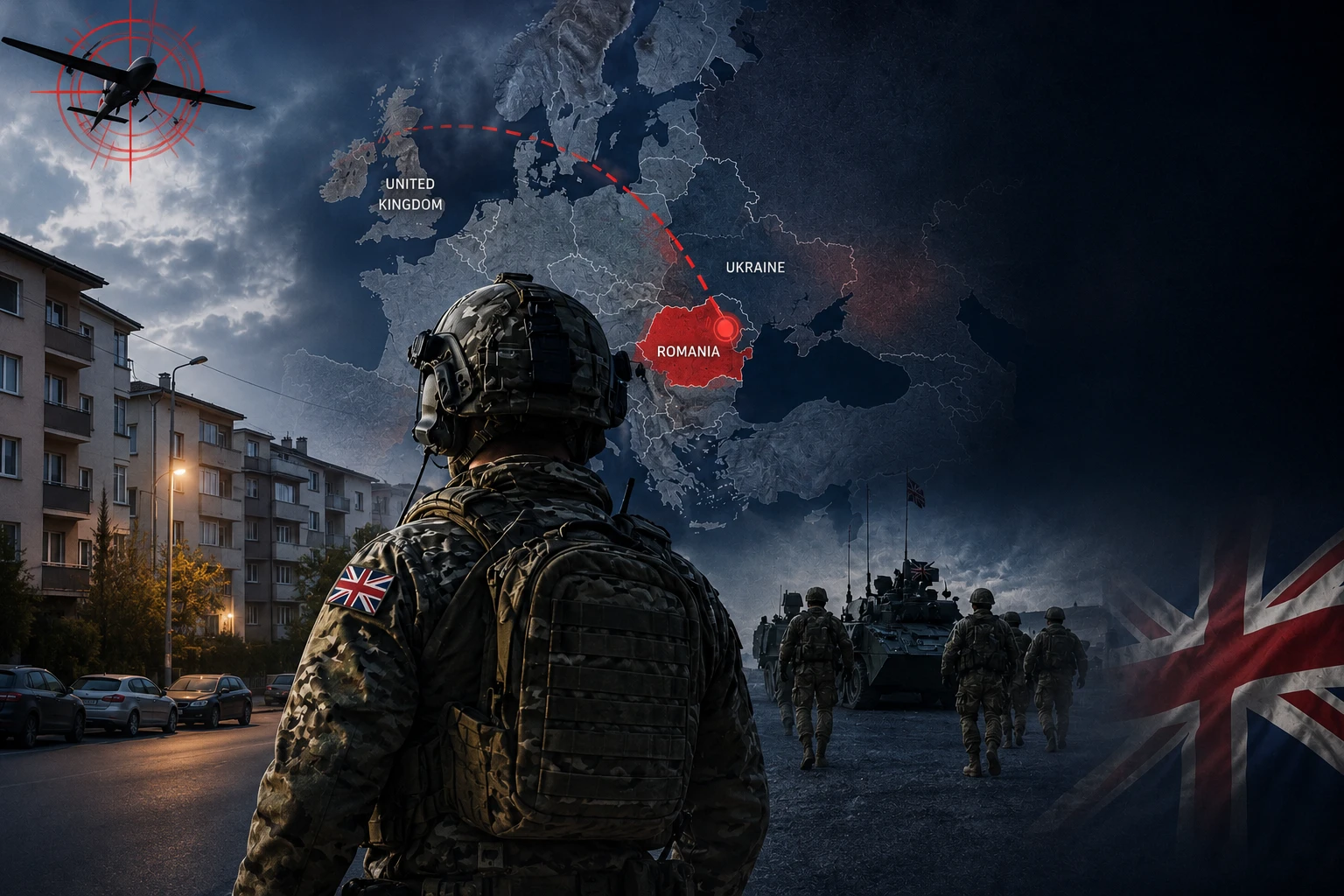
Analysis: From Romania to London – Why Britain Is Talking About War More Than at Any Time Since the Cold War
A drone crashes into a residential building in Romania and suddenly dominates Britain’s front pages, sometimes receiving more attention than developments within Britain itself.
On the surface, the incident appears limited in scope. A drone strikes an apartment block, injures civilians, and joins a long list of events stemming from the war in Ukraine, now well into its fourth year. Yet the way British newspapers responded reveals that this is no longer a story about Ukraine alone.
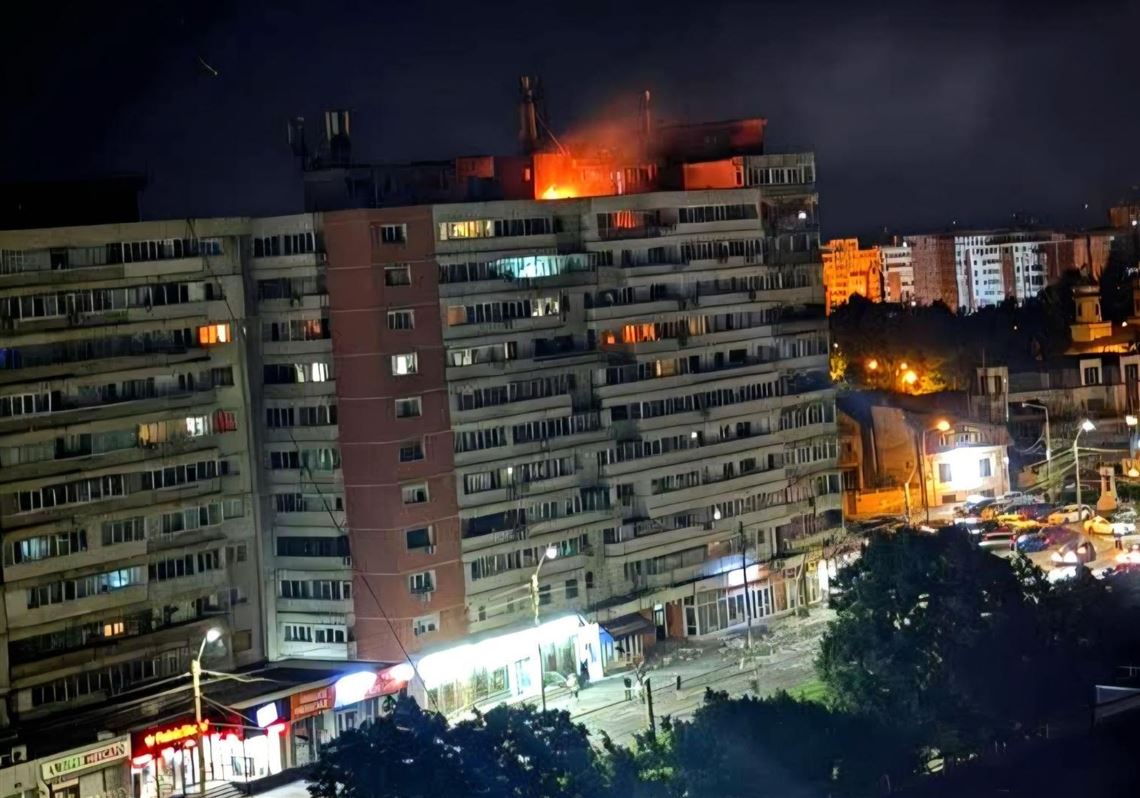
For many politicians and defence planners in London, Russia is no longer viewed as a problem confined to another country’s borders. It has become a direct European challenge that is forcing a reassessment of security priorities, defence planning and military spending.
That is why it was hardly surprising to see an incident in Romania dominate British headlines. Following reports that a Russian drone struck a residential building in the city of Galați, injuring two people, the event appeared at first glance to be a relatively minor episode on the margins of the war. Its symbolism, however, was far greater than its immediate impact.
It served as a reminder that the conflict is edging ever closer to NATO territory, and that tensions between Russia and the alliance are no longer seen as matters affecting Ukraine alone.
Britain’s Strategic Reassessment
This shift extends well beyond media coverage and political rhetoric.
Since the outbreak of the war in Ukraine, Britain has undergone a noticeable transformation in its defence priorities.
Keir Starmer’s government has committed to increasing defence spending to 2.5% of GDP by 2027, with the ambition of eventually reaching 3%. The planned increase has been described as the most significant expansion of defence spending since the end of the Cold War.
At the same time, Russia has moved to the centre of Britain’s strategic thinking. Recent defence reviews describe Moscow as an “immediate and pressing threat“, while government plans include expanding ammunition production, strengthening missile capabilities and improving military readiness.
Underlying these measures is a broader assumption: Europe has entered a new security era that differs fundamentally from the decades that followed the collapse of the Soviet Union.
Britain has also played a leading role in supporting Ukraine, supplying weapons, providing military training and advocating for stronger deterrence measures across NATO’s eastern flank. As a result, managing the challenge posed by Russia has become a permanent feature of Britain’s political debate.
None of this necessarily points towards an imminent conflict between Britain and Russia. It does, however, reflect a growing consensus within the political establishment that the post-Cold War era has come to an end, and that the stability Europe once took for granted can no longer be assumed.
External Threats and Domestic Pressures
Yet this transformation is not solely about security.
Britain continues to face sluggish economic growth, mounting pressure on public services, recurring crises in housing and healthcare, and the lingering political and cultural divisions that followed Brexit.
Against this backdrop, national security has become one of the few issues capable of generating a measure of political consensus.
This may help explain why incidents involving Russia often attract attention that exceeds their immediate military significance. Such events are not interpreted merely as security incidents. They increasingly serve as reminders of a shared external threat, one that can foster a sense of national purpose often obscured by domestic disagreements.
In that sense, stories linked to Russia are frequently read through a broader political lens. Their importance lies not only in what happened, but in what they symbolise.
A New Political Language Across Europe

The significance of the Romanian incident therefore lies less in the damage it caused than in what it reveals about a deeper shift in the political mood across Britain and Europe.
A continent that once spoke primarily about peace, integration and economic cooperation is increasingly adopting a different vocabulary: deterrence, readiness, military spending and preparation for worst-case scenarios.
This does not necessarily mean that Europe is moving towards another major war.
It does suggest, however, that European governments have begun to treat security as a central political priority after decades of believing that large-scale conflict belonged largely to the past.
The question looming in the background is therefore not whether war will come tomorrow.
It is whether Britain and Europe have already begun rebuilding their institutions, policies and strategic assumptions on the belief that the post-Cold War order is over.
Read more:
ShortURL ⬇