

Gold’s 2026 Shock: A Warrior’s Pause — or the Beginning of Safe-Haven Fatigue?

Global financial markets are entering a phase of renewed uncertainty as gold undergoes a sharp corrective swing, prompting legitimate questions among investors and savers about the long-term logic of holding the yellow metal. After the historic gains recorded earlier this year, the latest downturn has left market participants facing a familiar dilemma: is this a buying opportunity — or a signal that deeper declines lie ahead?
Diagnosing the Moment: Why Has the Throne of Gold Trembled?
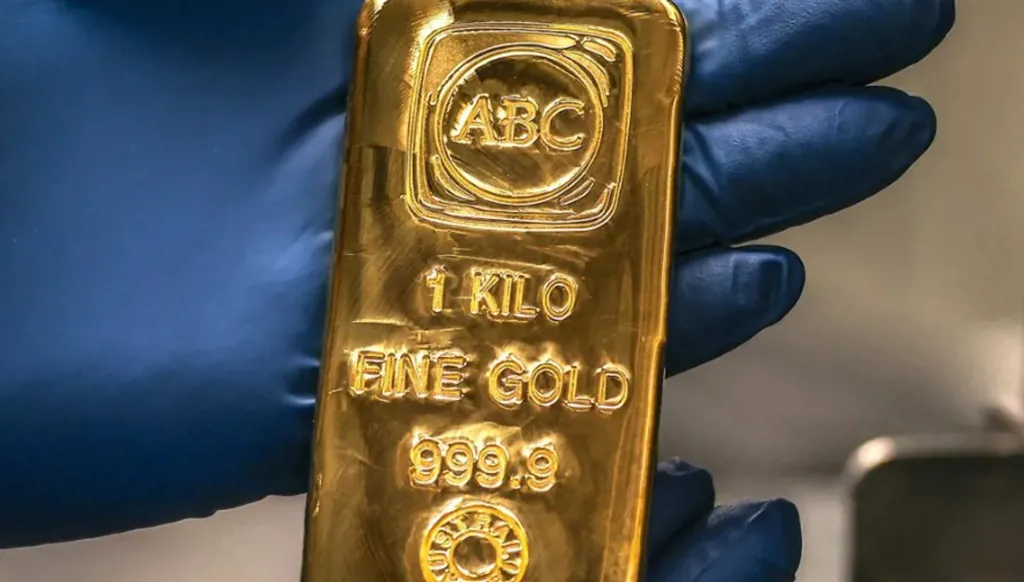
Current price volatility cannot be understood in isolation from wider macroeconomic shifts. Despite persistent geopolitical tensions — traditionally supportive of gold — a set of countervailing forces has begun to dominate trading screens.
Rising bond yields and sustained high interest rates remain central to the story. Fresh inflation data has encouraged major central banks to maintain tight monetary policies, increasing the opportunity cost of holding gold. For many investors, fixed-income instruments offering predictable returns now appear more attractive than a non-yielding asset.
At the same time, a partial resurgence in major fiat currencies has exerted additional downward pressure. The strengthening of the US dollar — alongside firmer performances by the pound and the euro — has weighed on bullion prices, given that gold is globally priced in dollars.
Profit-taking has also played a decisive role. After reaching record highs, large institutional funds have begun liquidating portions of their holdings to convert paper gains into cash, increasing market supply and amplifying downward momentum.
The Forecast Market: Where Might Prices Head Next?

Technical readings suggest that gold may currently be undergoing what analysts describe as a “healthy correction”. Economic history shows that assets experiencing rapid rallies often require periods of consolidation before resuming upward trajectories.
Two broad scenarios are now emerging.
In the first, prices stabilise above key support levels, potentially paving the way for a renewed rally aimed at breaking previous peaks before the end of 2026.
In the second, sustained selling pressure could continue if incoming economic data signals stronger-than-expected growth in the United States or Europe, pushing gold towards more attractive entry levels for new buyers.
Navigating Volatility: Practical Strategies for Gold Investors
Beyond short-term speculation, the fundamental principles of saving and investing in gold remain largely unchanged.
Long-term perspective
Gold has rarely been a vehicle for rapid profit. Its enduring value lies in its ability to preserve purchasing power over time. Price declines therefore represent realised losses only for those forced to sell during downturns.
Gradual accumulation
Rather than deploying available liquidity at a single price point, financial planners often advise spreading purchases across multiple intervals. This “cost-averaging” approach helps investors secure a more balanced entry price and reduces exposure to sudden post-purchase corrections.
Portfolio insurance
Gold is commonly recommended to represent between 10% and 15% of overall wealth or savings. Such allocation can help offset losses in equities, property markets, or currency depreciation — including periods of pound weakness during inflationary cycles.
Shielding purchasing power

In an era of volatile exchange rates and expansive monetary policies, gold remains the only major asset that cannot be printed. For many households monitoring global markets, bullion continues to function as a strategic store of value against the gradual erosion of savings.
Gold may currently be passing through a turbulent pricing phase that could persist for weeks. Yet the structural drivers behind its long-term appeal — rising global debt, entrenched inflation risks and geopolitical uncertainty — remain firmly in place. The present pullback may ultimately prove less a collapse than a temporary window for investors seeking to strengthen their holdings at more favourable valuations.
Read more:
ShortURL ⬇