

Double Standards at the UK Home Office: Why Is Sudan Punished While Pakistan Is Spared?
In politics, priorities may shift and policies may evolve. What cannot easily be justified, however, is the stark double standard that emerges when decisions directly affect people’s lives and futures.
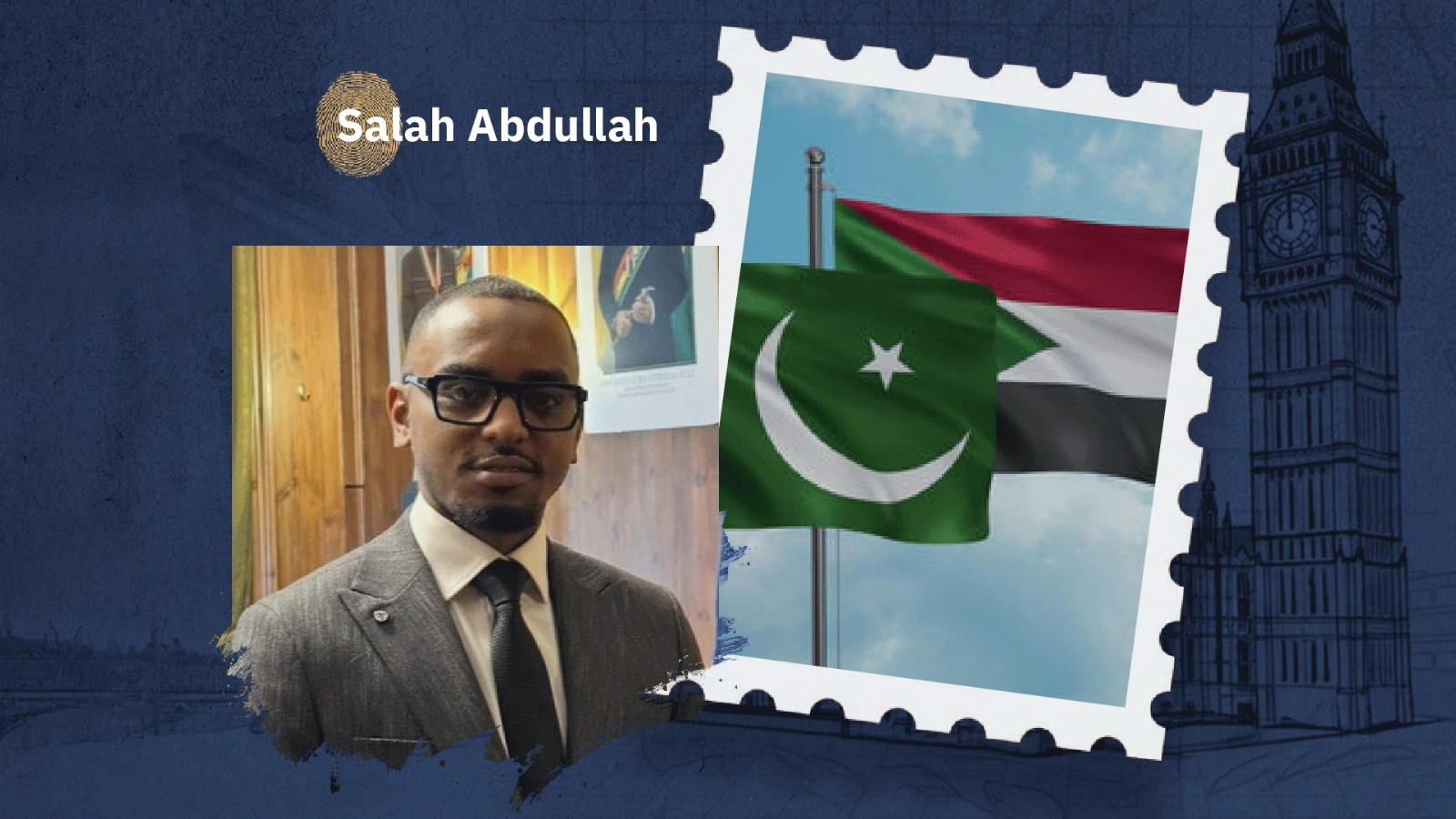
The UK government’s recent decision to suspend student visas for several countries – with Sudan placed prominently on the list – raises a fundamental and legitimate question: why Sudan? And how did Pakistan escape inclusion despite statistics suggesting otherwise?
The Numbers Behind the Sudan Decision

The government justified its decision by citing a rise in asylum applications from individuals who had entered the United Kingdom on student visas. Yet a closer examination of the available data quickly undermines the logic behind that argument.
According to widely cited figures, the number of Sudanese students who applied for asylum after entering the UK on study visas does not exceed 120 individuals.
One hundred and twenty people – from a country currently enduring one of the most devastating humanitarian crises in the contemporary world.
Sudan today is engulfed in a brutal war, with millions of civilians facing an unprecedented humanitarian catastrophe. Yet instead of demonstrating solidarity with a nation in crisis, the Home Office has effectively imposed what amounts to a collective penalty on an entire country over just 120 cases.
Pakistan and the Asylum Figures the Policy Overlooks
By contrast, available statistics suggest that Pakistani nationals top the list of asylum applicants among those who initially entered the UK through legal visa routes. Estimates indicate that roughly a quarter of such applications come from Pakistani citizens. At the same time, more than 30,000 student visas were issued to Pakistani nationals in a single year.
Some figures go further, suggesting that over 10,600 Pakistani nationals entered the UK legally before later applying for asylum. Yet despite these numbers, Pakistan remains absent from any restrictive measures.
The question, then, is simple: why?
Political Sensitivities and Electoral Calculations

When British journalist Camilla Tominey confronted Home Secretary Shabana Mahmood with this discrepancy, the response was brief and opaque. The Home Secretary said she would “not provide a running commentary on discussions with other countries and nationalities.”
But this answer did little to address the underlying concern. Instead, it deepened the sense of unease. How can Sudan face sweeping restrictions over 120 cases while Pakistan remains untouched despite far higher figures?
At this point, the language of statistics gives way to the language of politics.
The Labour Party is well aware of the significant electoral weight of the Pakistani community in Britain. Historically, it has represented one of the party’s most reliable voting blocs, particularly in major cities and key parliamentary constituencies.
It is also impossible to ignore the fact that the Home Secretary herself is of Pakistani heritage. Any decision perceived as targeting the Pakistani community could therefore carry enormous political sensitivity — perhaps even amounting to political self-sabotage.
Immigration Policy or Political Selectivity?
This argument, however, is not a call for discriminatory treatment against Pakistanis or any other community. What is being demanded is simply consistency in the application of policy.
If the stated criterion for restrictions is the misuse of student visas to claim asylum, then that standard should be applied evenly across all countries.
Punishing a nation suffering the consequences of a catastrophic war over a relatively small number of cases, while overlooking another country with significantly larger figures, does not resemble a balanced immigration policy. At best, it appears to be political selectivity; at worst, an attempt to appease an influential electoral constituency.
The Unanswered Question
This raises another important question:
Did the Home Office consult with Sudanese authorities before taking this step?
Were possible solutions explored with British universities or with Sudanese institutions? Or was the decision simply made because Sudan lacks the political influence or electoral leverage to defend itself within Britain’s corridors of power?
Ultimately, the issue is not the tightening of immigration policy itself. Every state has the sovereign right to control its borders.
The problem arises when such policies become selectively applied tools shaped by narrow political calculations. At that point, they lose their most important safeguards: credibility and fairness.
The message this decision sends is troubling. It suggests that electoral considerations may outweigh objective facts, and that some countries are easier targets than others — not because of the numbers, but because of the ballot box.
Which leaves a question that still deserves a clear and transparent answer from the Home Secretary:
Why Sudan – and not Pakistan?
Read More:
ShortURL ⬇