

Reform UK’s London gamble: Laila Cunningham named mayoral candidate two years ahead of vote
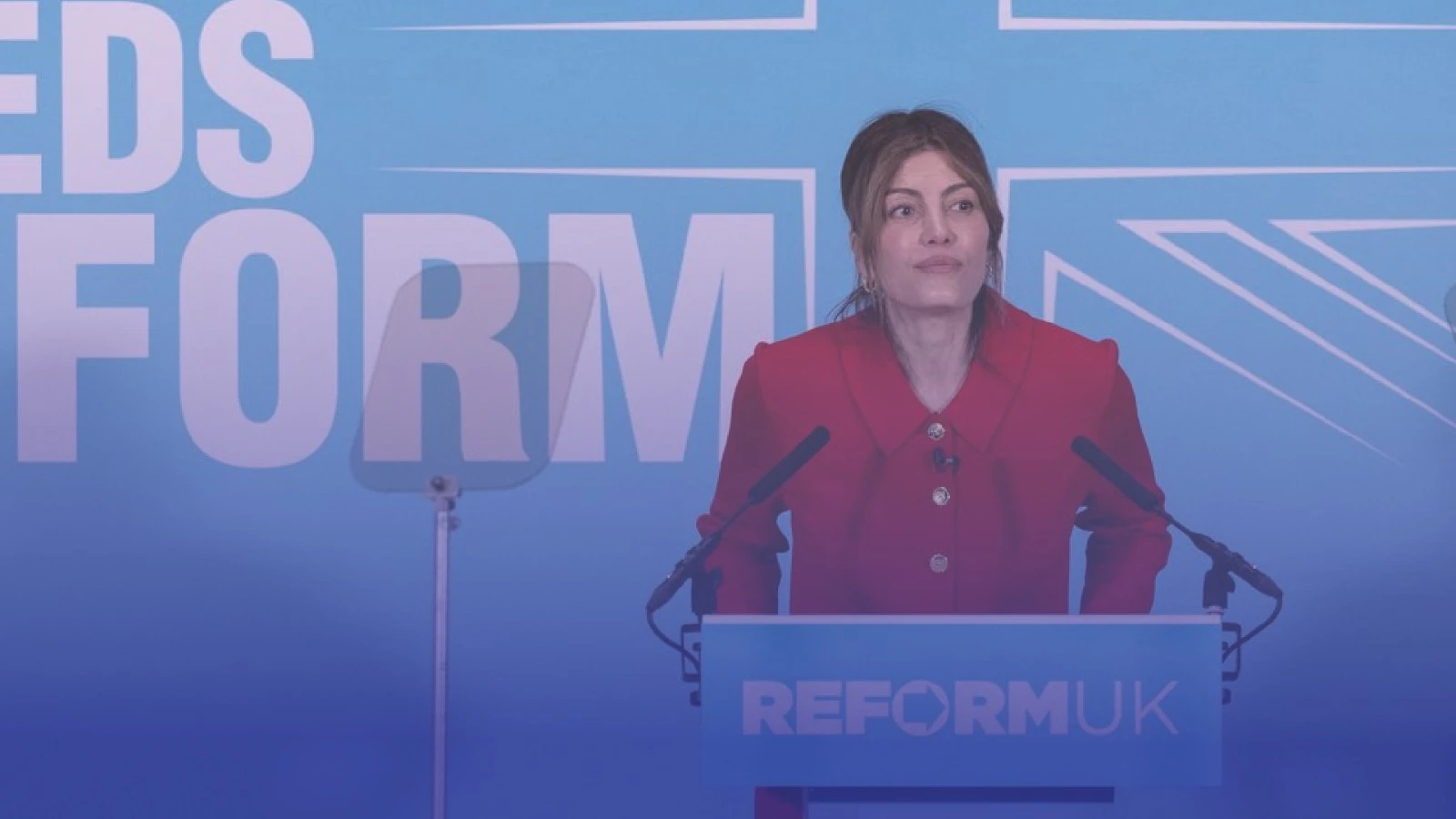
Reform UK has formally announced Westminster councillor Laila Cunningham as its candidate for the 2028 London mayoral election, becoming the first party to declare a challenger more than two years before voters go to the polls.
The announcement, made on 7 January at a press conference in central London, marks an unusually early intervention in a contest that is still some distance away. While Reform framed the move as a sign of confidence and momentum, the timing also signals the party’s intention to shape the political debate around London well ahead of the formal campaign period.
While the party framed the decision as organisational readiness, the early timing and tone of the launch suggest a strategic attempt to define the race on Reform’s terms, particularly around crime, transport and cost-of-living pressures.
Crime as the central campaign theme
Cunningham placed public safety at the heart of her campaign pitch, using stark language to describe London as suffering from a breakdown in law and order. She pledged what she called an “all-out war on crime”, promising tougher policing, greater police visibility and a renewed focus on knife crime, drugs, robbery and sexual violence.
Reform’s approach mirrors a broader party strategy of presenting the 2028 election as a referendum on Mayor Sadiq Khan’s record as chair of the Metropolitan Police Authority. Cunningham directly blamed Khan for policing outcomes in the capital, arguing that responsibility lies with the mayor through control of priorities, leadership appointments and budgets.
City Hall and its supporters reject that characterisation. Official data shows that some violent crime indicators have fallen in recent years, and that London compares broadly in line with other global cities of similar size. Critics of Reform argue that the party’s emphasis on fear and disorder oversimplifies a complex picture and plays to electoral anxieties rather than evidence.
ULEZ and the ‘war on motorists’
Transport and environmental policy formed the second major pillar of Cunningham’s platform. She pledged to scrap the Ultra Low Emission Zone entirely, describing it as a punitive policy that disproportionately affects working people, tradespeople and carers.
This stance aligns with Reform UK’s wider opposition to urban climate measures, but puts the party at odds with official assessments showing that ULEZ has contributed to reductions in harmful air pollution across London. The issue remains politically sensitive, sitting at the intersection of environmental health, affordability and transport access, particularly in outer boroughs.
A symbolic candidacy under scrutiny

Cunningham’s selection has drawn particular attention because she is a Muslim woman representing a party with a long history of hardline rhetoric on immigration and national identity. The move has prompted questions across political and media circles about whether Reform is seeking to soften its image in a city defined by ethnic and cultural diversity.
The party insists the choice reflects merit and political alignment, not symbolism. However, critics argue the candidacy risks being read as a tactical attempt to neutralise accusations of Islamophobia and racism without any substantive shift in policy direction. Cunningham herself has previously faced criticism for remarks widely described as inflammatory, further complicating the narrative Reform is attempting to project.
Khan’s record and competing narratives
Labour figures responded by pointing to what they describe as Khan’s delivery record: expanded free school meals, record levels of council housing starts, reductions in air pollution and a decline in homicides. City Hall data shows that council housebuilding reached its highest level on record during the 2024–25 period, a statistic Labour uses to counter claims that the mayor has failed on core social issues.
For Khan’s allies, Reform’s framing ignores these outcomes in favour of a simplified story of decline. For Reform, the numbers do not outweigh what it argues is a lived experience of insecurity and rising costs among Londoners.
A race defined early
Reform’s early announcement appears designed to lock in a binary framing of the contest long before rival parties name their candidates: Cunningham versus Khan. Whether that strategy succeeds will depend on whether Reform can translate national polling momentum into sustained support in a city that has repeatedly rejected right-wing populist challengers.
What is clear is that the London mayoral race has begun in earnest, not as a clash of personalities alone, but as a contest between two sharply different visions of the capital: one centred on enforcement, rollback and confrontation, and another rooted in incremental reform, environmental policy and social investment.
As the long road to 2028 unfolds, Cunningham’s candidacy will remain under close scrutiny, both for what it says about Reform UK’s ambitions and for what it reveals about the limits of political rebranding in one of Europe’s most diverse cities.
Read More:
ShortURL ⬇